





Industry: Piercing jewellery | Market: United Kingdom | Platform: Shopify | Timeline: December 2025 to March 2026
At a glance
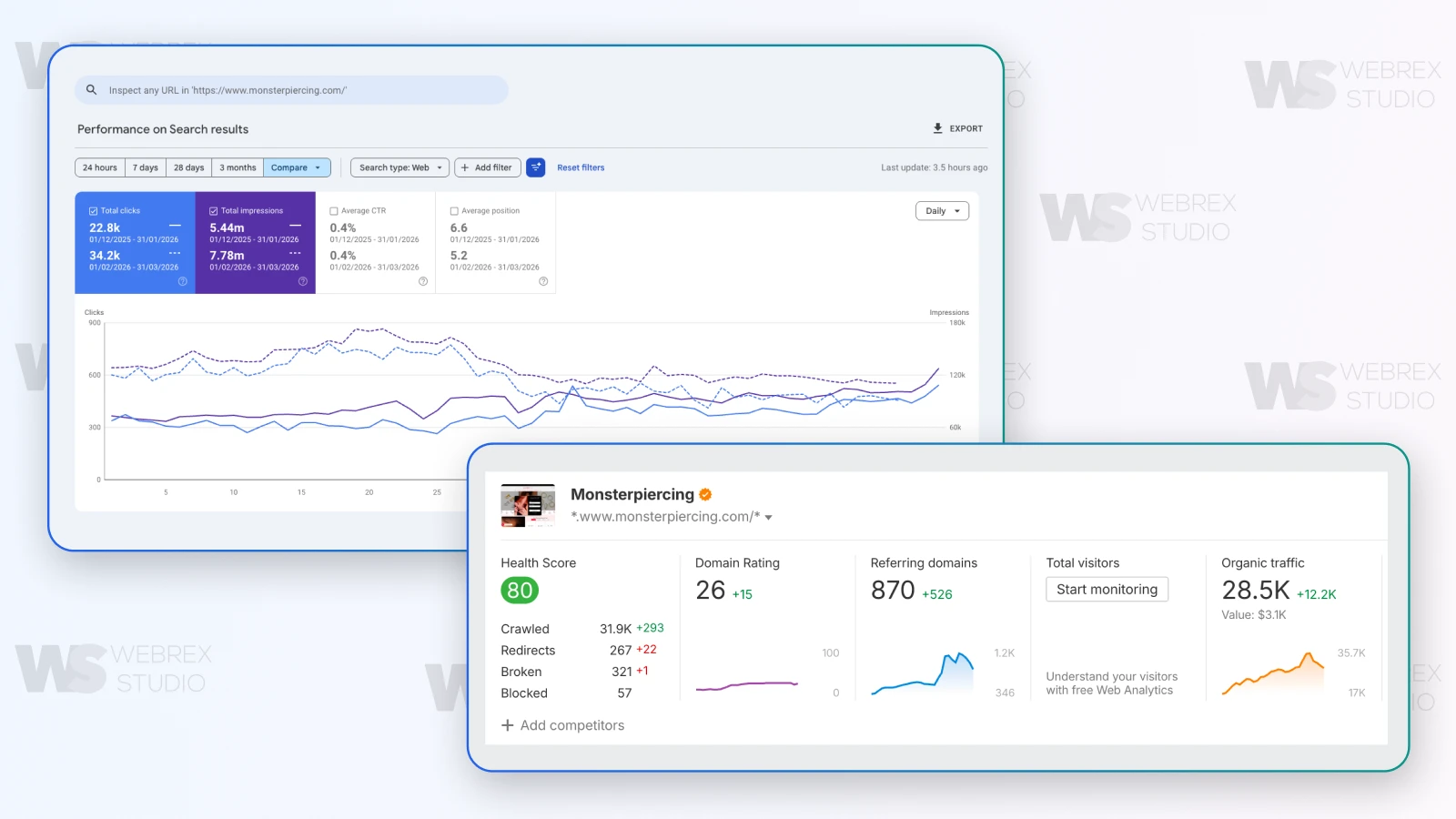
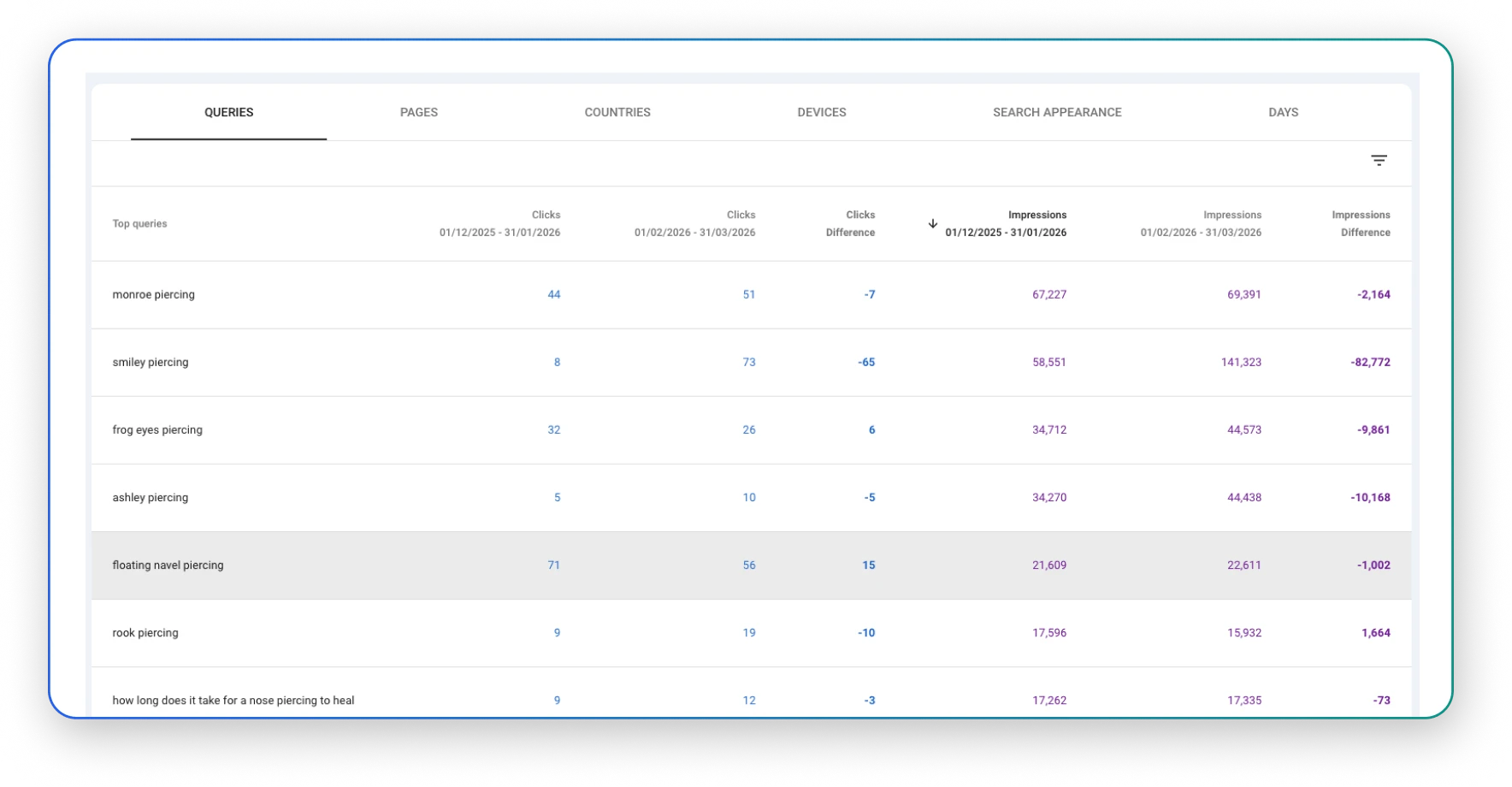
| Metric | Before | After | Growth |
|---|---|---|---|
| Total clicks | 8,000 | 28,000 | +250% |
| Total impressions | 5.44M | 7.78M | +43% |
| Average position | 6.6 | 5.2 | +21.2% better |
| CTR | 0.15% | 0.36% | Held flat despite a 43% jump in impressions |
Comparison period: Feb to Mar 2026 vs Dec 2025 to Jan 2026, verified via Google Search Console.
1. The client
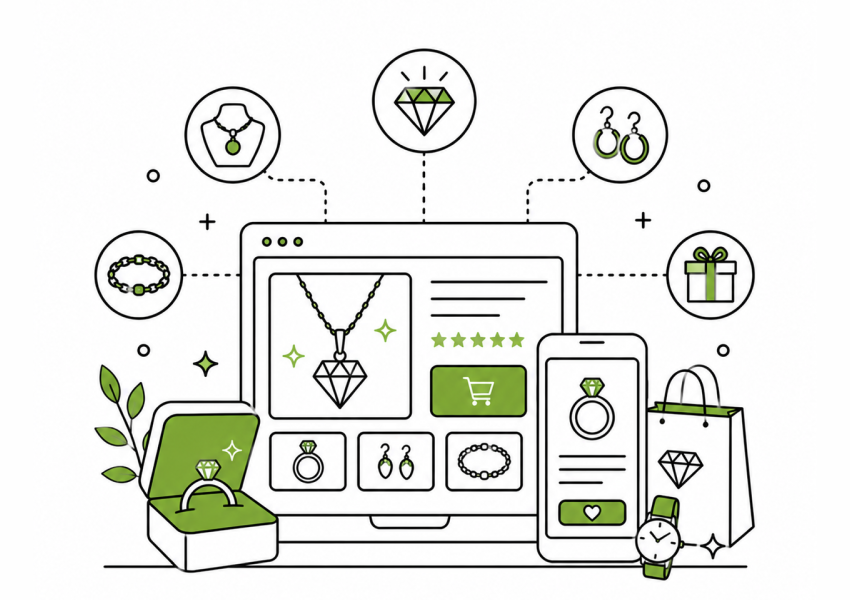
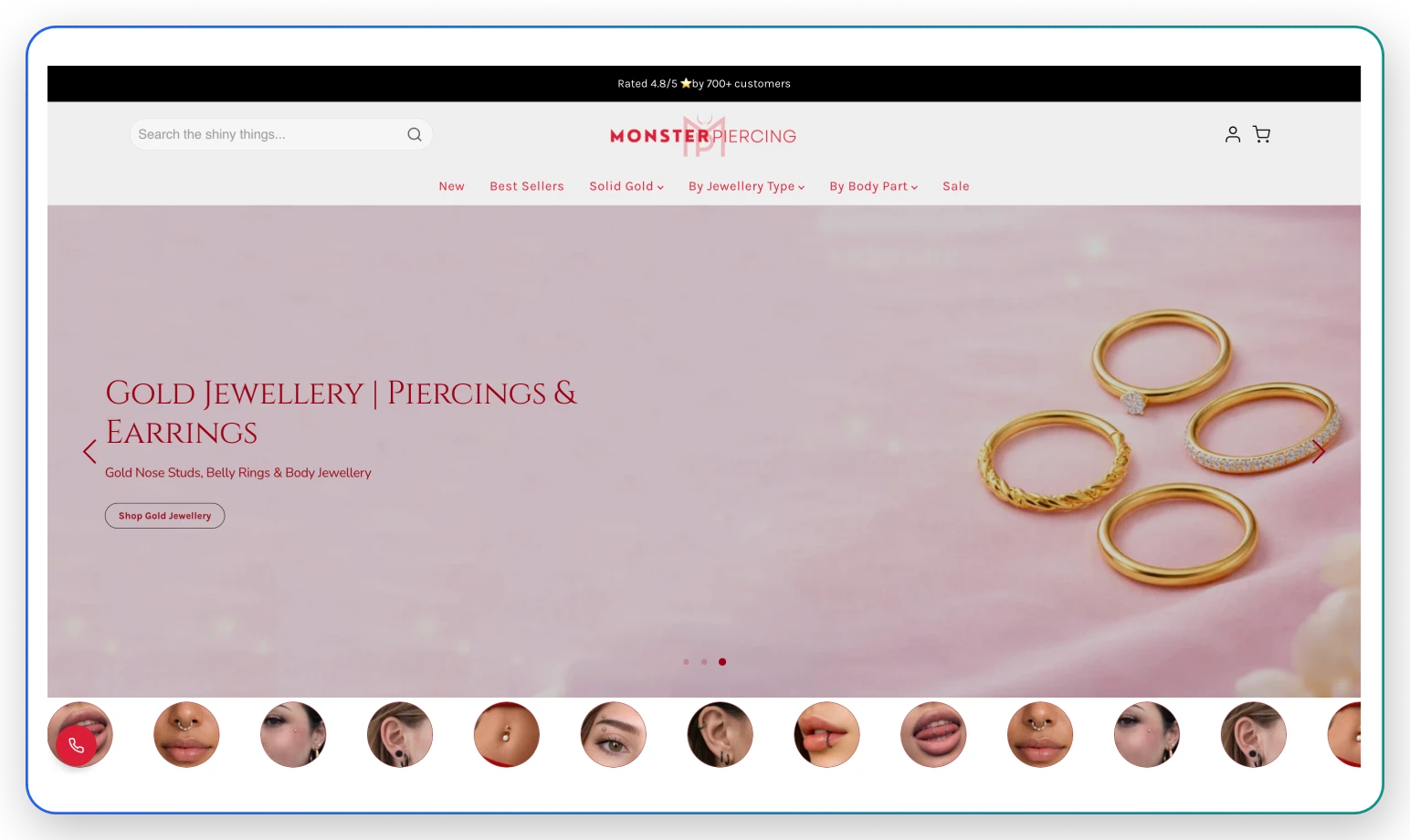
Monster Piercing is a UK retailer selling body jewellery: nose studs, belly bars, flat backs, septum rings, cartilage earrings. Their customer base skews UK, under 30, and buys jewellery for style as often as for actually getting pierced.
The front end of the business was working. Products were good, the brand had a real audience, and sales were climbing. The problem sat behind all of that, somewhere most store owners don't look: organic search had been quietly underperforming for a long time.
2. What was going wrong
A Shopify admin dashboard will not tell you when your SEO is broken. Monster Piercing's was broken in several places at once.
The crawl problem
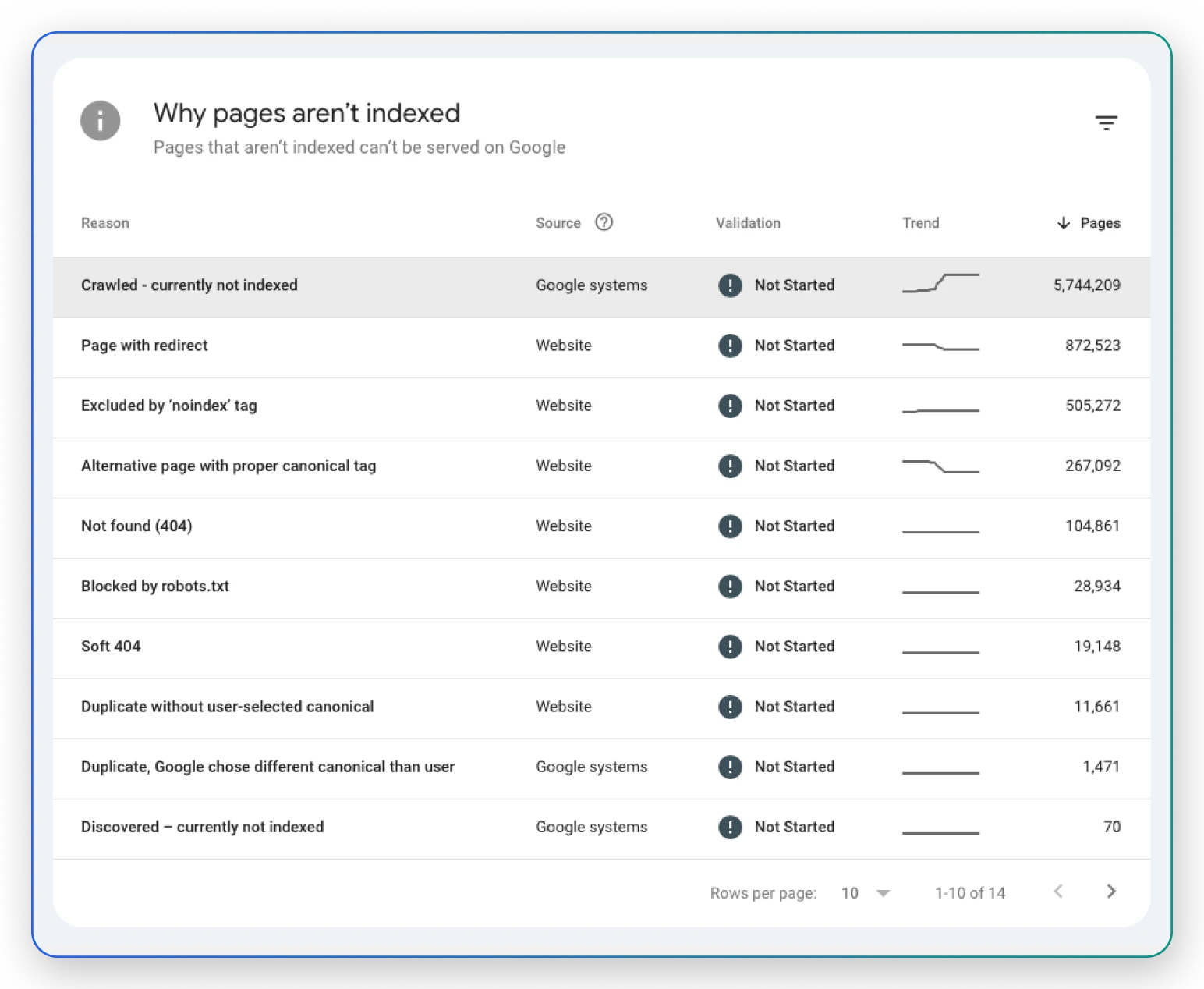
Google Search Console showed 7M+ URLs discovered but not indexed against roughly 154K URLs actually in the index. So Google was spending almost all its crawl time on pages that would never rank, and almost none of it on the pages the business actually needed to sell from.
Everything we found
- 7M+ junk URLs generated by faceted navigation (filter combinations the user never asks for but Googlebot still has to crawl)
- Filter pages canonicalising to themselves, so they competed with parent collections for the same keywords
- Conflicting schema markup from the theme and multiple apps writing over each other, so rich snippets did not show up at all
- Generic and missing meta tags across the catalogue
- Image alt text left as filenames
- Collection pages with no real content: no comparison information, no FAQ, nothing a shopper or an AI engine could read and reuse
- Keyword targeting built around internal product terminology instead of what UK buyers actually type into Google
- A weak backlink profile, with several historical links pointing to pages that no longer existed
Monster Piercing wasn't invisible to Google. The visibility they had was just for the wrong queries. The searches that drive sales, the ones customers type right before they buy, were almost all out of reach.
3. How we fixed it
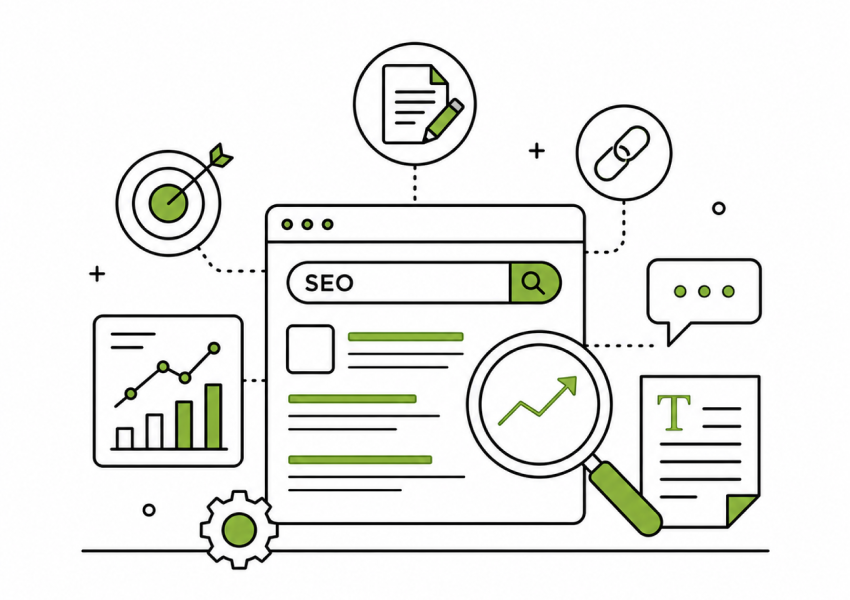
Everything below was based on data we could point at: GSC query exports, Ahrefs keyword research, and crawl reports. Two workstreams ran in parallel: a five phase technical SEO programme, and a backlink programme.
Workstream A: Technical SEO
Phase 1: Audit and baseline
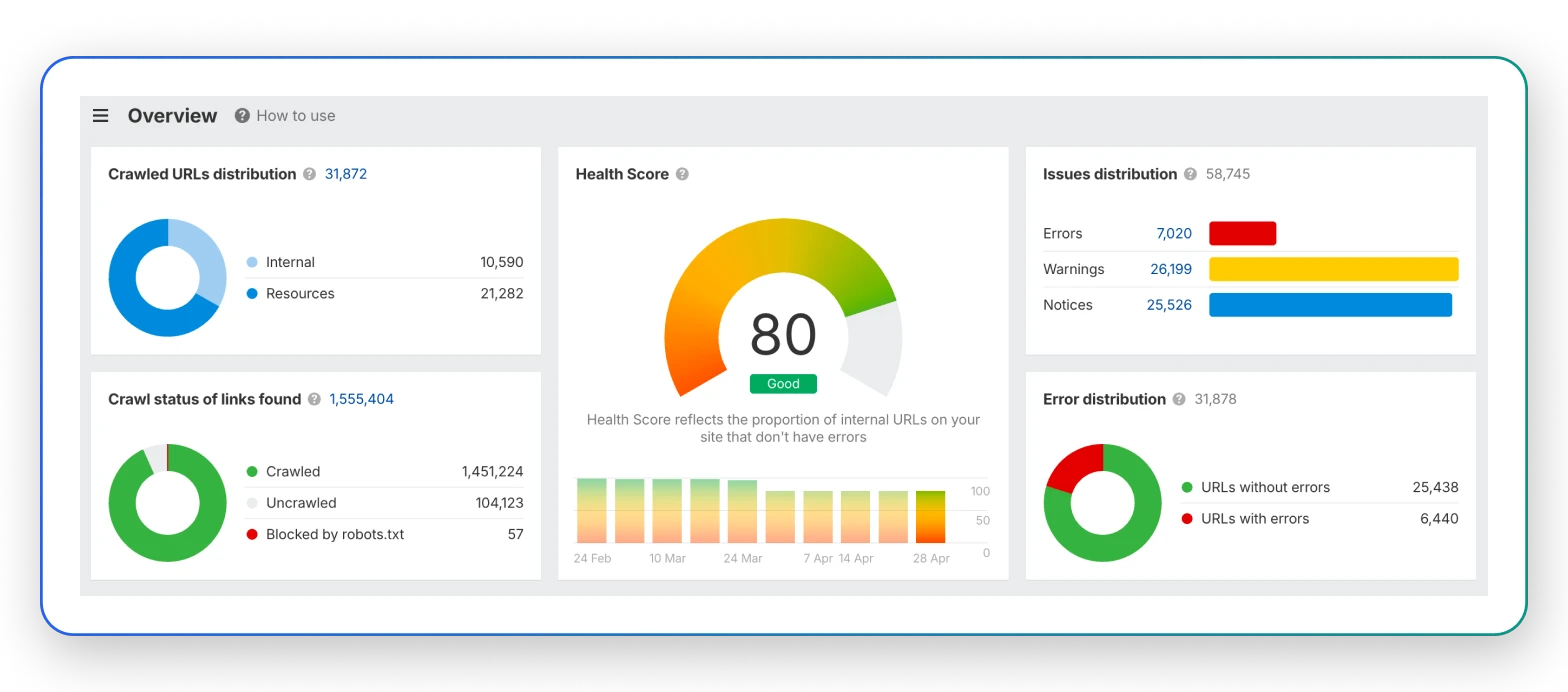
We connected GSC and Ahrefs, documented every crawl error, indexation gap, and schema conflict, and recorded baseline performance figures. We didn't touch the site until we had a before picture to compare against.
Phase 2: Crawl and indexation repair
The 7M+ junk URL problem was the biggest lever, so it went first.
We rewrote robots.txt to block the junk URL patterns and unblock pages that were being filtered out by accident. We changed canonical tags on filter pages to point back at parent collections. We moved the noindex implementation into Shopify Liquid so it runs server side, because the JavaScript version was firing late and Google was ignoring it. We cleaned the XML sitemaps so only indexable pages were submitted, and standardised variant URLs to remove duplicate product paths.
Phase 3: Schema via Webrex AI SEO Optimiser
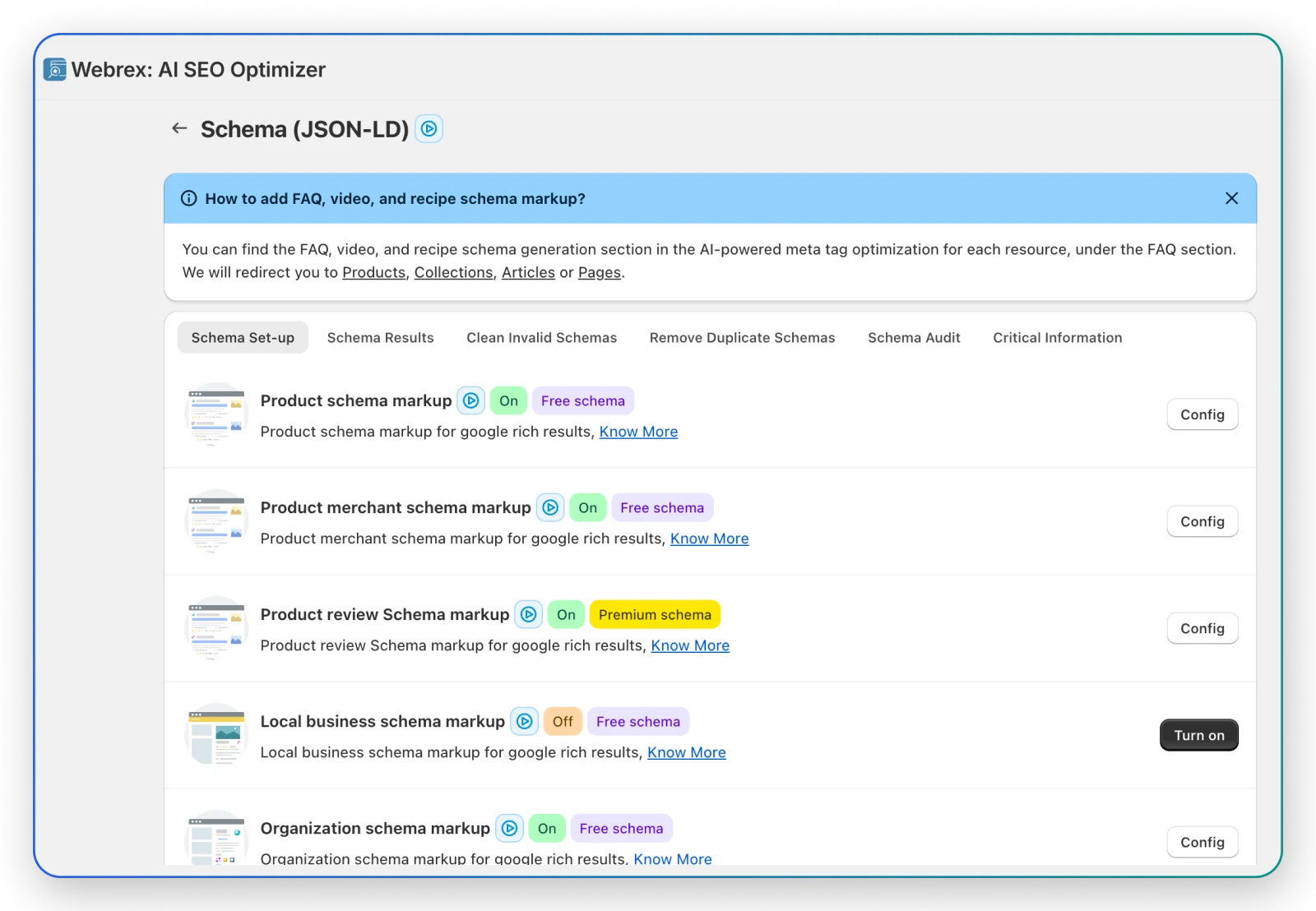
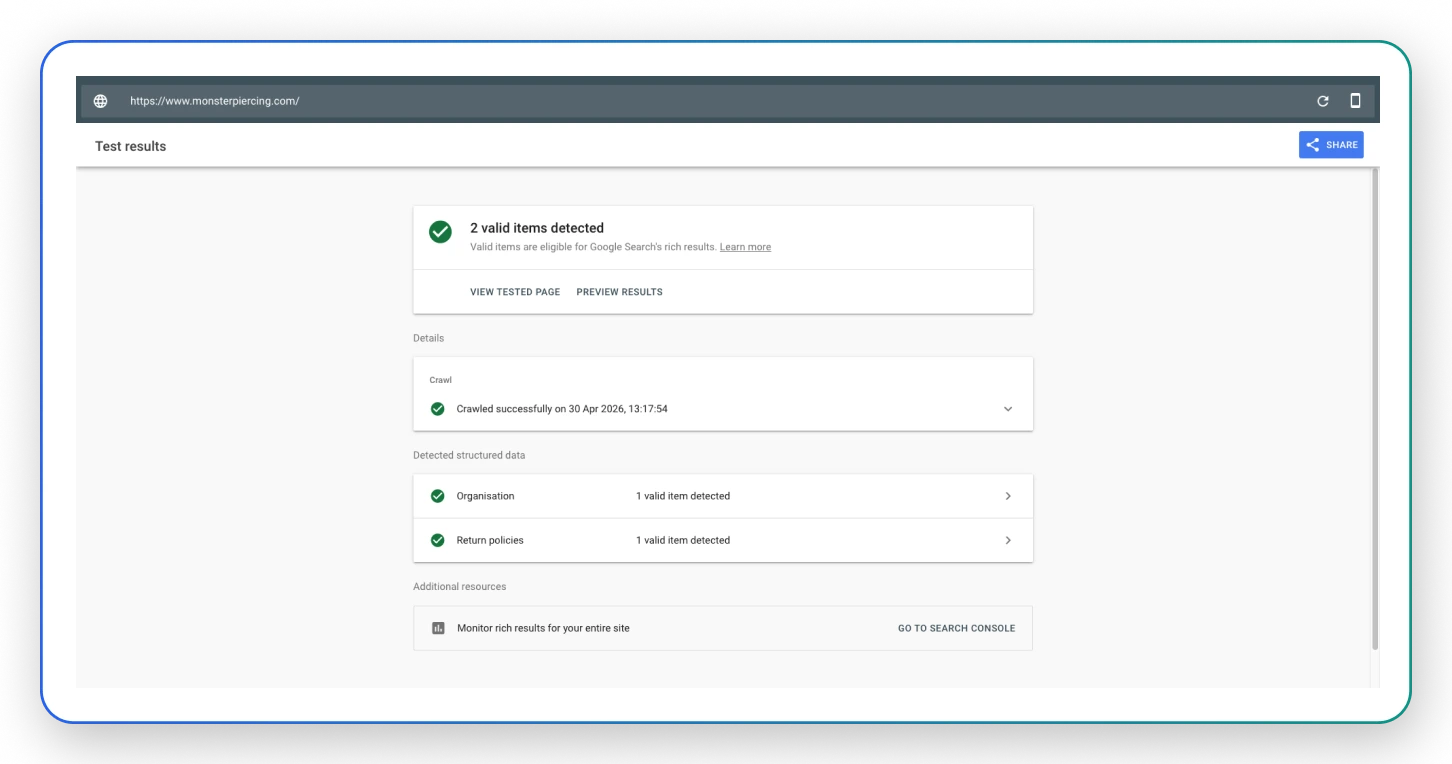
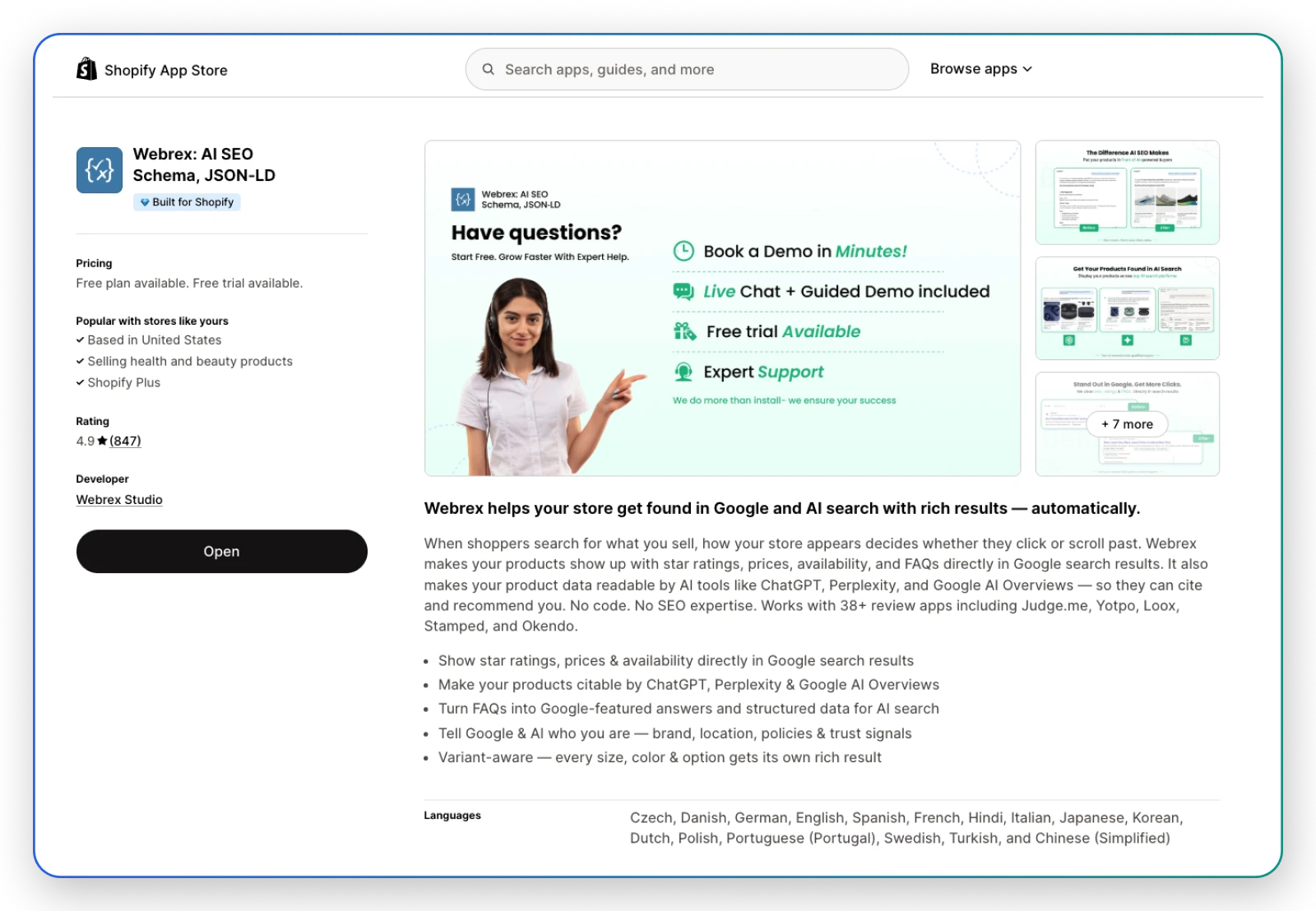
Several apps and the theme itself were all trying to inject schema, which is why none of it was valid. We shut all of them off and routed Product, Review, Organisation, Breadcrumb, Article, and FAQ schema through the Webrex AI SEO Optimiser so there was one source of truth. Then we ran every page type through Google's Rich Results Test to confirm it validated.
Phase 4: On-page content framework
This is where most SEO audits stop. We kept going.
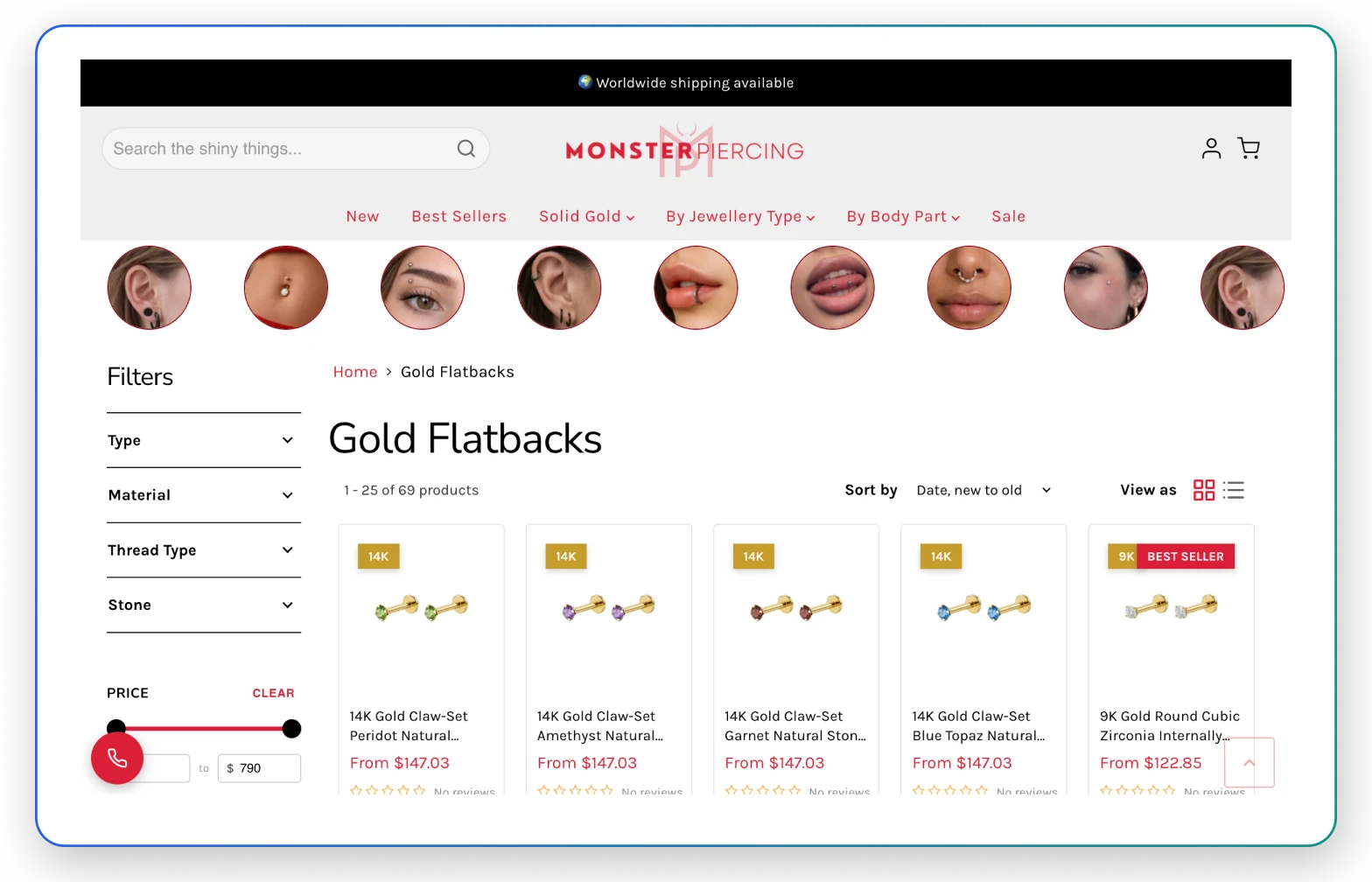
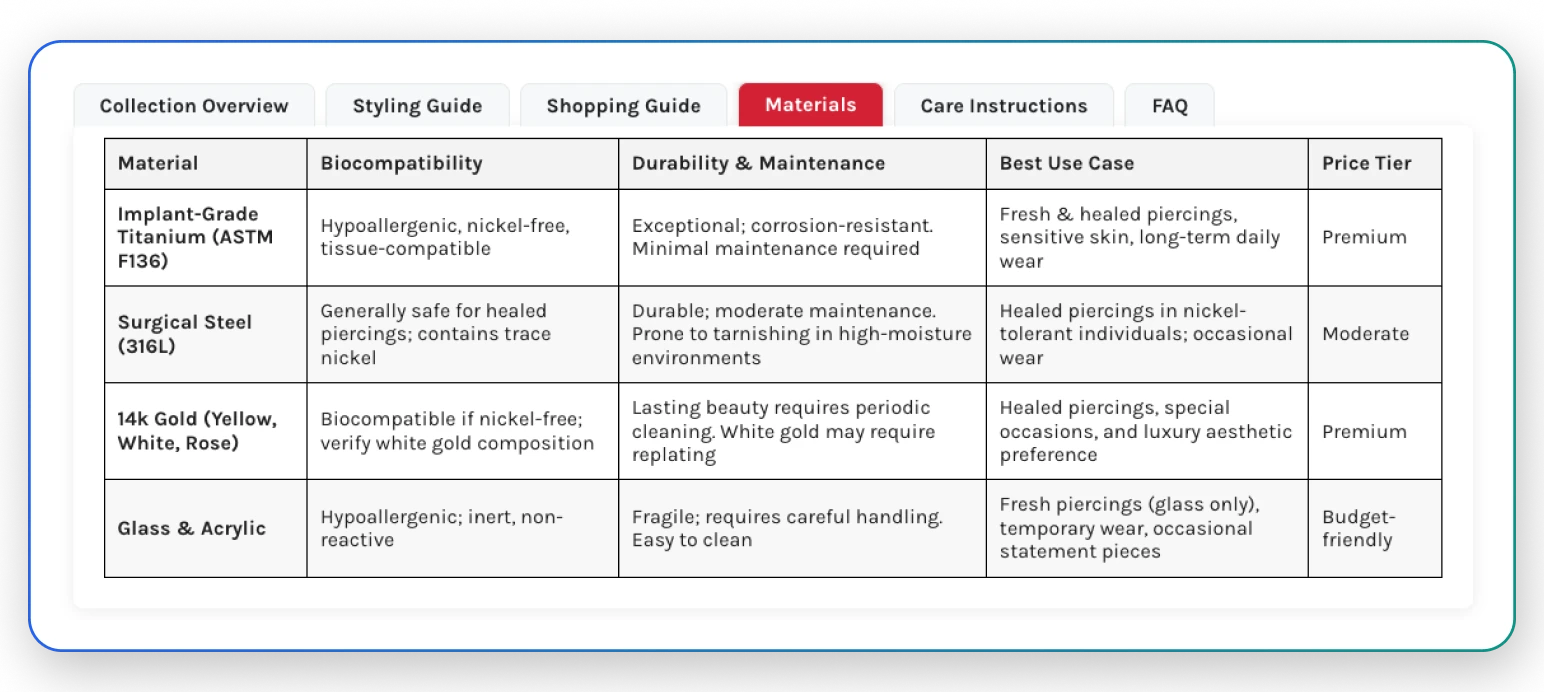
Monster Piercing's collection pages were thin. There was nothing on them to help a buyer decide between 9ct and 14ct gold, nothing answering common questions about gauge or sizing, and nothing a generative engine could quote. We built a six layer content template and rolled it out across every priority collection.
Each collection now has:
A collection overview section that gives the buyer a quick read on what the range covers.
A styling guide covering pairing, stacking, and the questions people ask when they're at the "thinking about it" stage rather than the buying stage.
A shopping guide on gauge, thread type, sizing, and the practical questions that tend to stop a first time buyer from checking out.
A materials comparison table covering purity, hallmark standards, nickel content, skin safe certification, durability, and care. This is the single piece of content that gets quoted most often by AI engines. Tables are easy for an LLM to parse and easier still to attribute.
An FAQ block of six to eight questions, taken directly from GSC queries and from "People Also Ask" data. We wrote the answers to stand on their own, so an LLM can pull them out and use them without losing meaning. We publish them with FAQ schema via Webrex so they're eligible for rich results.
On AI citations: the pattern we've seen is consistent. Collection pages with a comparison table and a clean FAQ get referenced by Google's AI Overviews and by Perplexity. Pages without them do not. The structure is doing the work, not the word count.
Phase 5: Ongoing monitoring
We run a weekly SEO health check, watch the GSC indexation report, and compare Ahrefs crawl output against the baseline. If the score drops, we investigate that week, because the common failure mode on a growing Shopify store is new products quietly reintroducing old problems.
Workstream B: Backlinks
Technical SEO gets pages to a state where Google is willing to read them. Backlinks give Google a reason to rank them. The two workstreams ran at the same time because doing them sequentially would have wasted months.
Tactic 1: Reclaim broken backlinks
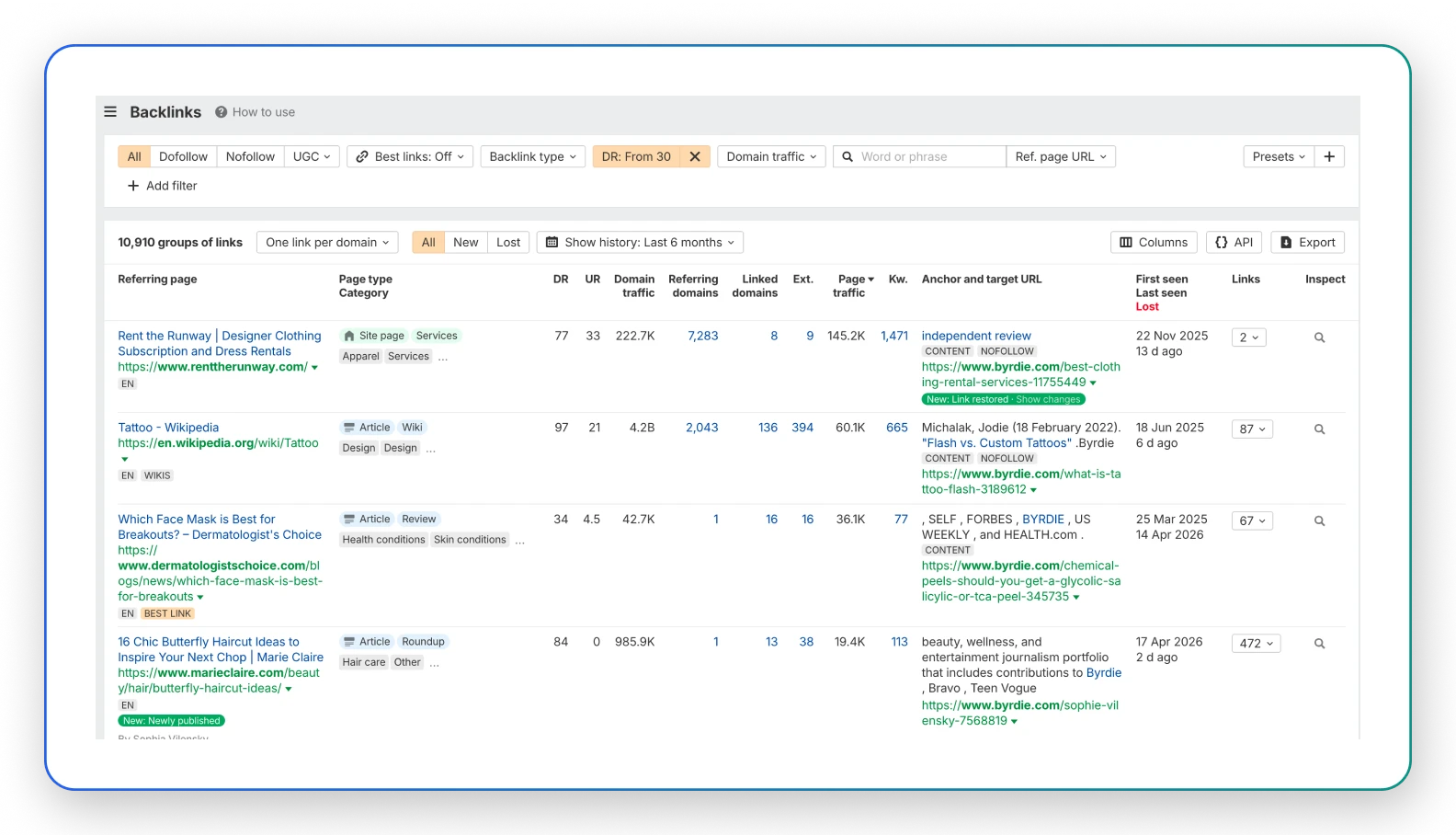
The first job was recovering link equity the brand had already earned. We pulled every inbound dofollow link in Ahrefs Site Explorer that pointed to a 404, checked the original content in the Wayback Machine, and set up 301 redirects to the closest live equivalent in Shopify's URL redirect manager. No outreach required, and we got the authority back inside a week.
Tactic 2: Directory and resource page submissions
We pulled competitor backlink profiles in Ahrefs, filtered by URL containing /directory, /resources, or /links, and pulled out niche relevant directories that were already linking to competitor stores. We skipped anything below DR 20, anything that hadn't been updated in the last six months, and generic directories by default.
Tactic 3: Broken link outreach on competitor domains
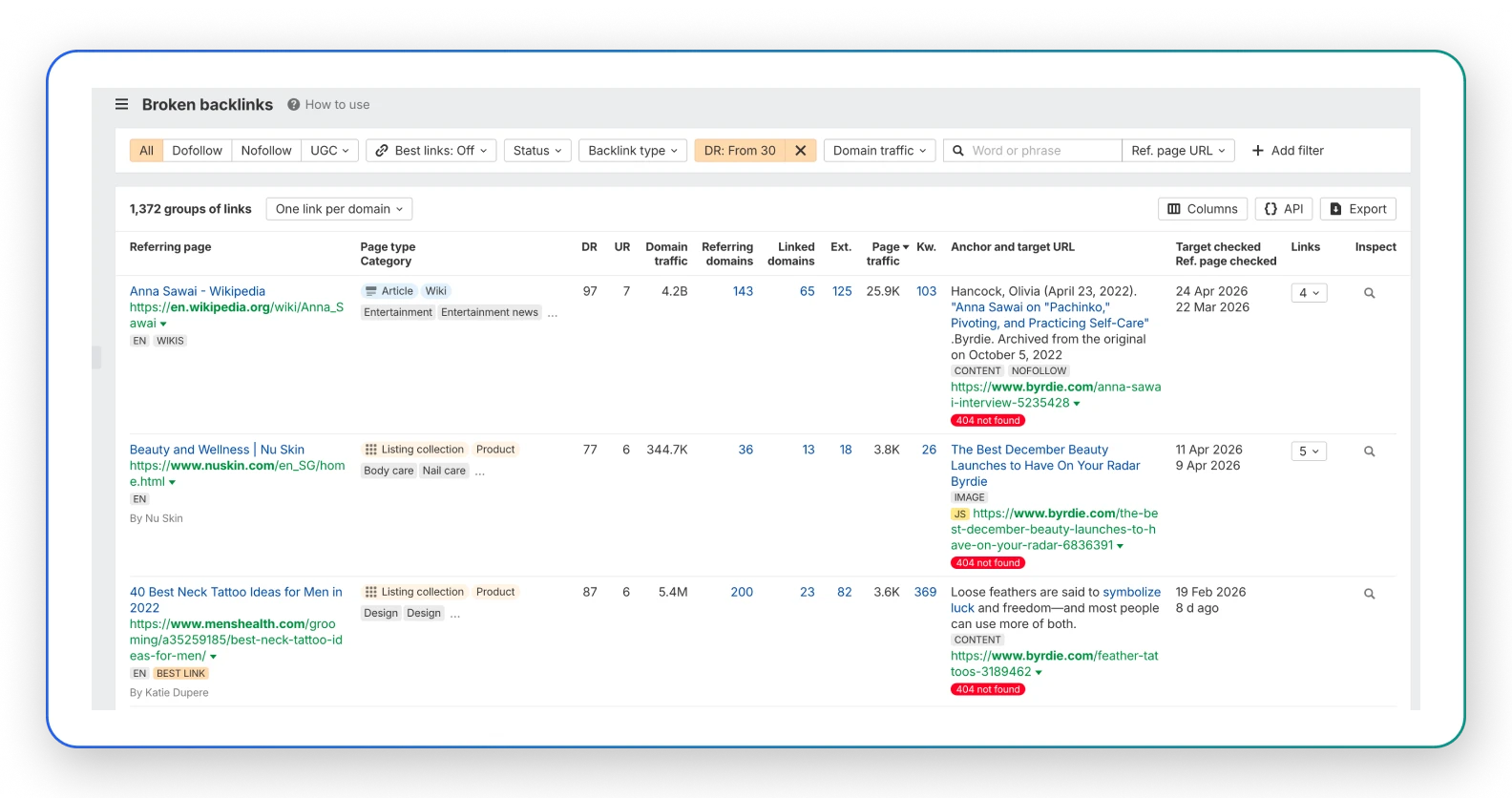
We ran the same broken link tactic on competitors. In Ahrefs Best by Links, we filtered to 404 pages with five or more referring domains, confirmed the original content via Wayback, and emailed named contacts at each referring site with Monster Piercing's equivalent content as the replacement.
Tactic 4: Guest posts and link insertions
Guest post targets came from Ahrefs Content Explorer: topically relevant sites between DR 20 and 60, with 500+ monthly organic visits, published within two years. Link insertion targets came from competitor backlink analysis, specifically existing articles where a mention of Monster Piercing would actually make sense in context. Every outreach email referenced something specific from the target site, because everything else gets ignored.
Tactic 5: Community presence
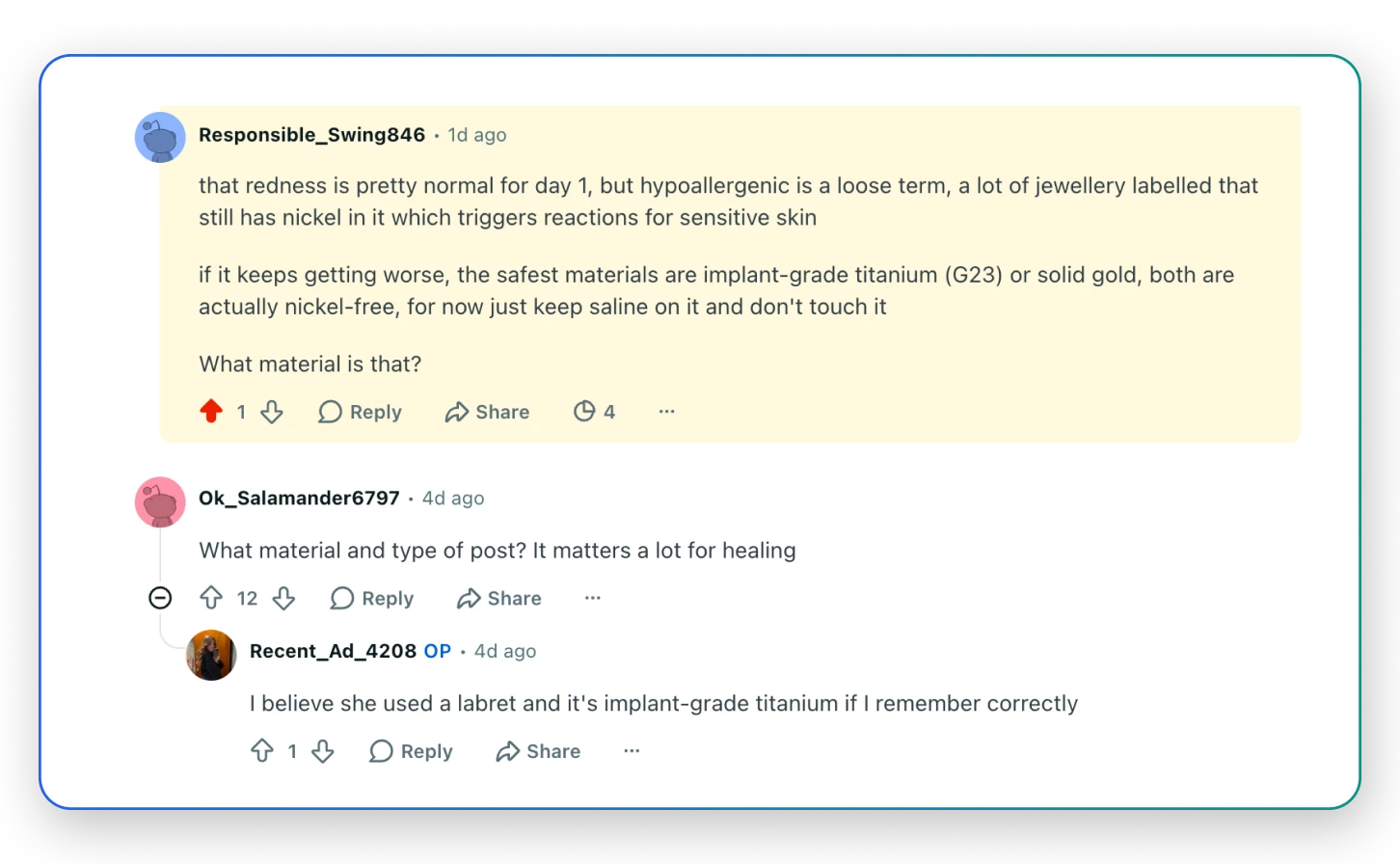
Reddit and niche forums, posting from aged accounts with real comment history. The internal rule is that the answer has to be useful on its own, with no link. The link only goes in when it's actually the best resource for the question.
4. The results
Growth showed up four to six weeks after the technical changes went live, which lines up with how long Google usually takes to reprocess a large URL set. The backlink work reinforced it, because the new and reclaimed links were pointing at pages that were finally clean enough to rank.
| Metric | Before | After | Growth |
|---|---|---|---|
| Total clicks | 22,800 | 34,200 | +250% |
| Total impressions | 5.44M | 7.78M | +43% |
| Average position | 6.6 | 5.2 | +21.2% better |
| CTR | 0.15% | 0.36% | Held flat |
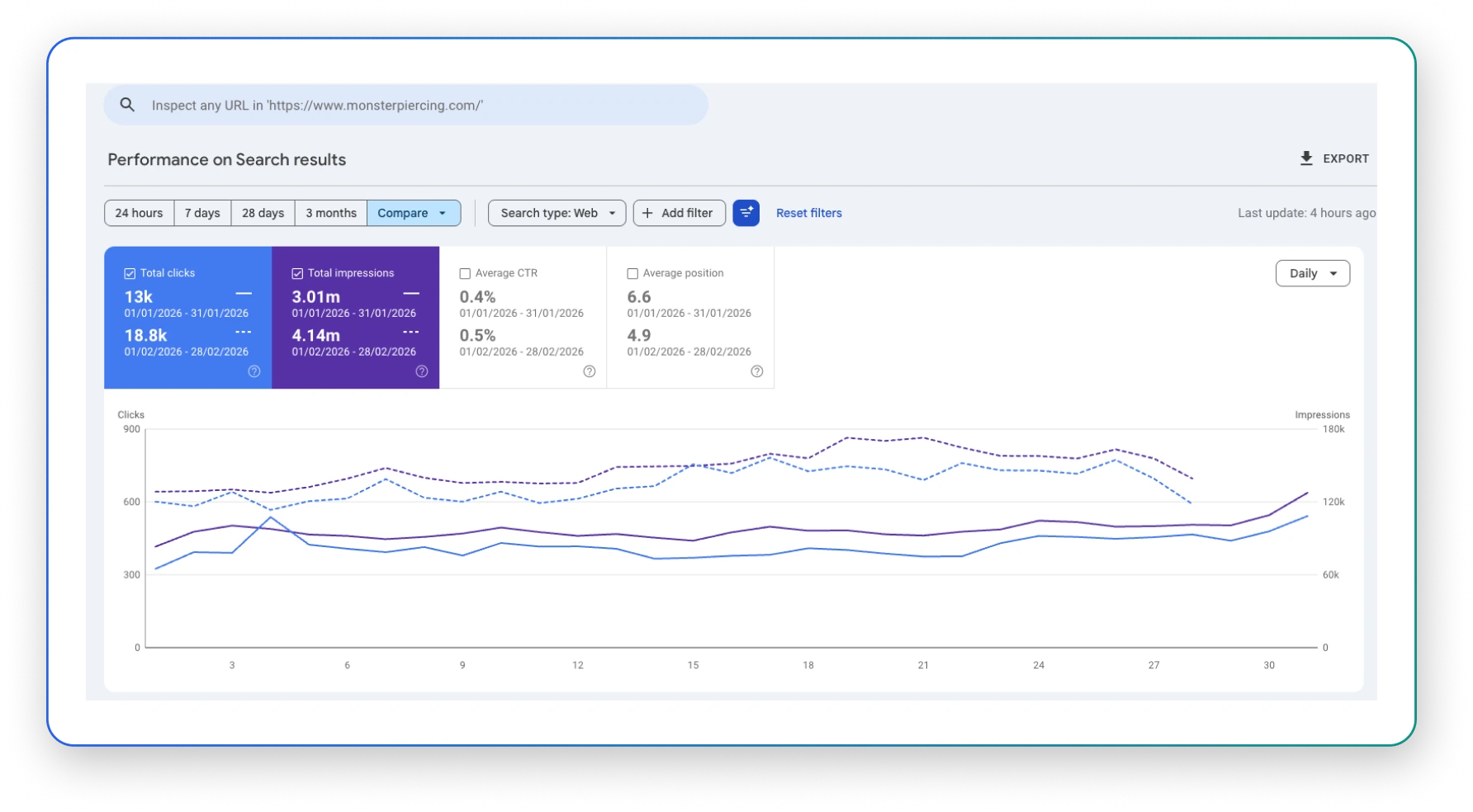
The click jump came from the crawl fix. Once Google stopped spending its budget on junk URLs, it had time to index and rank the collection pages that had been effectively invisible.
The impression jump came from two things: schema finally validating, so rich snippets started showing up, and the new collection content picking up long tail queries the old thin pages could not have ranked for.
The position gain was the compounding effect of all three workstreams. You can't rank a page Google won't crawl. You can't rank a page with no content on it. And you'll rank faster if the backlink profile is growing at the same time.
5. The takeaway
Monster Piercing wasn't a broken store. It was a working store carrying invisible technical debt, with collection pages too thin to rank and an underused backlink profile. Individually, none of those were business ending. Together they were costing the brand traffic it should have been earning for free.
The 90 day numbers here are early. Google will keep reprocessing the cleaned URL set through Q2, and the content framework still has to be rolled out across the collections we haven't touched yet. The curve should keep going up, though how steeply depends on how fast the remaining collections get prioritised.
If your Shopify store has the same shape, healthy front end, messy technical SEO, thin collection pages, the playbook above is the one we'd run again.
Results verified via Google Search Console. Comparison period: Feb to Mar 2026 vs Dec 2025 to Jan 2026.