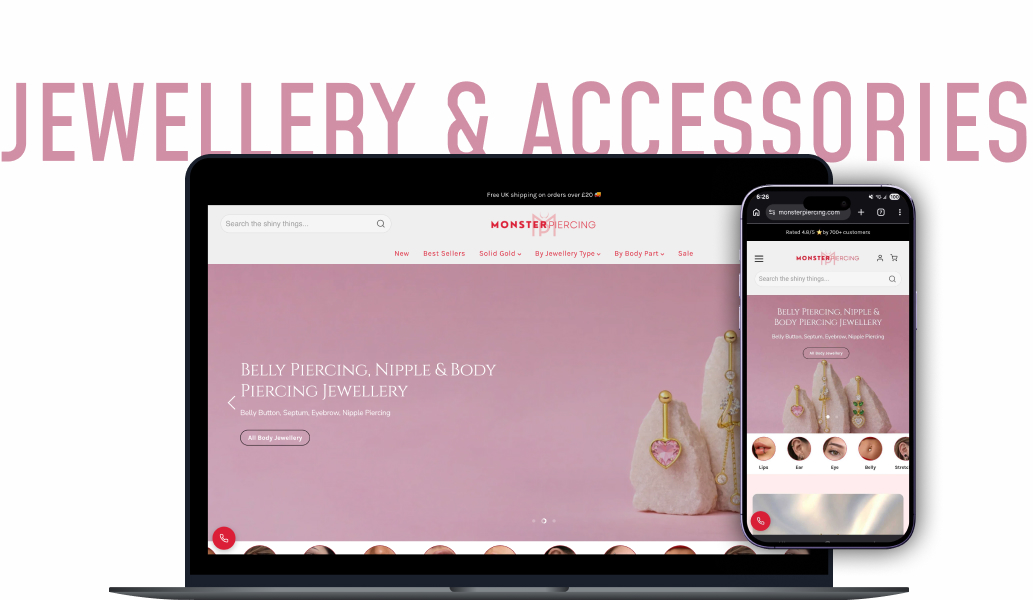

Monster Piercing had an email list, a social following, and a product people bought on impulse. What they'd never done was run all three channels on the same story at the same time. Spring was the moment to find out what that looked like.
Client: Monster Piercing - Shopify, piercing jewellery (UK)
Service: Multi-channel campaign management (email, Meta ads, website, organic social)
Campaign: Mar 25 - Apr 8, 2026 | Contributed by Akshata Wakhle, Webrex
Compared to: Mar 10 - 23, 2026 (prior 14-day baseline)
RESULTS AT A GLANCE
| Metric | Result | Change |
|---|---|---|
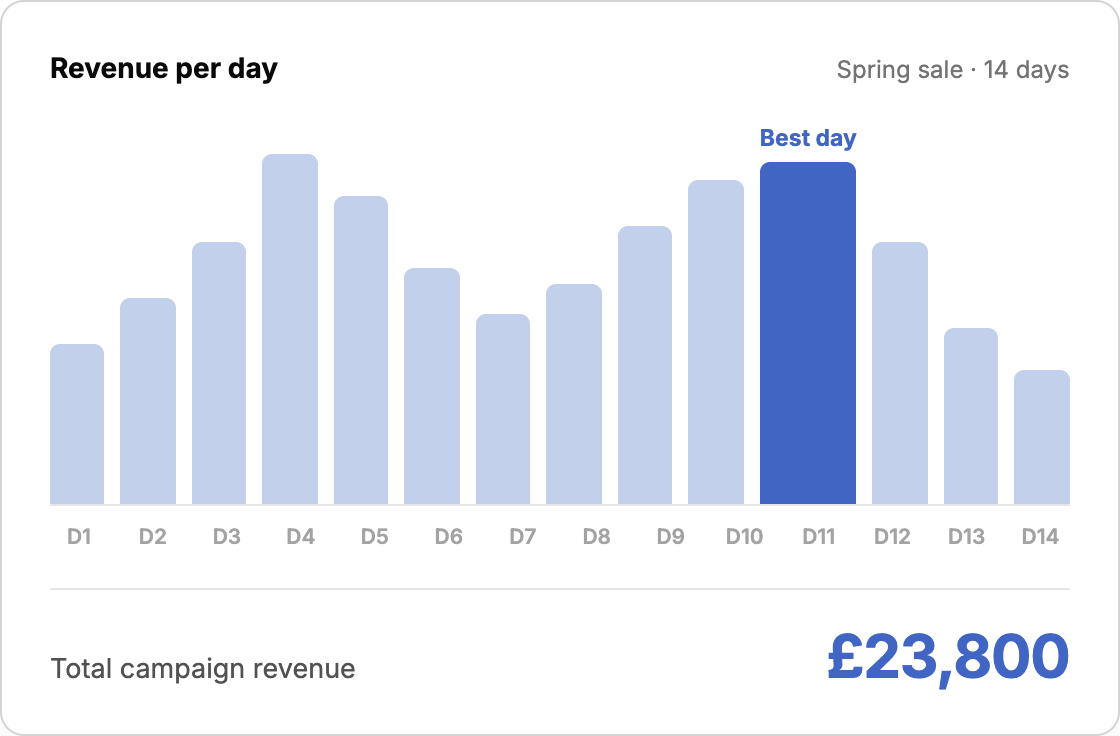
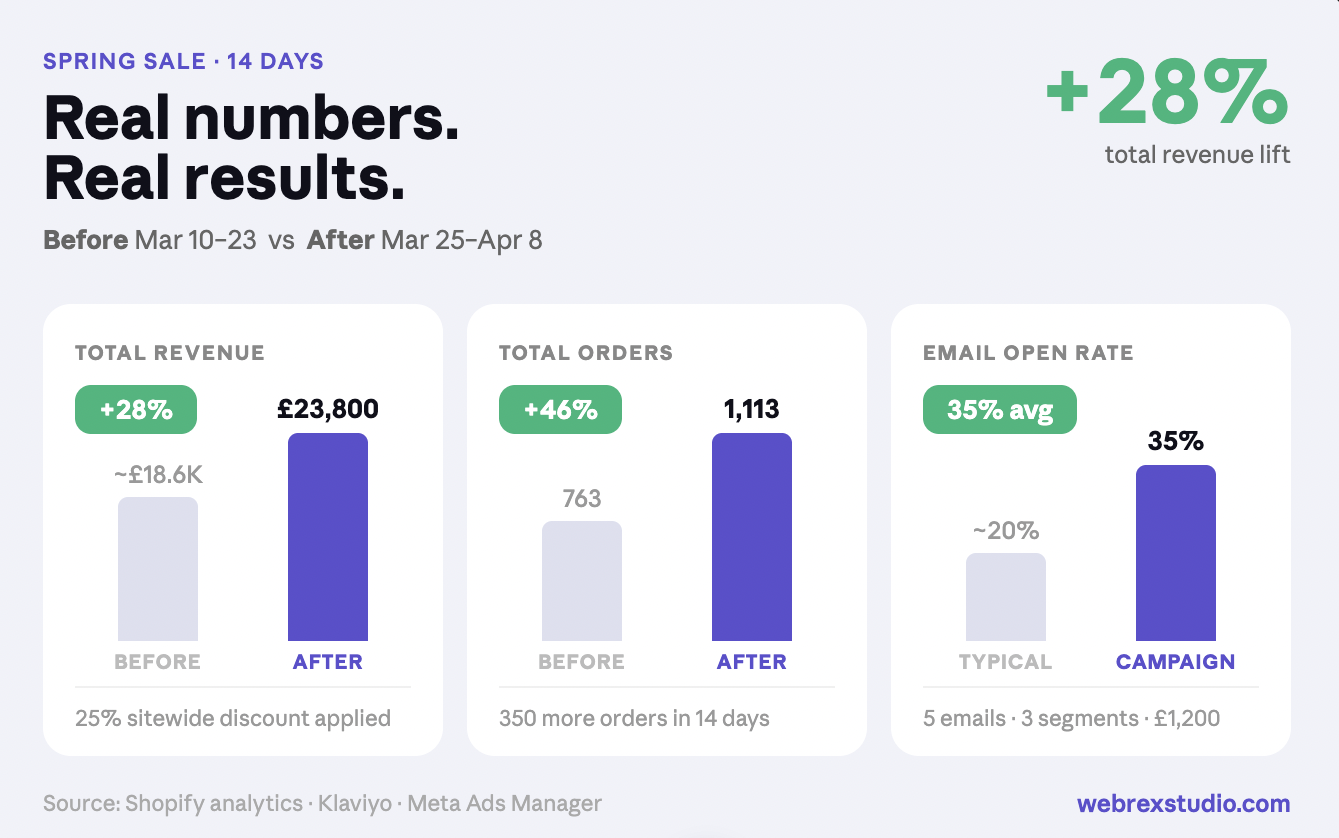
| Total Revenue | £23,800.03 | ↑ 28% vs prior period |
| Total Orders | 1,113 | ↑ 46% from 763 prior |
| Sessions | 30,396 | 14-day campaign |
| Sitewide Discount | 25% | All products |
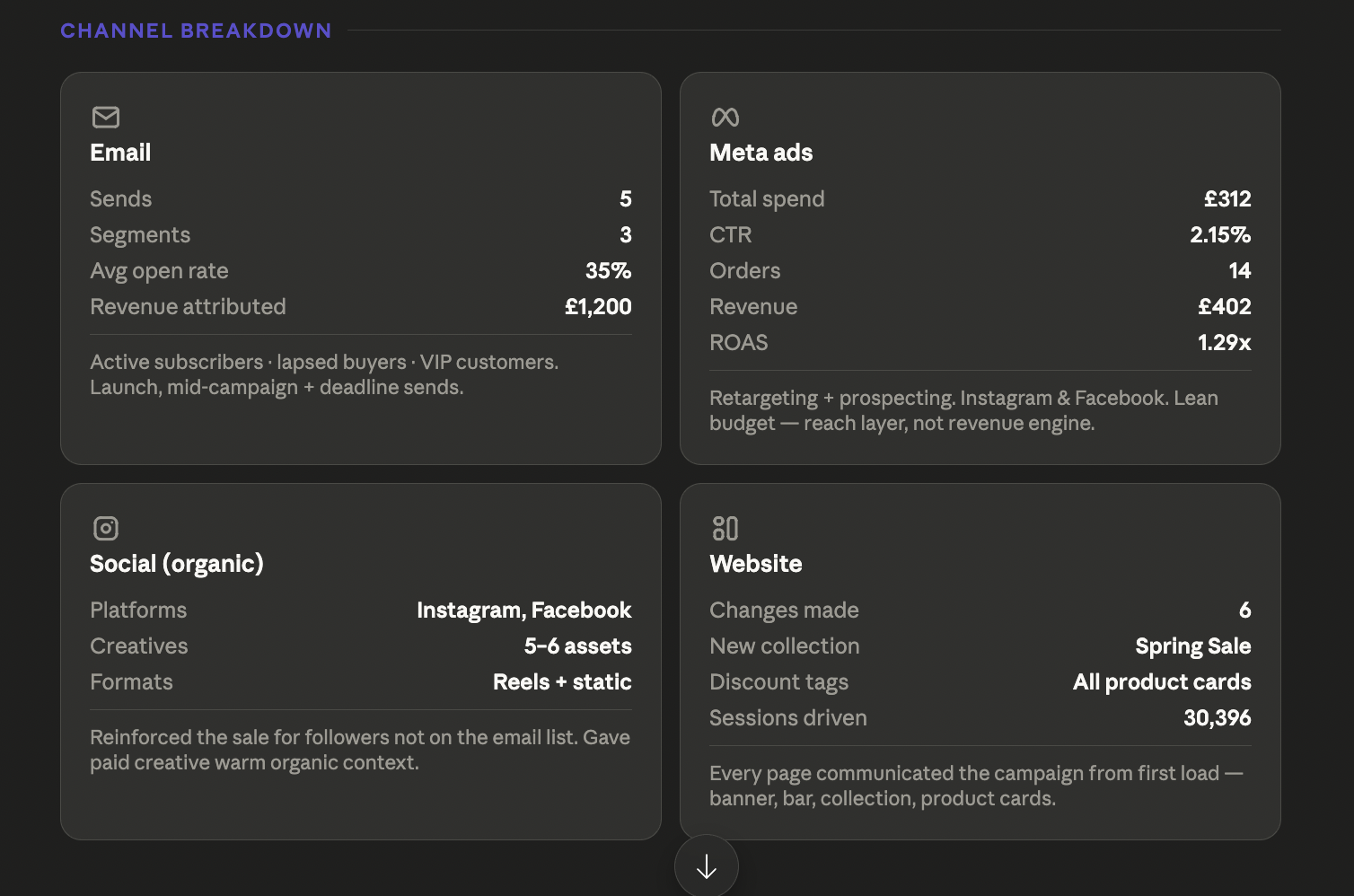
| Email Open Rate | 35% avg | 5 sends · 3 segments |
| Email Revenue | £1,200 | Attributed to email |
Source: Shopify Analytics · Klaviyo · Meta Ads Manager
The Problem: A Brand Ready to Run with Channels That Never Ran Together
Monster Piercing had no awareness problem. Spring is the peak season for piercing jewellery customers to refresh their look, spend more freely, and experiment with new styles. The audience was there. The product was there. The email list was there.
What was missing: coordination. The email might go out on a Tuesday. A social post might follow on Thursday. Meta ran when the budget was available. None of it was timed together, none of it told the same story.
The question: Could 14 days of every channel saying the same thing at the same time produce measurably different results than what they'd done before?
What We Knew Before We Built Anything
15 days of research before a single creative went live.
Baseline data: We pulled the 14 days before launch (Mar 10-23) to set the target.
Average daily revenue: £1,328.
Total: £18,600.
That was the number to beat and the benchmark for the before/after comparison.
Competitor scan: UK jewellery competitors were running 10-15% discounts with generic seasonal copy. 25% sitewide created real urgency and sat far enough above market to make the offer undeniable without feeling like a clearance event.
Email architecture:
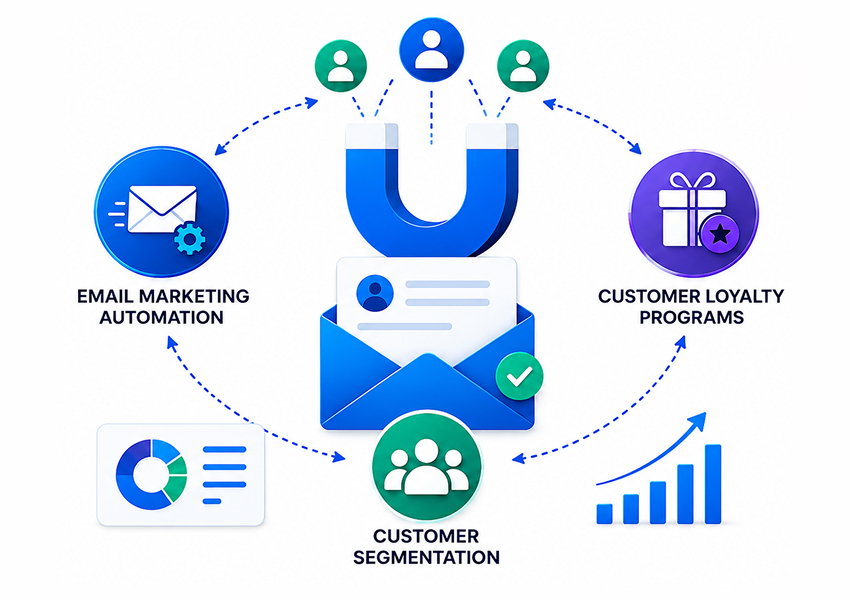
5 sends across 14 days: launch, product spotlight, mid-campaign push, urgency, and last call.
3 segments: Lapsed buyers, VIP customers, General subscribers
Each with a different message angle. The send calendar and narrative arc were mapped before any copy was written.
Budget decision: Meta got £312. Not to acquire cold customers, but to retarget warm ones, people who'd seen the email or visited the site but hadn't bought yet. Email and organic carried the campaign. Paid was the follow-up layer.
What We Built
Website: 5 Changes Before Launch Day
Every page on the site had to communicate the sale from the first scroll.
1. Announcement bar: 25% off across every page for the full 14 days, a constant, unavoidable reminder of the offer.
2. Homepage primary banner: Built specifically for the campaign. Not repurposed new creative, campaign-specific copy.
3. Secondary banner + promo block: A scrollable second banner and an additional homepage promotional block kept the sale visible below the fold.
4. Dedicated Spring Sale collection: Created as the landing page for all email links and ad traffic, one destination, no confusion.
5. Discount tag on every product card: 25% off shown at browse level, sitewide, so the buying decision happens before the product page.
Email: 5 Sends, 3 Segments
35% average open rate across all five sends is strong for a promotional cadence.
The sends ran a deliberate arc: launch excitement → product education → social proof → urgency → last chance.
Each segment (lapsed, VIP, general) received a different subject line and angle, but the same offer.
On attribution: £1,200 is the email's direct last-click revenue. Email's bigger contribution was reach and timing, which drove the majority of the 30,396 campaign sessions at zero incremental cost per click. Last-click attribution understates that role significantly.
Meta Ads: £312 Budget, Retargeting Only
Two audiences: email openers who hadn't bought, and site visitors from the prior 30 days. No cold prospecting, the goal was to stay visible to warm audiences who'd already seen the offer and hadn't converted. £402 in directly attributed revenue at £312 spend. The ROAS looks thin in isolation; it wasn't designed to look good on its own.
Social (Organic): Instagram + Facebook
5 to 6 assets: Reels and static posts across both platforms, zero paid boost. Posts gave the campaign visual presence for followers who weren't on the email list, and reinforced the offer for anyone who saw the email and then checked social before deciding. Supporting layer, not a revenue driver, but part of the coordinated picture.
BEFORE VS AFTER - 14-DAY COMPARISON
DAILY REVENUE - CAMPAIGN PERIOD VS PRIOR PERIOD
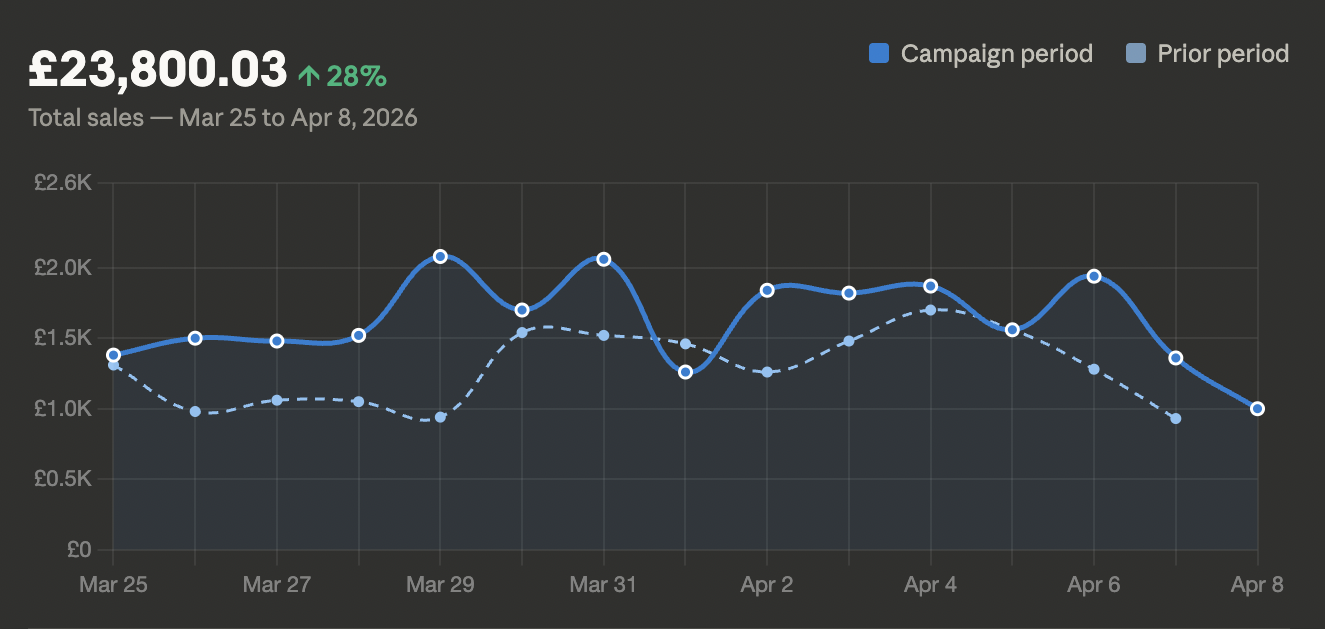
Source: Shopify Analytics · Mar 10-23, 2026, used as comparison period
What the Numbers Say
Before (Mar 10-23): £18,600 revenue · 763 orders · baseline 14-day window
After (Mar 25-Apr 8): £23,800 revenue · 1,113 orders · 30,396 sessions
The +28% revenue lift came from more orders, not bigger baskets. +46% order growth on the same audience tells you the 25% discount drove volume from buyers who were already considering they just needed a reason and a deadline. That's what a coordinated campaign creates.
30,396 sessions at £312 in paid spend means the vast majority of traffic was organic: email opens, direct, and social. The campaign proved its own model paid amplifies, but organic does the work.
CHANNEL BREAKDOWN
The Takeaway
Monster Piercing didn't get a bigger budget or a new product. They got coordination.
The same offer hit the same audience across email, website, paid social, and organic on the same day, with the same message. That's what turned a spring discount into a £23,800 campaign result. Most Shopify brands run channels in parallel but not together. That gap is where campaigns win or lose.
15 days of planning. 14 days of execution. Every channel. One story.