






01/04
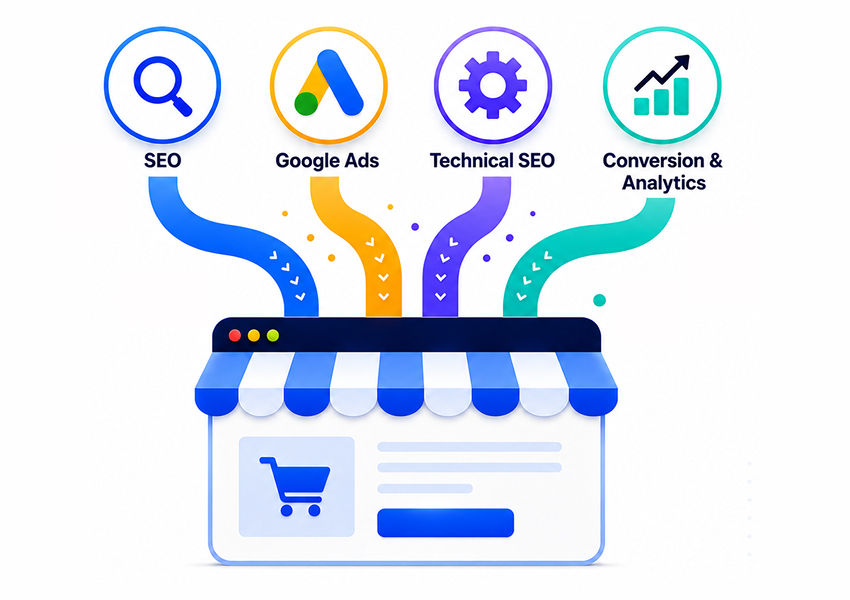
Impact audit
Lighthouse, Core Web Vitals, funnel drop-offs, app stack review, crawl health, before scoping anything.
What changes
You find out where the revenue is leaking before you pay anyone to build.
 SEO Schema & JSON‑LD
Rich snippets & structured data
All in #1 AI SEO & AEO
AI meta tags, blogs & schema
SEO Audit Optimizer
Fix technical SEO issues fast
SEO Speed Optimizer
One-click image & page speed
Currency Converter
Geo-redirect & local currency
Multi Announcement Bar
Promos, countdowns & banners
Frequently Bought Together
Frequently bought together & AOV
Pricing By Country
Country-specific price control
Google Shopping Feed
Sync products to Google Ads
SEO Schema & JSON‑LD
Rich snippets & structured data
All in #1 AI SEO & AEO
AI meta tags, blogs & schema
SEO Audit Optimizer
Fix technical SEO issues fast
SEO Speed Optimizer
One-click image & page speed
Currency Converter
Geo-redirect & local currency
Multi Announcement Bar
Promos, countdowns & banners
Frequently Bought Together
Frequently bought together & AOV
Pricing By Country
Country-specific price control
Google Shopping Feed
Sync products to Google Ads
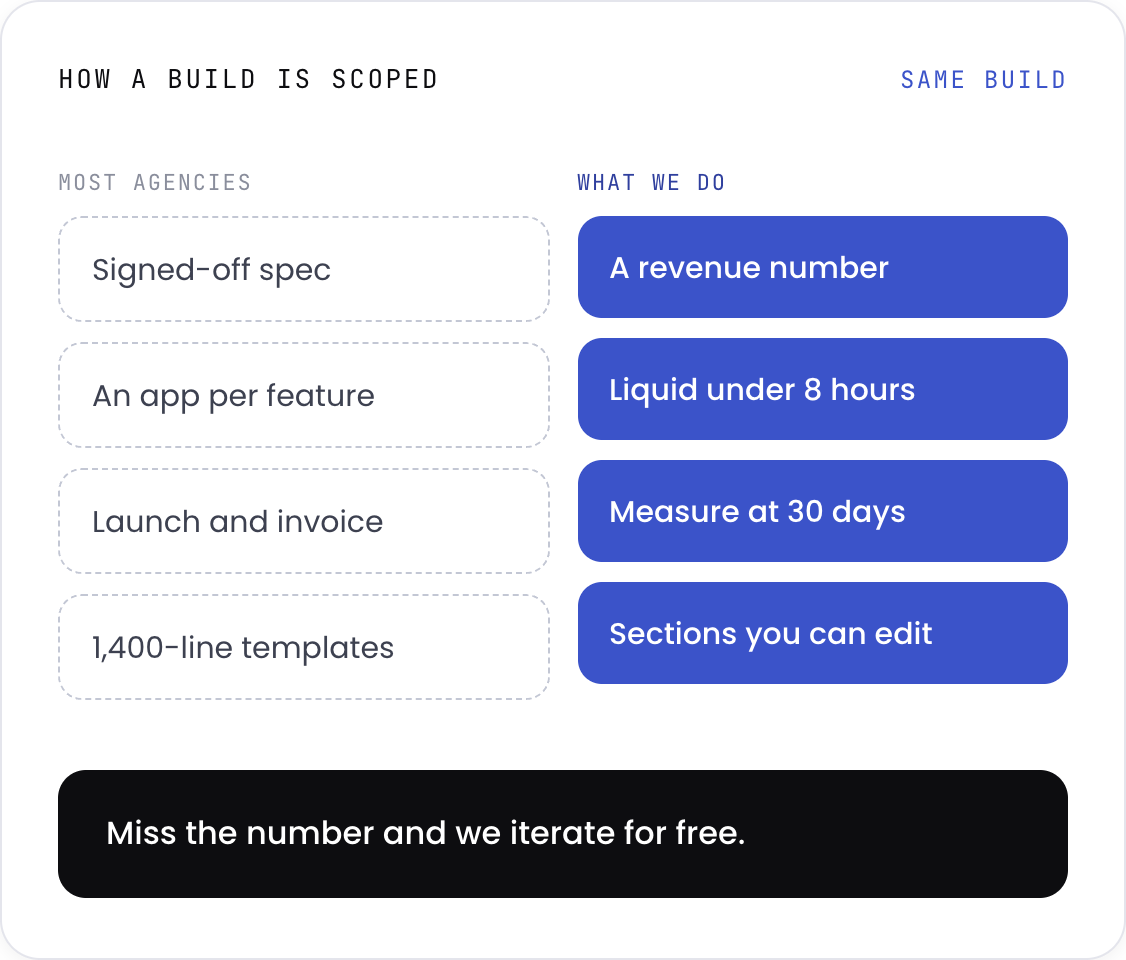
Most agencies build to a spec and invoice on launch. We put a number on the build before code ships, then check it 30 days later. If it misses, we iterate for free.










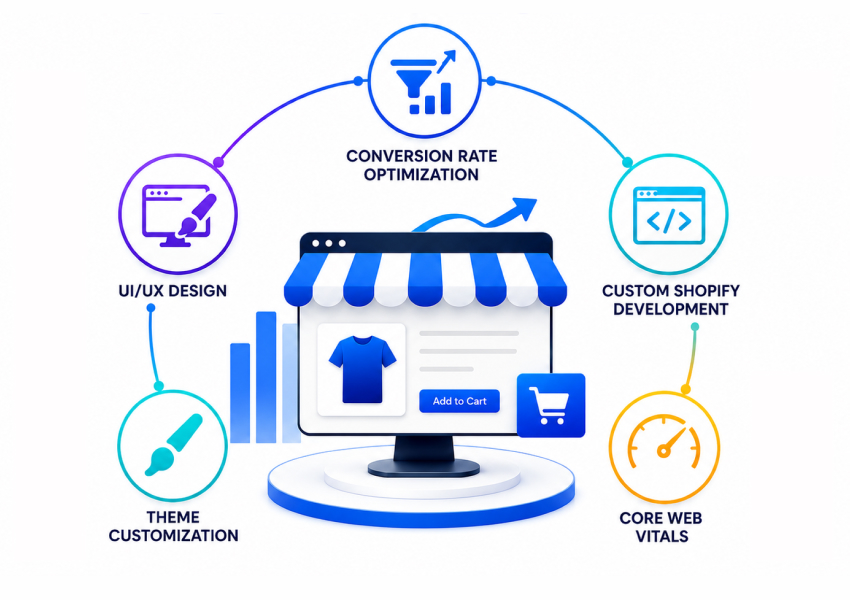
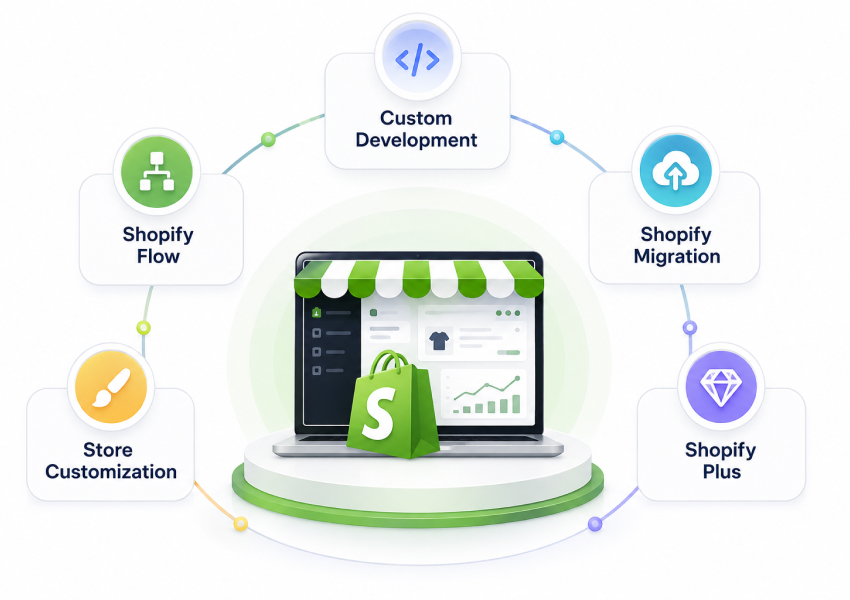
Custom Shopify development is building the parts of your store the platform does not give you. Not a theme you bought and recoloured. Bespoke sections, checkout logic, private apps, automation, and the integrations that make your operation actually work.
The difference from general web development is that Shopify decides a lot for you. You cannot touch checkout unless you are on Plus. Apps are easy to install and quietly cost you page speed. Liquid renders server-side, which most developers coming from React get wrong. Shopify custom development is knowing which of those constraints to work inside and which to build around, and the answer changes depending on what the feature is actually worth to you.
Each pillar has a named outcome you can check against.
Lighthouse, Core Web Vitals, funnel drop-offs, app stack review, crawl health, before scoping anything.
A projected number attached to the build. Lift LCP by 1.5s, conversion rises by X. Agreed before code.
Two-week sprints, daily updates, staging preview on day 7, delivered day 14. You sign off before anything goes live.
Performance measured against the projection. If it underperforms, we iterate at no extra cost.
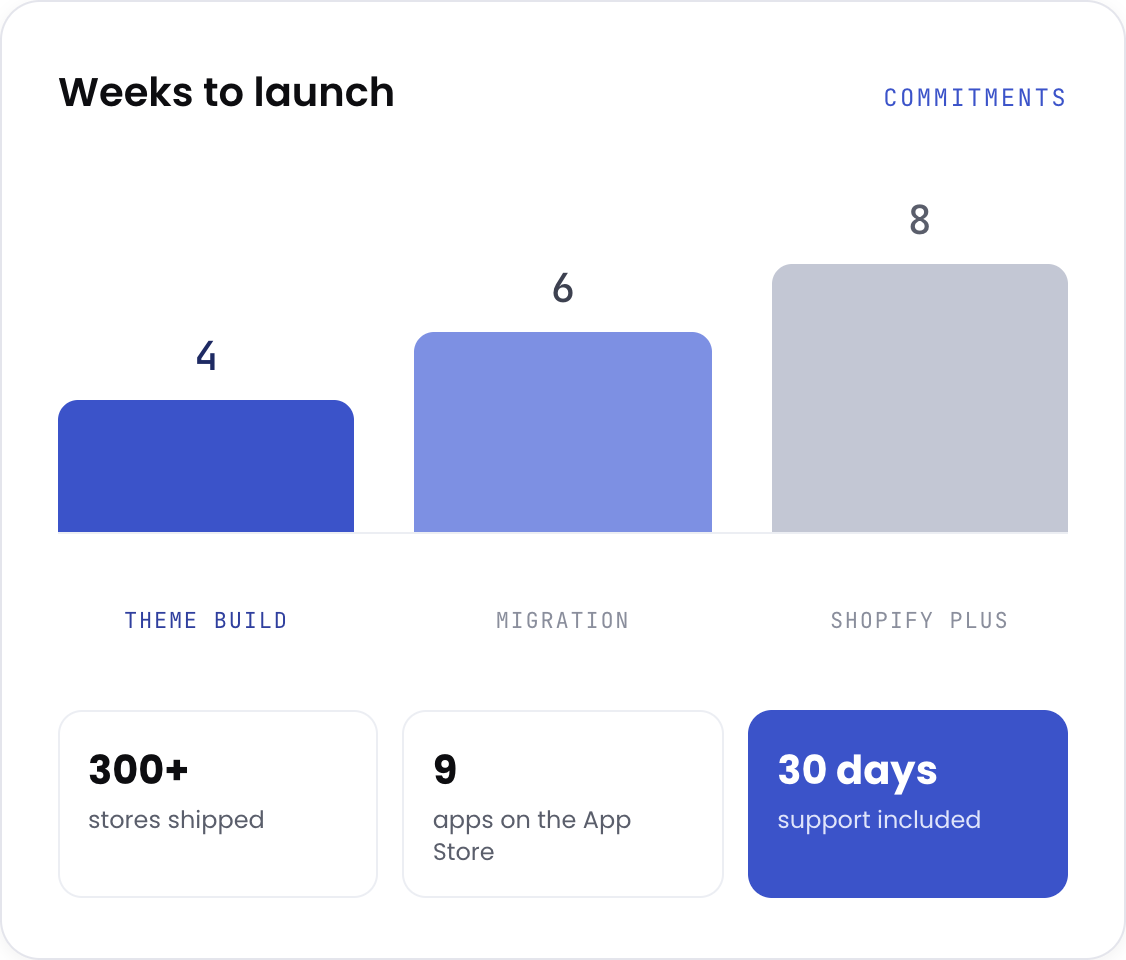
Every build includes a 30-day post-launch support window at no extra cost.
The list never says what any of it is worth.
An agency sends a proposal with twenty line items and a price. Everything gets signed off, everything gets built, nobody checks whether conversion moved. If it did not, that becomes your problem at the next renewal.
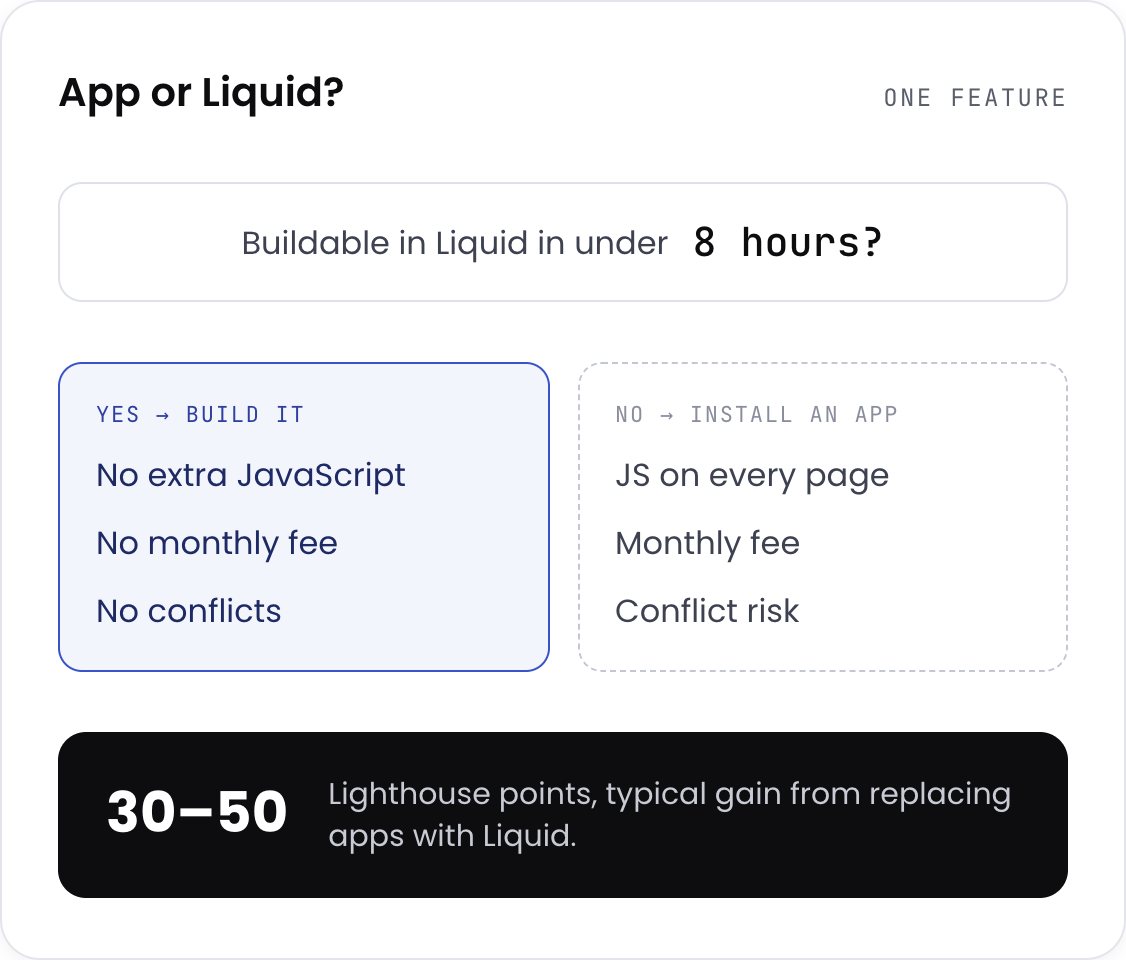
The threshold that matters most: if a feature can be built in Liquid in under eight hours, it should never be an app. Apps add JavaScript on every page load, a monthly fee, and conflict risk with whatever you install next. On stores with a Lighthouse score below 60, replacing apps with native Liquid is usually the single highest-value build available, and it typically moves Lighthouse 30 to 50 points.
Webrex operates nine apps on the Shopify App Store, used by over 300,000 merchants. That is unusual for a development agency, and it changes the work.
Webrex: All in #1 AI SEO & AEO
Webrex: SEO Audit Optimizer
SEO Schema & JSON‑LD
Webrex: SEO Speed Optimizer
Currency Converter
Webrex Multi Announcement Bar
WB: Frequently Bought Together
Webrex ‑ Pricing By Country
Webrex Google Shopping Feed
Most agencies offering Shopify app development have never shipped one to the App Store. We ship nine and support them daily.
View all appsCatalogue, margins, bestsellers, customers and competitors. We audit the live store and read your analytics. You get a Discovery Brief before anything else happens.
Every gap labelled Critical, High, or Enhancement, ordered by revenue impact rather than by how easy it is to build. You approve the task list before we start.
Two-week sprints. Daily updates. Staging preview on day 7, full delivery on day 14, then a review window. Approved work goes live immediately rather than waiting for a batch.
Redirects confirmed, 48 hours of monitoring on speed, indexing, and checkout. Loom training so your team can edit sections without a developer. 30 days of support included.
Timelines are commitments, not estimates: standard theme build 4 weeks, migration 6 weeks, Shopify Plus 8 weeks.


Most people who hire a Shopify developer are trying to solve one of two things: the platform will not do what they need, or the workaround they installed is now costing them money. Both are worth a call. Neither needs a rebuild by default.
If you are in the second list, say so on the call. We will point you to the right page, even if it is a cheaper one.