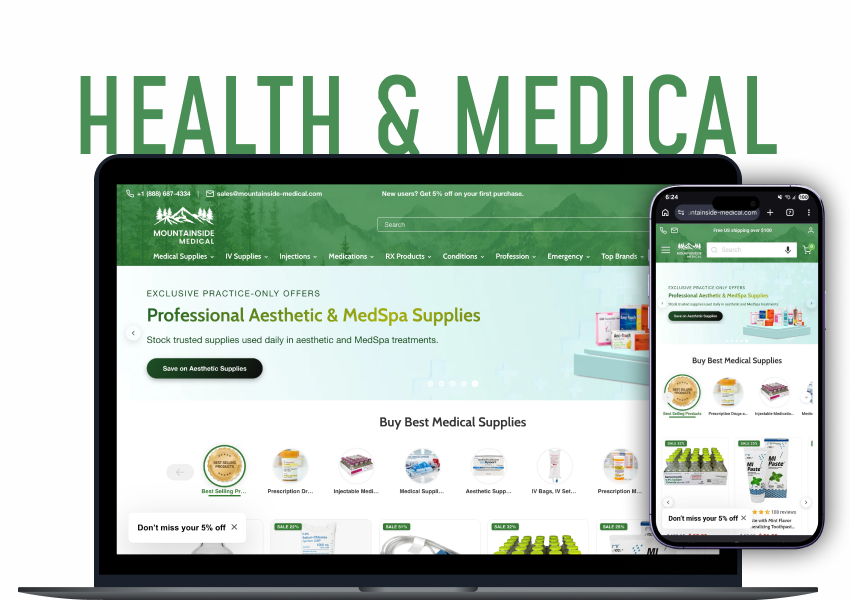


- Client: Mountainside Medical — Shopify, medical supplies and equipment (USA, B2B + B2C)
- Service: Full-store seasonal campaign build — design, countdown, product pages, cleanup
- Campaign: Independence Day Sale, Jun 22 – Jul 4, 2026 (13 days)
- Offer: Extra 10% off orders above $100
- Compared to: The two weeks immediately before launch
The Snapshot
Most stores swap one banner for a holiday sale and call it done. We did the opposite: we turned Mountainside Medical's entire store into the 4th of July for 13 days, then reset it clean the moment it ended.
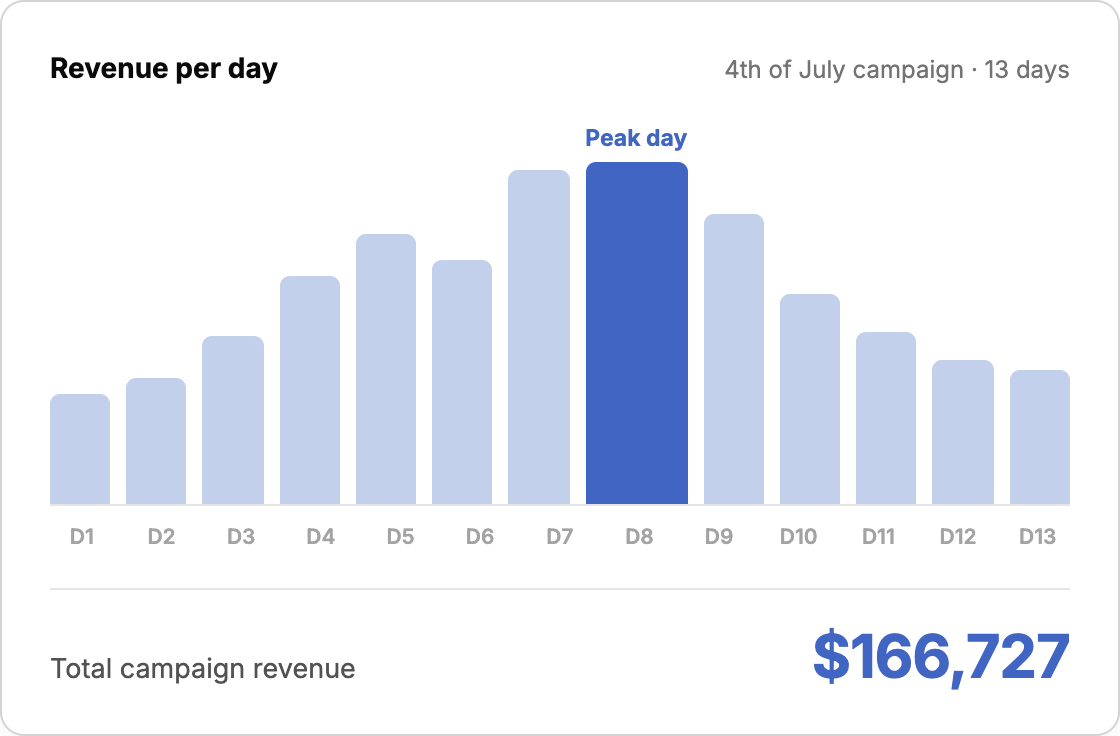
$166,727 in revenue, 1,288 orders, and 546 brand-new customers won — with under 10% of revenue given back as discount.
| Metric | Result | Change |
|---|---|---|
| Total Revenue | $166,727 | +18.5% vs prior 2 weeks |
| Total Orders | 1,288 | +26.8% vs prior 2 weeks |
| New Customers | 546 | won in 13 days |
| Orders that claimed the deal | 44.4% | crossed the $100 threshold |
| Discount given back | under 10% | of total revenue |
| Peak days | Jul 1–2 | $19.9K then $21.2K into the holiday |
Source: Shopify Analytics
The Strategy: Why a Store-Wide Shopify Sale
The thinking was simple. A sale only works when the whole store feels like a sale, not just the homepage. The moment a shopper lands on a product page, a collection, or the cart and forgets there's an offer running, the sale starts leaking money on every click.
So for all 13 days the goal was one thing: make the deal impossible to miss and impossible to forget, no matter where someone looked.
That mattered here because Mountainside sells medical supplies to both everyday buyers and healthcare facilities — an audience that cares about trust and compliance as much as price. The store had to feel exciting and urgent without ever looking less than professional.
The offer itself was simple: an extra 10% off orders above $100. The threshold keeps the discount under control and nudges shoppers to add a little more to unlock the savings.
What We Built for the Shopify 4th of July Campaign
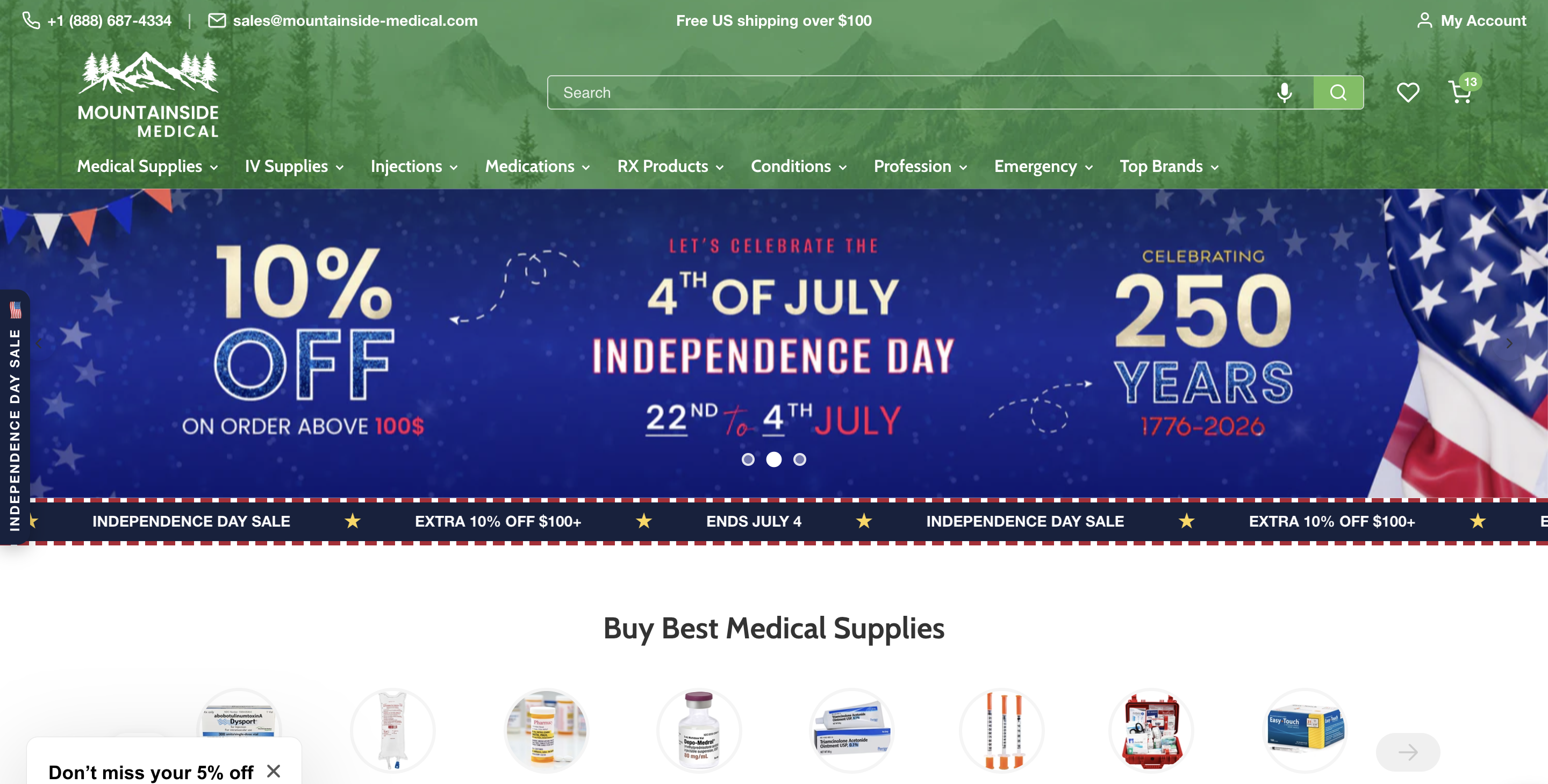
Every page had to communicate the sale from the first scroll. Here's what went live:
Live Countdown Timer
The first thing shoppers see is a bold, patriotic banner with the offer stated plainly and a countdown timer ticking down to July 4. A countdown turns a vague "sale" into a real deadline you can watch shrinking. When it hit zero, it flipped to "Offer Ended," so the urgency was always honest, never fake.
Announcement Bar and Promo Strip
A slim bar at the very top displayed trust and offer messages, such as free shipping and a new-customer discount. Just under the hero, a moving strip repeated the deal in short, punchy lines. Together, they meant the offer and the deadline followed shoppers wherever they looked.
Sticky Sale Tab
A small sale tab stayed pinned to the side of the screen the whole way down the page — a constant, quiet reminder that the clock was running, and a one-click route back to the offer.
Product Cards Built to Sell
This is where most stores leave money on the table, and where we made the biggest change through targeted CRO work. Every card got a sale badge showing the exact discount, review stars for instant trust, the old price crossed out, and a badge showing the final price you'd pay after the offer, so nobody had to do the math. A quantity selector and a clear buy button made it easy to add more and cross the $100 line. Out-of-stock and license-only items stayed clearly marked, so the store looked on sale while staying fully compliant.
Curated Collection Rows
Below the grid, hand-picked rows guided shoppers toward the products most likely to convert, and helped bigger baskets form naturally. The full visual system, from the hero banner down to the badges, came out of the same UI/UX design pass.
The Results: $166,727 in 13 Days
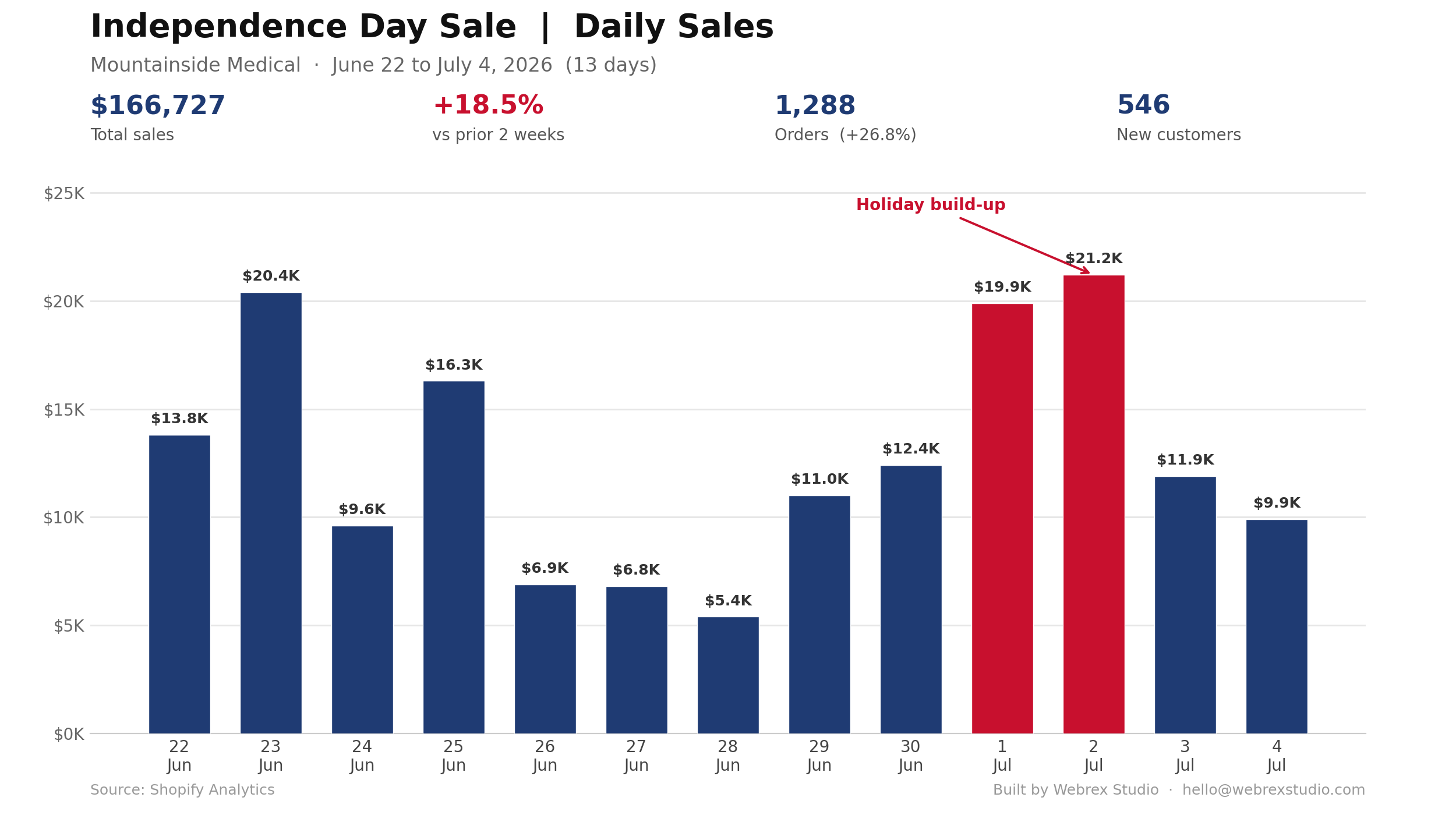
Compared with the two weeks right before: revenue up 18.5%, orders up 26.8%. Nearly a fifth more revenue and over a quarter more orders. Same store, same length of time. The only real change was the campaign.
The daily numbers show the campaign doing exactly what it was built to do. Sales climbed steadily into the holiday, peaking at $19.9K on July 1 and $21.2K on July 2 as the countdown neared zero, then closed strong through the 4th. The deadline pulled buyers forward instead of letting them drift.
Two numbers tell the rest of the story.
First, the offer stayed disciplined. Nearly half of all orders (44.4%) exceeded the $100 threshold to claim the deal, yet the store returned under 10% of revenue to do so.
Second, the campaign grew the customer base, not just the day's total. 546 brand-new customers bought in under two weeks. New shoppers start smaller, so average order value dipped slightly, but that's a healthy trade: hundreds of new relationships to sell to again, on top of a strong revenue jump.
Why This Shopify Sale Campaign Worked
The offer was everywhere: hero, top bar, promo strip, sticky tab, every product card. A shopper couldn't browse without seeing the deal and the deadline.
The deadline was real, too. A live countdown gave people a reason to buy now instead of "maybe later," and the honest "Offer Ended" state protected the brand's credibility once time ran out.
Price clarity mattered just as much. Each card showed the final price after the discount, so there was no gap between wanting something and knowing what it cost. Removing that friction is one of the simplest ways to lift sales.
None of it broke the rules that keep a medical supply store compliant. Stock limits and license restrictions held throughout, so the urgency never came with added risk.
The Takeaway
A sale isn't a banner. It's a clear offer, a visible deadline, and product pages that actually sell. Line those up and a holiday becomes a revenue event, not just a date on the calendar — worth $166,727 in this case.
It's repeatable, too. The same structure works for Memorial Day, Black Friday, New Year, or any moment worth building around. Build it once, reuse the playbook every season.
Want a campaign like this on your store? We design and build full-store seasonal campaigns for Shopify brands, from the first idea to the countdown to the cleanup afterward.
Source: Shopify Analytics · Campaign live Jun 22 – Jul 4, 2026