


- Client: Mountainside Medical — Shopify Plus, medical supplies (USA)
- Service: Checkout page optimization
- Timeline: Changes live May 27, 2026 · Results measured through June 10, 2026
The Snapshot
In 15 days, with zero extra ad spend, five small checkout changes turned a 60% drop-off into measurable revenue. No rebuild. No new traffic. Here is what moved.
| Metric | Before (May 12–26) | After (May 27–Jun 10) | Change |
|---|---|---|---|
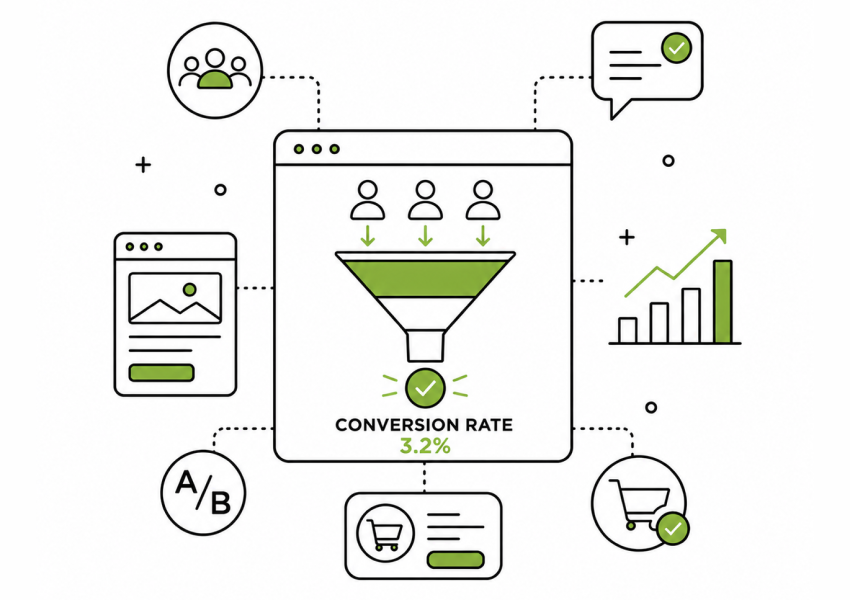
| Checkout completion rate | 39.44% | 44.89% | +13.8% |
| Checkout abandonment | 60.56% | 55.11% | −9.0% |
| Average order value | $143.07 | $151.20 | +5.69% |
The Problem: Won the Customer. But Lost Them at Checkout.
Mountainside Medical had no traffic problem. It had a finish-line problem.
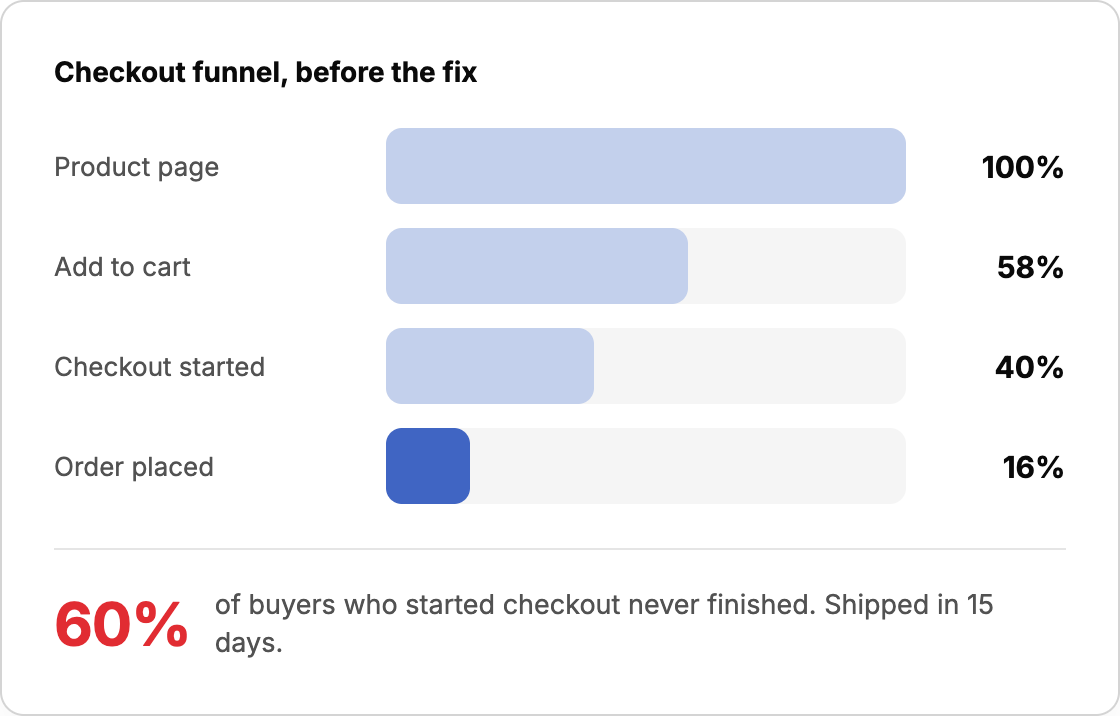
6 out of 10 shoppers who reached the checkout page left without buying. Abandonment sat at 60.56%. For a store doing 1,400+ orders a month, that is real money walking out at the very last step.
The client's question was simple: Can you fix our checkout without spending more on ads?
We said YES.
What We Changed: Five Changes That Reduced Checkout Abandonment by 9%
We did not rebuild the checkout. We made five targeted changes based on how real visitors were behaving on the page. Data, not guesswork, drove these changes.
1. Moved the upsell out of the buying flow
The upsell block was interrupting the purchase. We moved it to the right rail on desktop and to the bottom on mobile. Buyers complete the purchase first, and then see the offer.
2. Added trust badges where hesitation happens
Medical purchases are sensitive. Shoppers want to know their payment and personal data are safe, so we placed trust signals at the exact point of doubt.
3. Auto-applied discounts
Session recordings showed shoppers hunting for a discount-code field, then leaving to search for codes. We removed the hunt — eligible discounts (like first-order offers) now apply automatically.
4. Added more payment methods
We expanded payment options to cut the "my payment method isn't here" errors.
5. Cleaned up product warnings
Required medical warnings looked alarming and broke trust at the worst moment. We reformatted them to stay compliant without scaring buyers away.
The Results After 15 Days
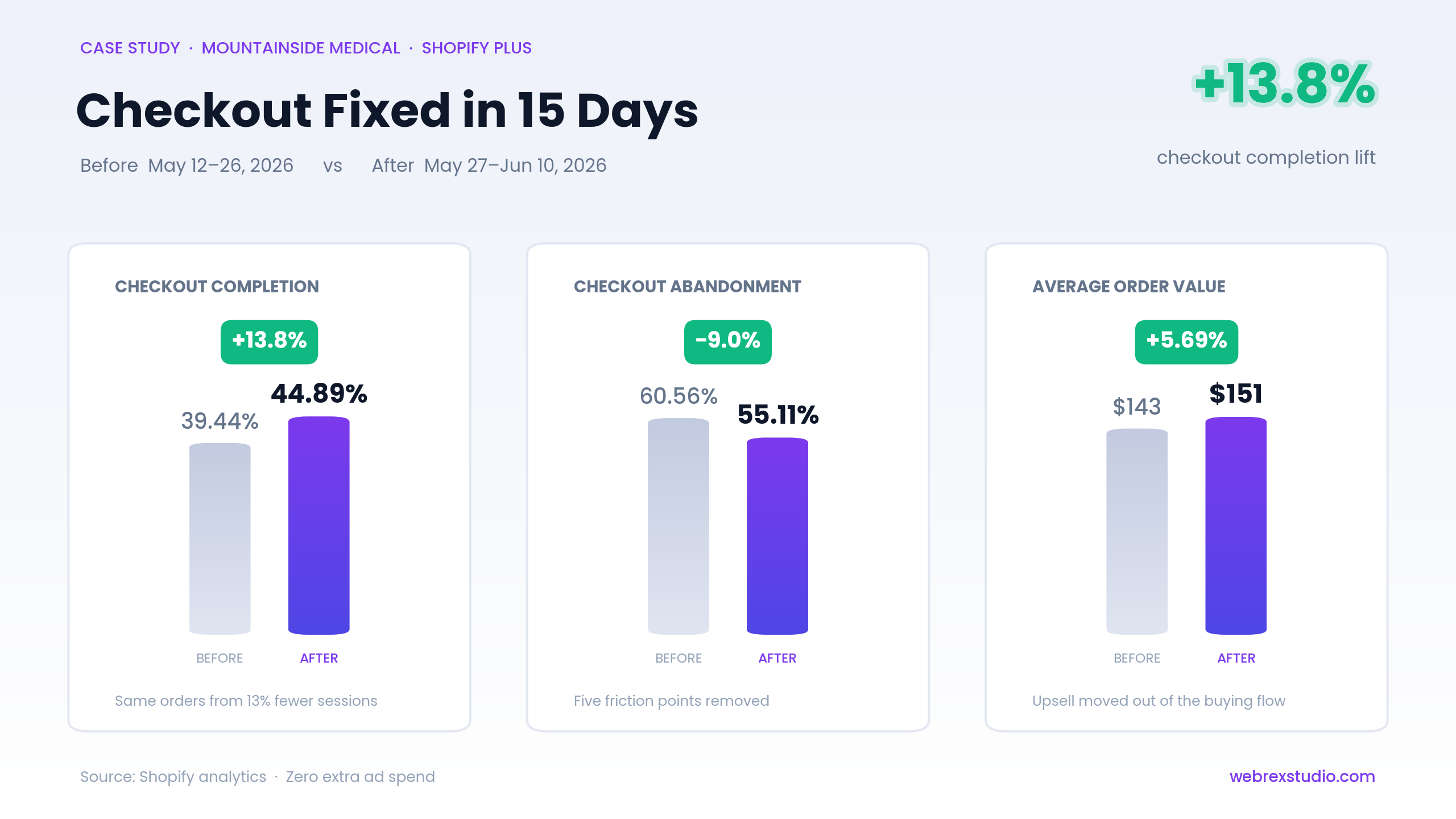
Here is the part those numbers hide:
Traffic to checkout actually dropped 13% in the after period, due to normal seasonal variance. Yet the store produced nearly the same order count: 1,300 orders vs 1,315 before.
Same orders, 13% fewer sessions. That is what it means to increase checkout conversion in practice — you stop paying to refill a leaking bucket.
Where the Gains Came From
The device data tells the story of the upsell move. Every device improved once the upsell stopped sitting in the middle of the buying flow.
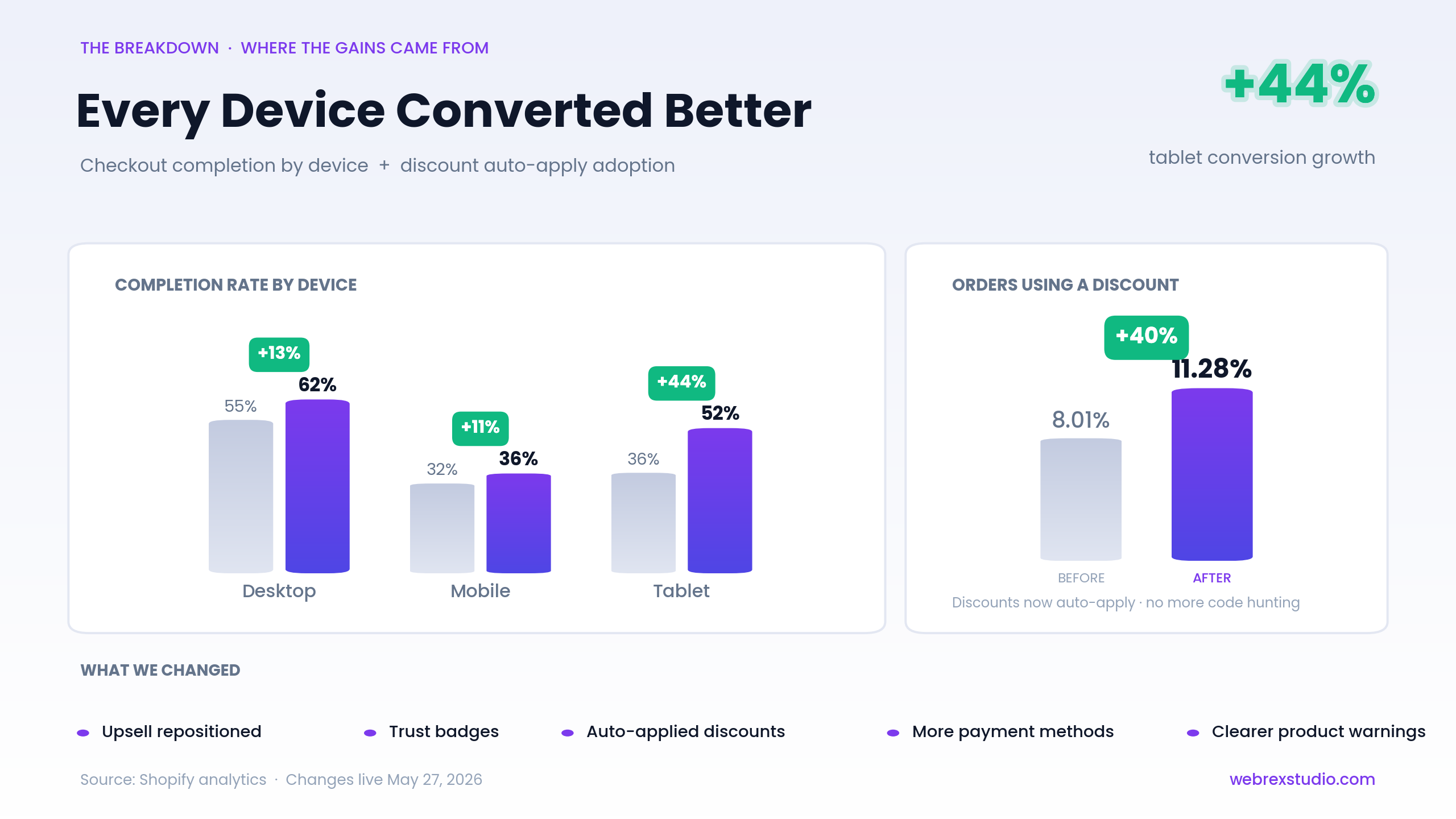
The auto-applied discounts paid off, too: orders using a discount rose from 8.01% to 11.28%. Shoppers who would have left to chase codes (and never returned) now simply complete the purchase.
The best part: AOV rose +5.69% at the same time. Discounts didn't shrink order value — removing friction grew it.
The Takeaway
Five small changes. Fifteen days. No rebuild, no extra ad spend, and +13.8% more buyers crossed the finish line.
The biggest revenue lift is rarely more traffic. It's the buyers already at checkout, waiting for one less reason to leave.
Losing Buyers at Checkout? We'll find out where and fix it.
Source: Shopify analytics · Zero extra ad spend