Best Schema Markup for E-commerce Website
Running an online store means competing on two fronts simultaneously: winning the sale when a shopper lands on your page, and winning the visibility that brings them there in the first place. Schema markup is one of the most direct ways to improve both.
This guide covers the schema types that matter most for ecommerce stores, what each one does, and what it looks like when Google puts it to work.
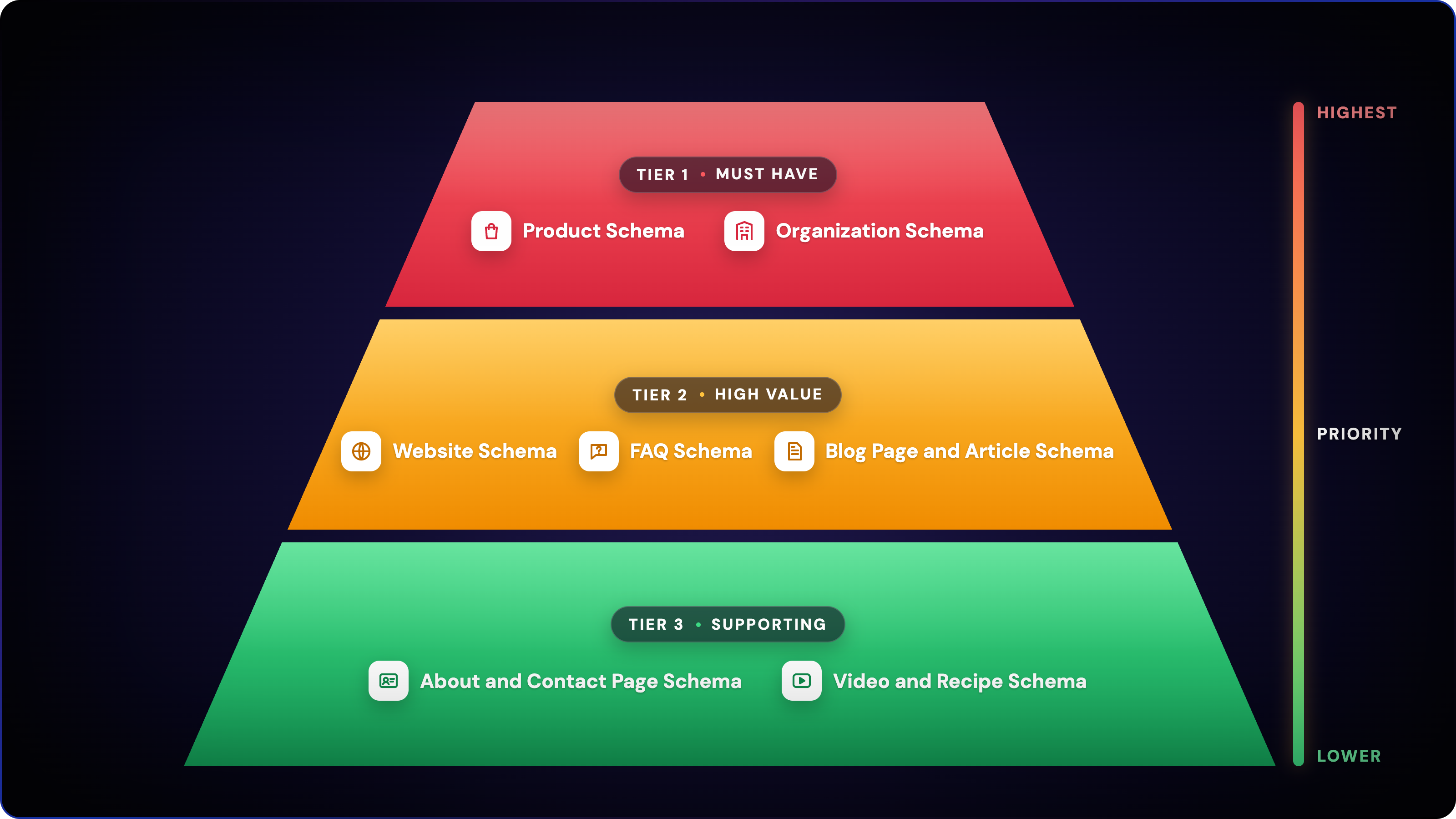
Schemas Covered in This Guide
Why These Schemas Are Selected
These schema types are not picked for rich results alone. Each one serves a role across multiple ways Google surfaces your store:
Rich results
Star ratings, prices, product images, and availability visible in search before a shopper even clicks your link.
Google AI Overview citations
Structured content helps Google identify your pages as credible sources when it generates AI-powered answers at the top of search.
Brand Knowledge Panels
Defined business data helps Google build and display a verified identity panel for your store in search results.
People Also Ask
Clean, machine-readable page structure improves the chances your content surfaces in question-based search formats.
Entity recognition
Google treats your store as a real, documented business, not just a URL, which builds long-term search authority.
Complete store coverage
Together, these schemas cover every major touchpoint: your products, brand, site structure, content, and customer-facing information.
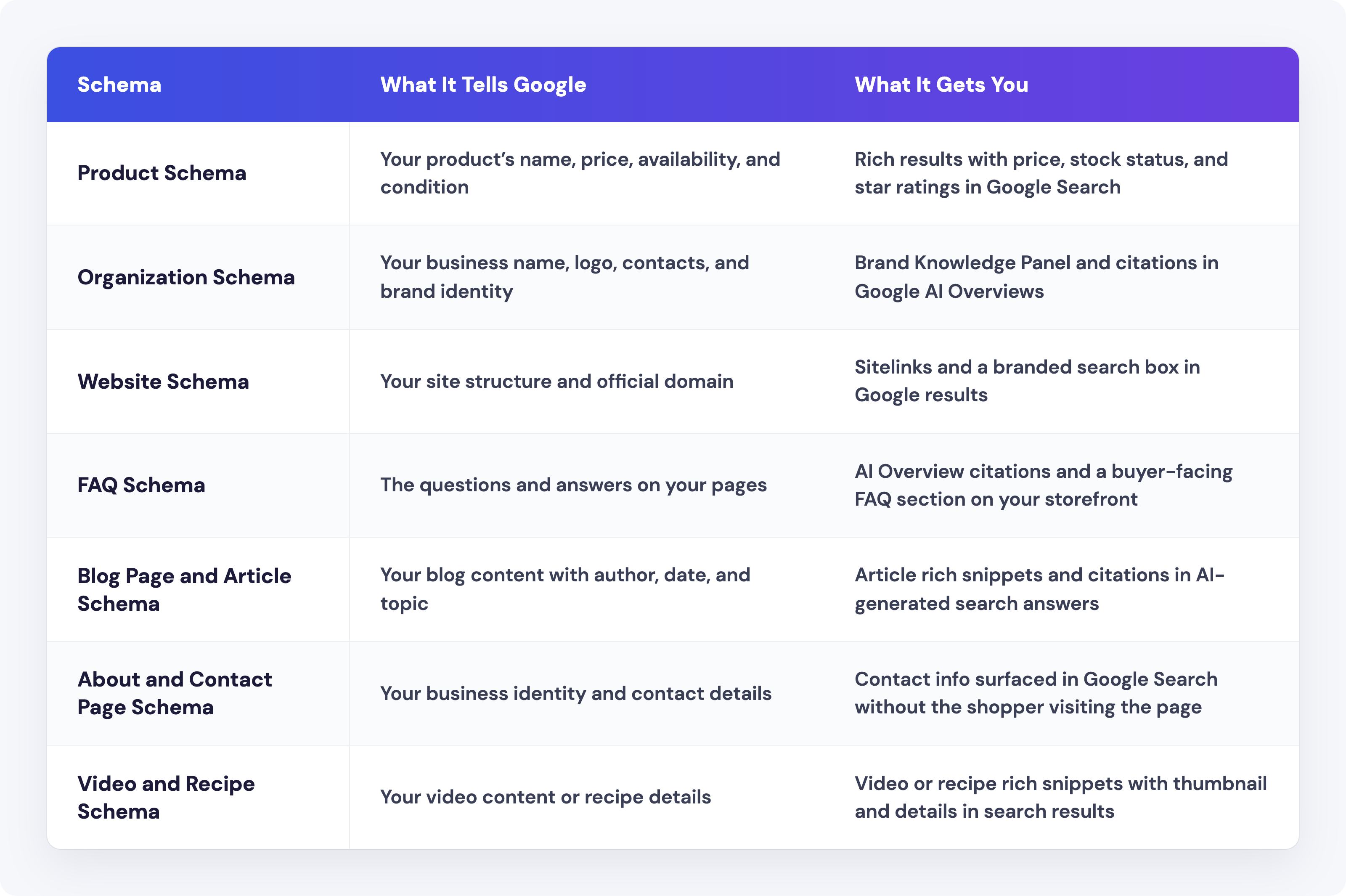
Here is how the seven schema types map to what they tell Google and what they get you in search.
1. Product Schema
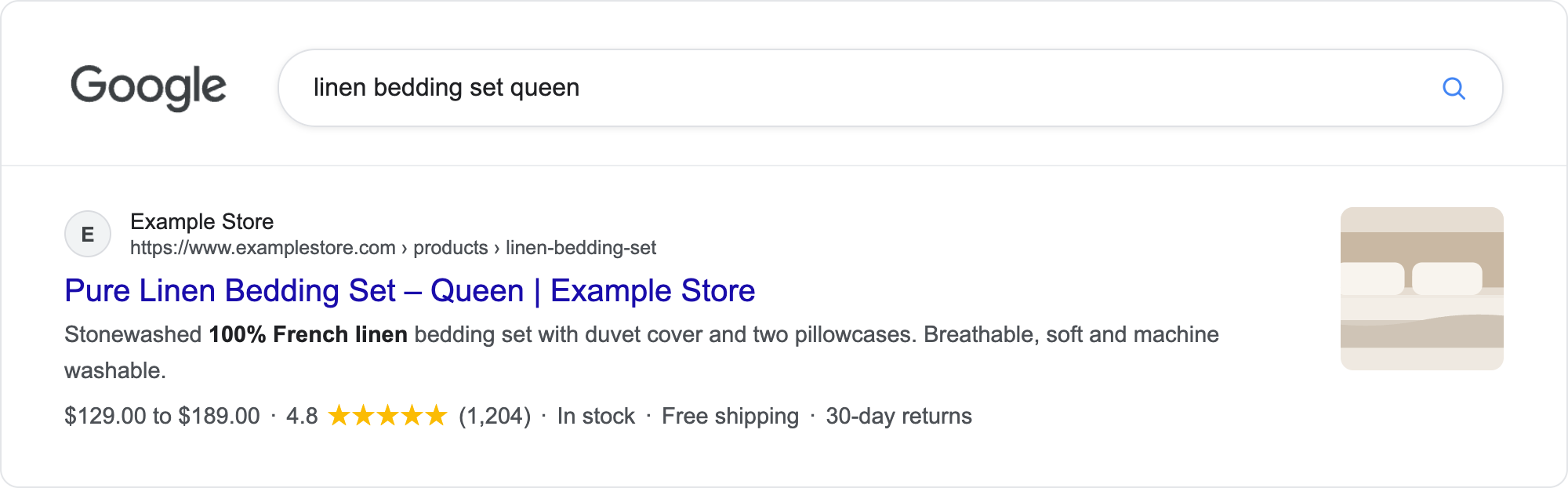
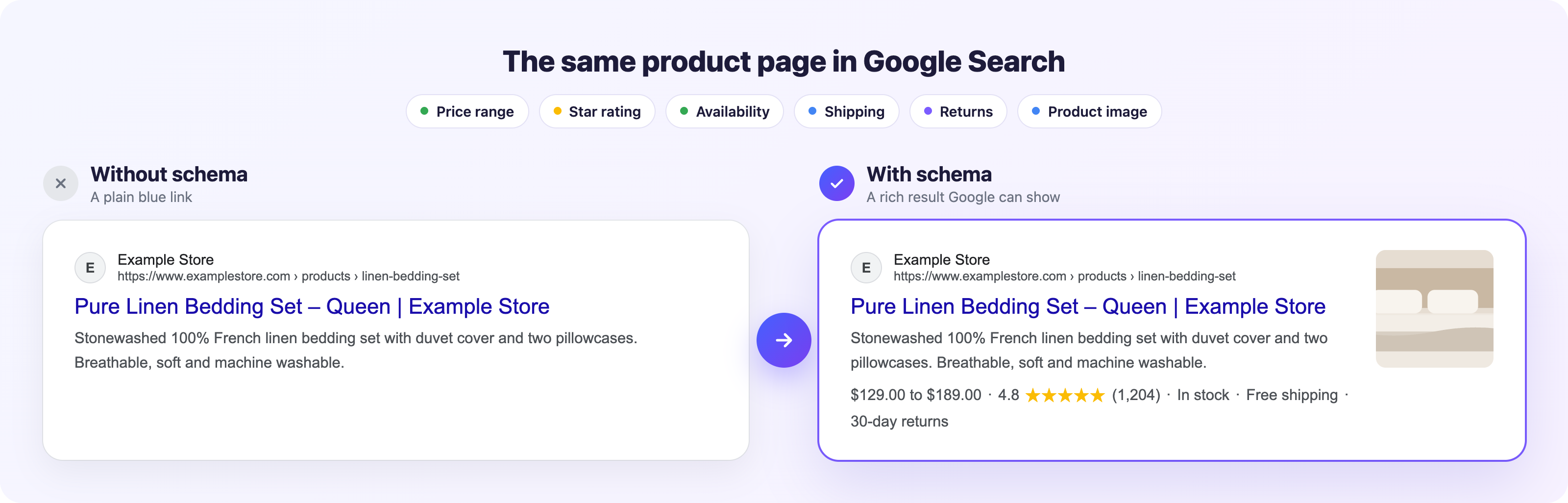
Product schema is the foundation of ecommerce structured data. It tells Google precisely what a product is: its name, description, price, currency, availability, brand, and condition. Without it, your product pages appear as plain text links in search results. With it, Google can render a rich result that shows the product's key details directly on the search page, before a shopper clicks.
Product Merchant
Product Merchant schema is a specific extension of Product schema focused on the selling details of a product. It communicates information like the seller name, shipping options, return policy, and fulfillment conditions. This data feeds into Google's merchant-focused surfaces, including free product listings and shopping results, where shoppers compare products across multiple stores at the same time.
For an ecommerce store, having Product Merchant schema in place means your product's delivery and returns information can appear alongside the price and availability in Google's results, reducing the research a buyer has to do before choosing where to buy.
Review Schema
Review schema adds star ratings to your product pages in Google Search. When a product page includes structured review data, Google can display an aggregate rating (such as 4.8 out of 5 based on 214 reviews) directly beneath the search result.
Star ratings are among the highest-impact visual signals in a search result. A product result with a 4.8-star rating and 200+ reviews commands significantly more attention than a plain link. Review schema makes that rating visible at the moment a shopper is deciding which result to click.
2. Organization Schema
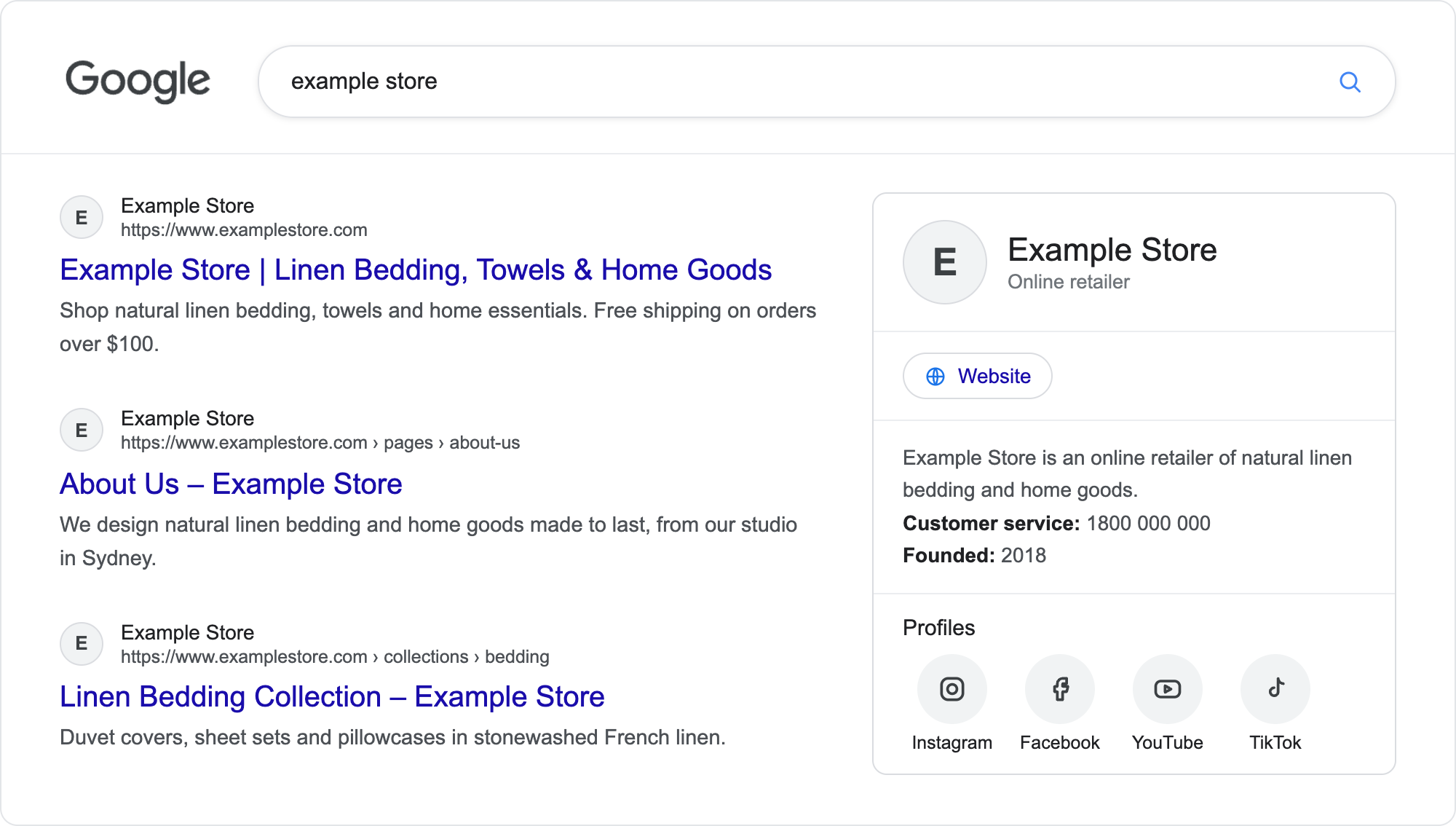
Organization schema establishes your store as a recognized entity in Google's understanding. It defines your brand: the business name, logo, website URL, founding information, contact details, and social media profiles. This is what builds a brand Knowledge Panel, the information card that appears in Google Search when someone searches for your store by name.
Beyond the Knowledge Panel, Organization schema contributes to Google AI Overviews. When someone searches a question about your brand, "Who founded this store?" or "What does this brand sell?", the structured data from your Organization schema is what Google uses to construct an accurate answer and cite your pages as the source.
Local Business Schema
For ecommerce stores that also operate a physical location, showroom, or warehouse with public access, Local Business schema communicates the store's address, phone number, business hours, and geographic coordinates to Google.
This is what enables your location to appear in Google Maps results and in local search results for queries like "furniture store near me" or "shoe shop Gold Coast." It also feeds the business address and hours directly into Google AI Overview responses when someone searches for your contact or location information.
If your store is purely online with no physical presence, Local Business schema is not required, but Organization schema still is.
3. Website Schema
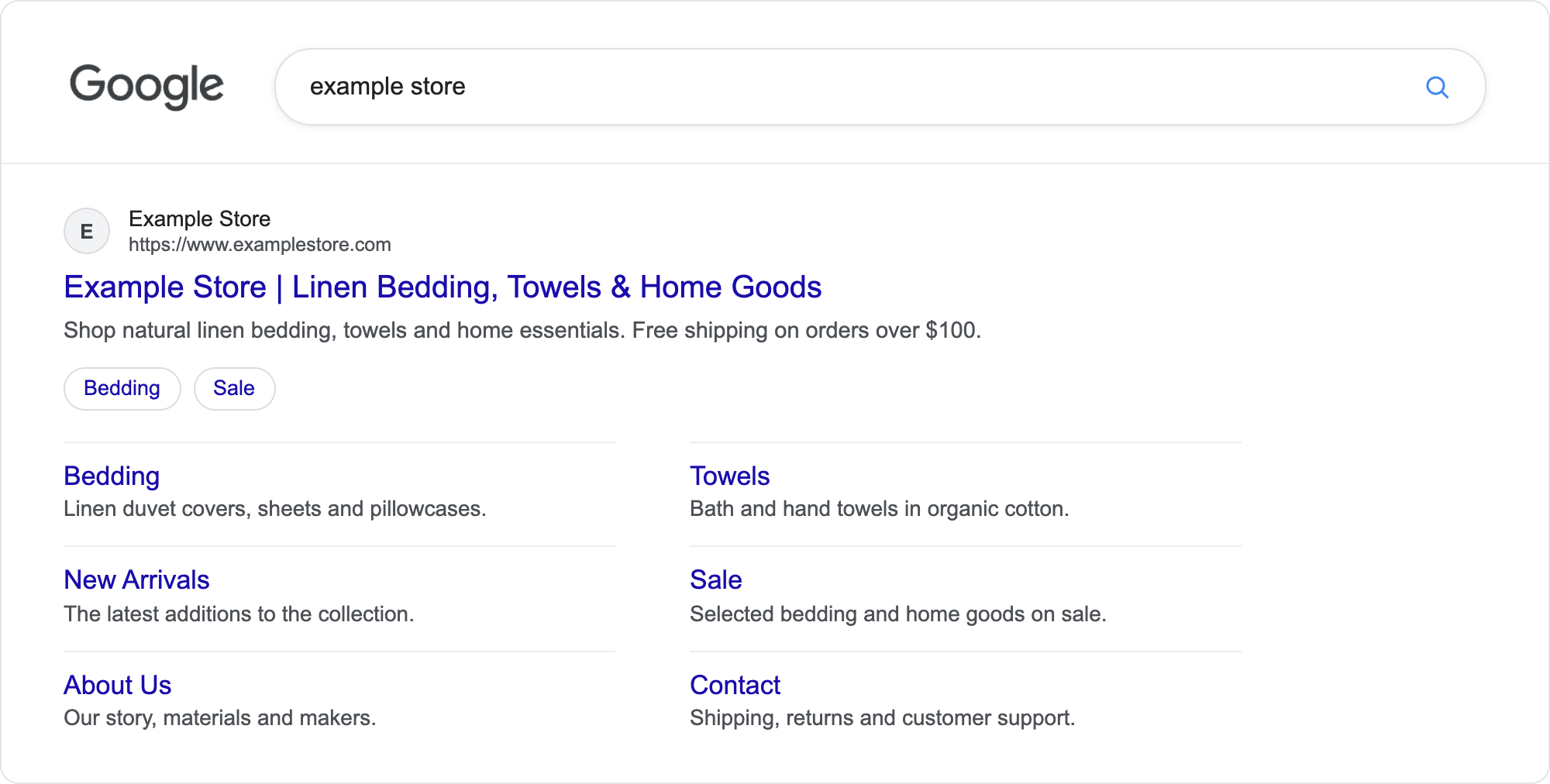
Website schema identifies your domain as an official website with a defined name and URL. Its most visible output is the Sitelinks search box, the search bar that appears within your brand's Google result when someone searches your store name. Shoppers can type a product name directly into that box and be taken to your store's search results page without navigating your site from the homepage.
Website schema also contributes to sitelinks, the additional links that appear beneath your main result for branded searches, such as direct links to your collections, product categories, or key pages. These make your brand result take up more space on the page and give shoppers faster access to the sections they are looking for.
4. FAQ Schema
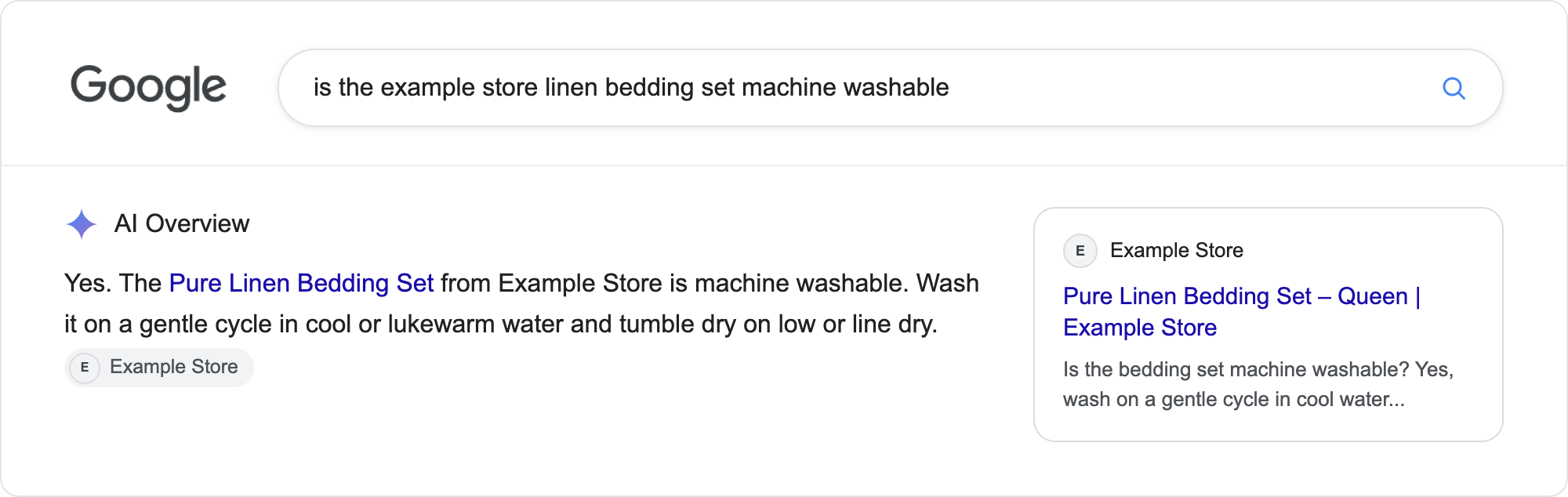
FAQ schema marks up question-and-answer pairs on a page in a way that search engines and AI systems can read directly. While Google reduced the expandable FAQ dropdown format from most commercial sites in 2023, FAQ schema remains one of the most valuable structured data types for ecommerce stores in 2026.
The primary reason is Google AI Overviews. When a shopper asks a product-related question, "What materials is this made from?" or "How long does shipping take?", Google synthesizes an answer from pages that clearly define the question and response in structured format. FAQ schema is that format. Pages with FAQ structured data are better positioned to be cited in AI Overview responses for the queries their products are relevant to.
FAQ schema on product pages also enables buyer-facing FAQ sections to be published directly on the storefront, addressing common purchase-blocking questions before a shopper has to reach out to customer support.
5. Blog Page and Article Schema
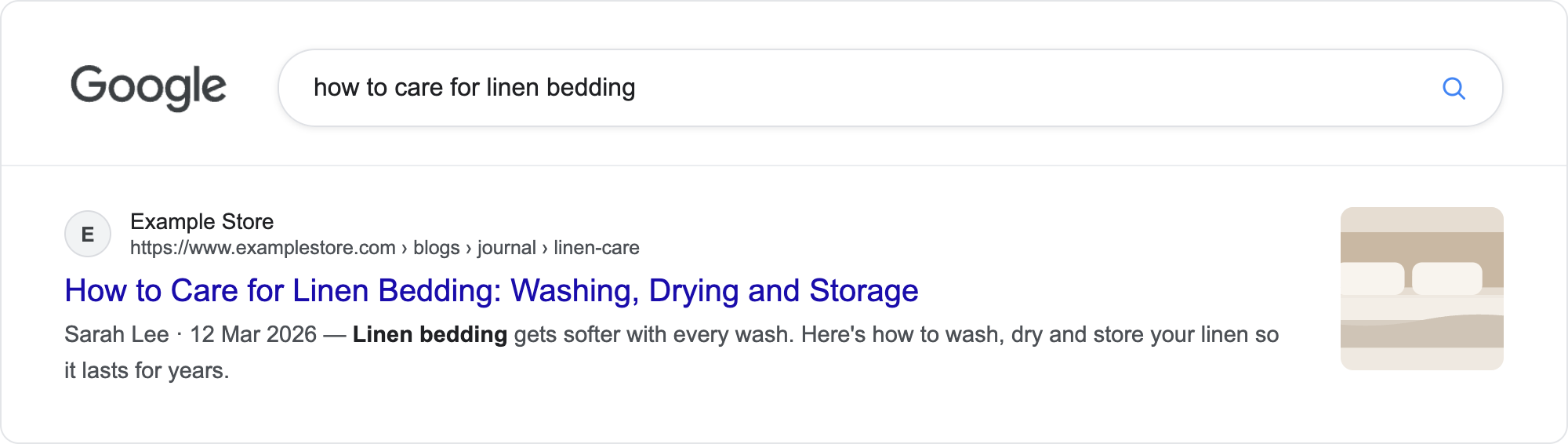
Article schema tells Google that a page is a piece of editorial content: a blog post, a guide, or a news article. It defines the article's headline, author, publication date, and the organization that published it.
For ecommerce stores, a well-maintained blog serves two functions. The first is traffic: informational blog posts capture shoppers who are researching before they buy. The second is authority: consistent, well-structured content published over time builds topical authority that improves how Google ranks your store's product and collection pages.
Article schema amplifies both functions. Blog posts with Article schema are more likely to appear in Google's article carousels and news-style results. Dates and author names in the structured data make posts look current and credible in search results. And blog content with clean markup can be cited in Google AI Overviews when a searcher asks an informational question your post answers.
6. About and Contact Page Schema
Your About page and Contact page are two of the most important pages on your store for establishing brand identity in Google's eyes, and they are frequently overlooked from a schema perspective.
About page schema gives Google a formal, structured description of your business: who you are, what you sell, when the company was founded, and who founded it. This feeds directly into Google AI Overview responses about your brand and contributes to the entity recognition that builds your Knowledge Panel.
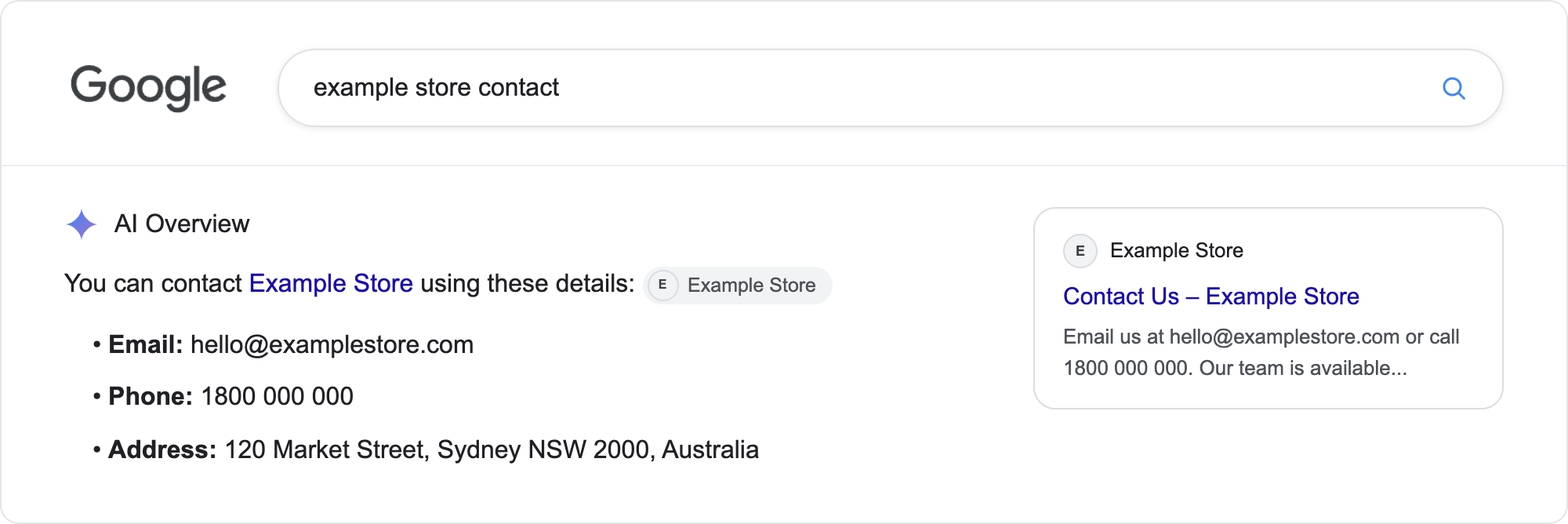
Contact page schema communicates your business email, phone number, physical address, and social handles in a machine-readable format. When someone searches for your contact information, Google can surface those details directly in the search result without the searcher needing to visit the page. This is particularly visible in Google AI Overview responses for branded queries like "contact [brand name]" or "[brand name] phone number."
Together, About and Contact page schema move your store from being an anonymous URL in Google's index to being a documented, identifiable business entity.
7. Video and Recipe Schema (Bonus)
Not every ecommerce store needs Video or Recipe schema, but for those that do, the return is significant enough to include them.
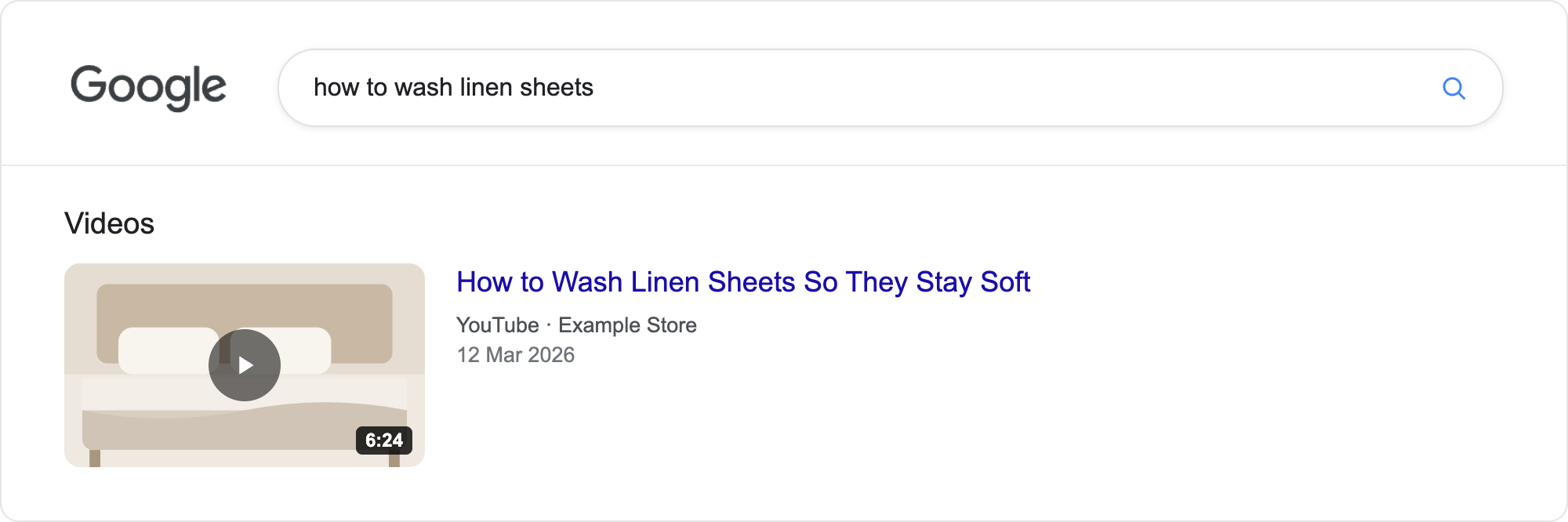
Video Schema applies to stores that publish product videos, tutorials, or demonstrations on their pages. When a product page includes a video with Video schema markup, Google can render a video rich snippet in search results showing the thumbnail, title, duration, and upload date. Shoppers can see the video preview before clicking, which increases the click-through rate for product pages that carry strong visual demonstrations.
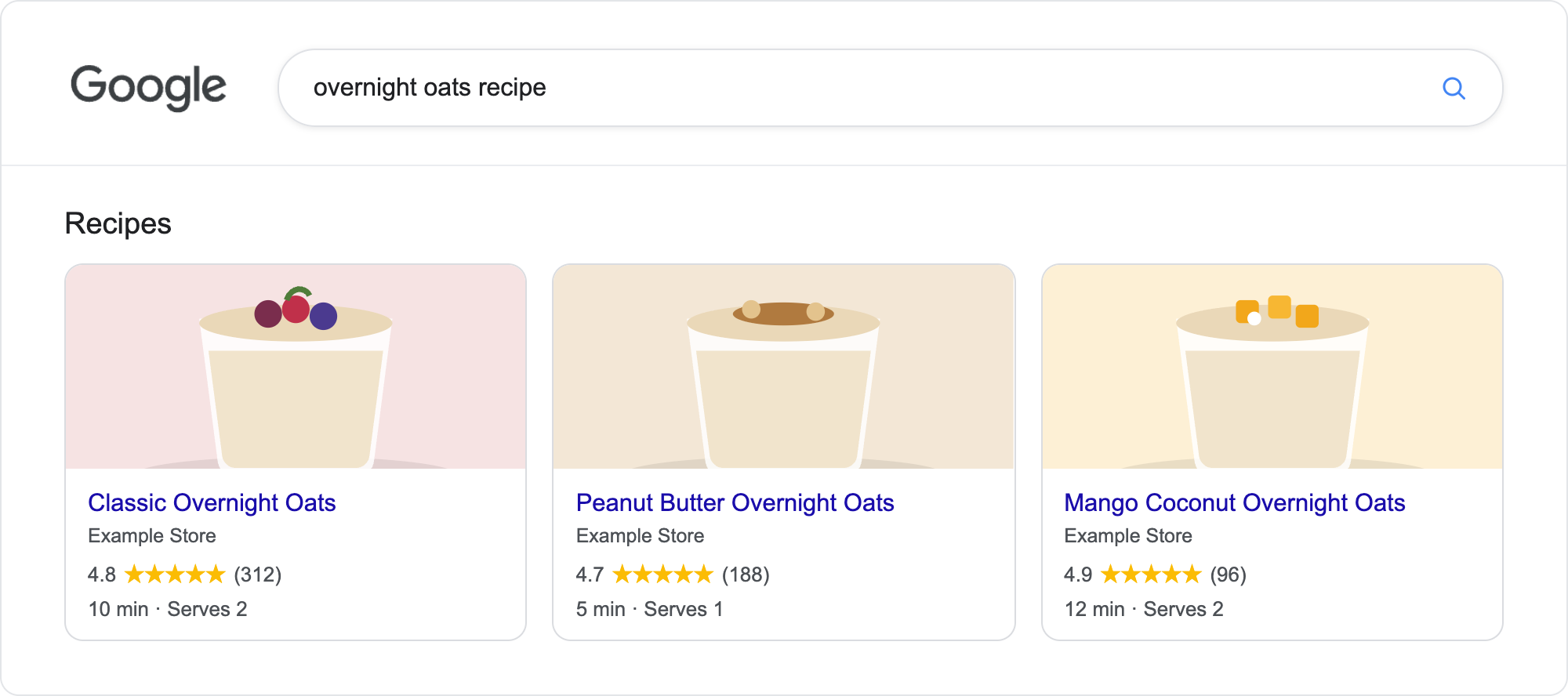
Recipe Schema applies to food, nutrition, beverage, or ingredient-based ecommerce stores. A store selling specialty foods, cooking equipment, health supplements, or kitchen goods can use Recipe schema on recipe content to appear in Google's recipe rich results, which show cooking time, ingredient count, and a photo in a visually distinct result format.
Both schema types are bonus additions. If your store publishes the relevant content, they are worth implementing. If not, the six schema types above already cover the most important structured data your ecommerce store needs.
How to Check If Your Schema Is Working
Once schema markup is in place, verifying it is the next step. Three tools cover this:
- Google Rich Results Test: Google's official tool. Enter any page URL and it shows which rich results the page is eligible for based on its structured data. This is the most direct way to confirm your schema is valid and readable by Google.
- Schema.org Validator: The official structured data validator from Schema.org. It checks whether your JSON-LD markup follows the correct schema format and flags any errors or missing required fields.
- Webrex Rich Results Validation Tool: A Shopify-focused rich results checker built specifically for ecommerce stores. Enter your store URL to see which schema types are active and which rich results your pages are eligible to show in Google Search.
The Full Picture
No single schema type covers everything a Google search can show about your store. Product schema handles product pages. Organization schema handles your brand. Website schema handles site-level recognition. FAQ schema handles buyer questions. Article schema handles your blog. About and Contact schema handles brand identity and contact visibility.
Each schema type fills a specific gap. Implementing all of them means that regardless of what someone searches about your store, whether they are researching a product, looking up your brand, checking your contact details, or reading an AI-generated answer that cites your content, Google has structured data to work with.
That is the difference between a store that shows up as a link and one that shows up as a recognized, trusted source.
Article by

Install SEO Schema
Add SEO Schema & JSON‑LD to your Shopify store in one click. Try it free and start optimizing your conversions and average order value instantly.
Want this done for you?
Webrex runs SEO, CRO & Ads as a comprehensive 6-month growth roadmap. Let our certified Shopify experts set up the app and scale your store.