
01/04
Behavioural
What people actually did. Purchases, browsing, frequency, response to discounts.
Example segment
Bought twice in 60 days, never used a discount code.
 SEO Schema & JSON‑LD
Rich snippets & structured data
AI SEO Optimizer
AI meta tags, blogs & schema
SEO Audit Optimizer
Fix technical SEO issues fast
SEO Speed Optimizer
One-click image & page speed
Currency Converter
Geo-redirect & local currency
Multi Announcement Bar
Promos, countdowns & banners
Frequently Bought Together
Frequently bought together & AOV
Pricing By Country
Country-specific price control
Google Shopping Feed
Sync products to Google Ads
SEO Schema & JSON‑LD
Rich snippets & structured data
AI SEO Optimizer
AI meta tags, blogs & schema
SEO Audit Optimizer
Fix technical SEO issues fast
SEO Speed Optimizer
One-click image & page speed
Currency Converter
Geo-redirect & local currency
Multi Announcement Bar
Promos, countdowns & banners
Frequently Bought Together
Frequently bought together & AOV
Pricing By Country
Country-specific price control
Google Shopping Feed
Sync products to Google Ads
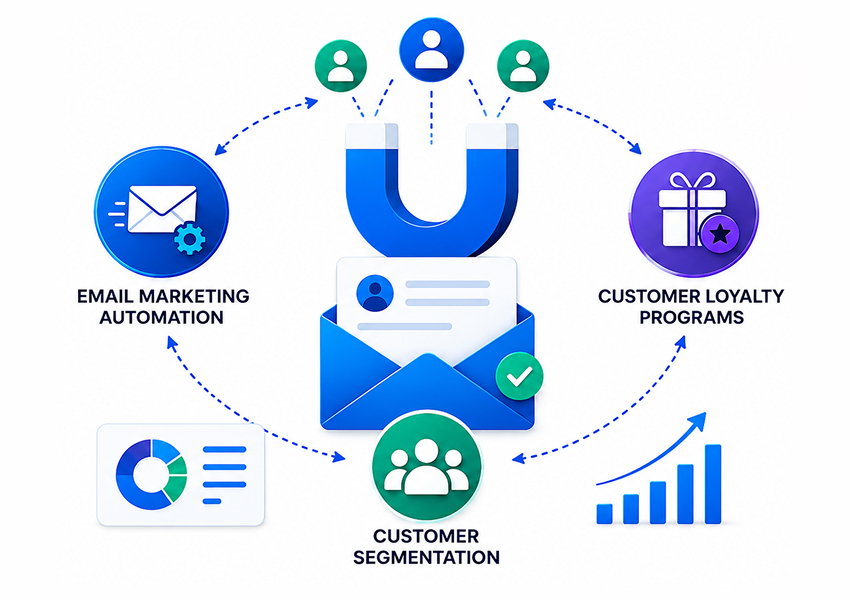
Most segmentation ends up as a slide nobody opens again. We build segments inside your store data, then wire them into email, ads, and on-site so they change what people actually see.
Customer segmentation is splitting your customers into groups that behave differently, so you can treat them differently. Not demographics for a pitch deck. Groups that justify a different message, a different offer, or a different price.
Customer segmentation in the retail industry is easier than the textbook version, because you already have the data. You do not need surveys or personas. Every order tells you what someone bought, when, how often, and for how much.
That is also why ecommerce customer segmentation looks nothing like the models taught in marketing courses. Those assume you are guessing at your audience. You are not. A customer segmentation analysis on a Shopify store is a query against orders you have already taken, and it usually takes a day. The hard part is not the analysis. It is deciding what changes as a result.
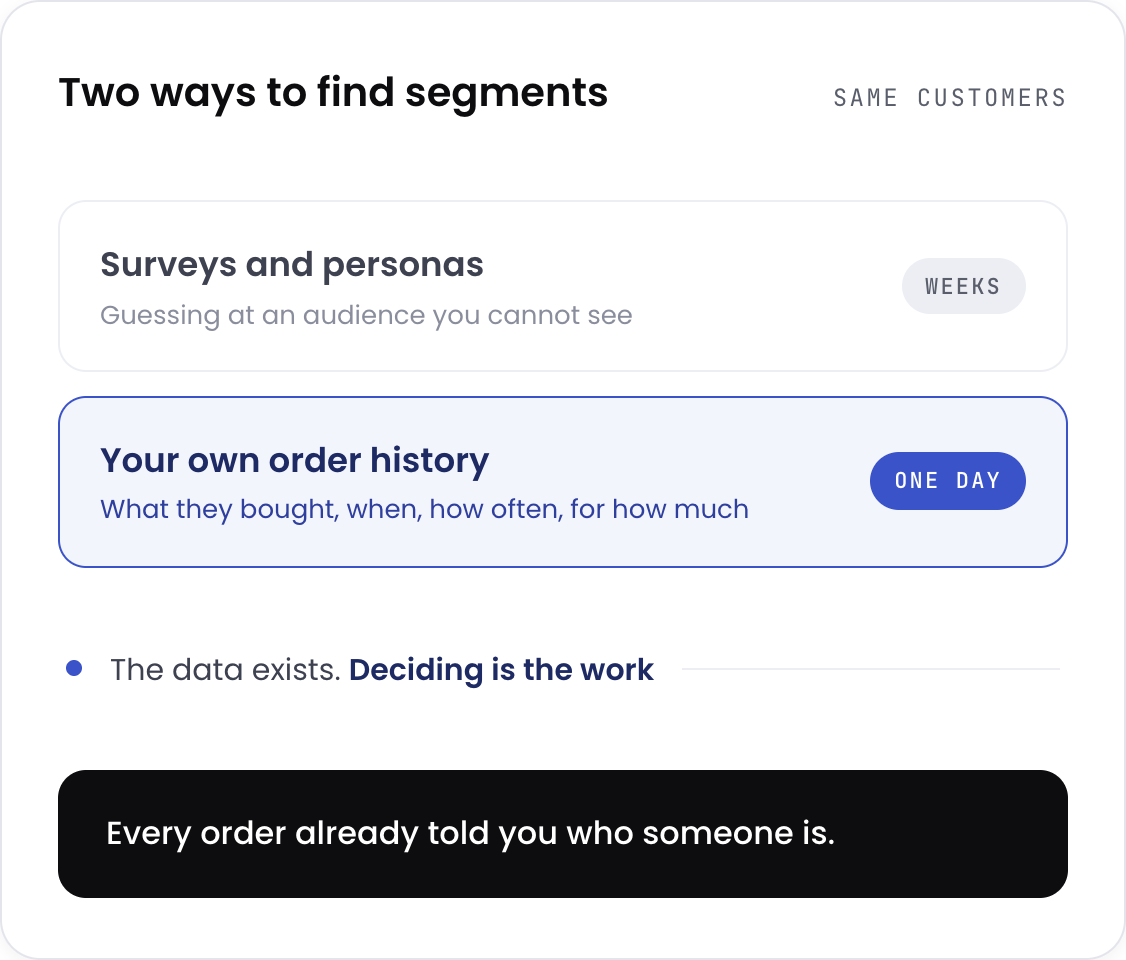
Retail customer segmentation usually stops at the first one, which is why the results are thin.
What people actually did. Purchases, browsing, frequency, response to discounts.
Recency, frequency, and monetary value scored together. The one most stores skip, and the one that pays fastest.
Where someone is in their relationship with you.
What someone buys tells you what they will buy next.
RFM is the one most stores skip and the one that pays fastest. Scoring every customer on how recently they bought, how often, and how much they spend takes an afternoon and immediately shows you which 10% of your list is carrying the revenue.
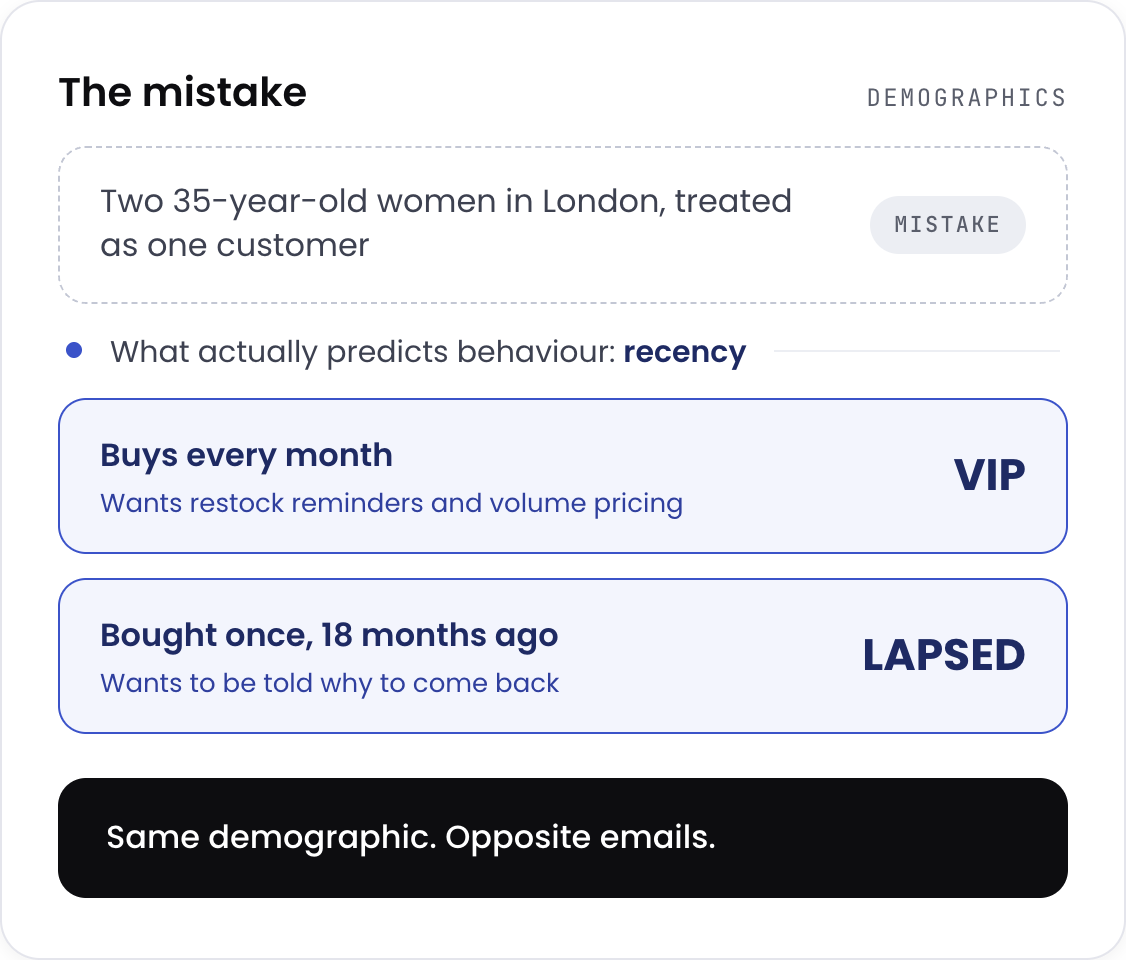
Age, gender, and location feel like segments because that is how segmentation gets taught. But two 35-year-old women in London, one who buys every month and one who bought once eighteen months ago, are not the same customer and should not get the same email.
What actually predicts behaviour is recency of last purchase, how often someone buys, how much they spend per order, and whether they have ever paid full price. Not age, gender, location, or which list they signed up to.
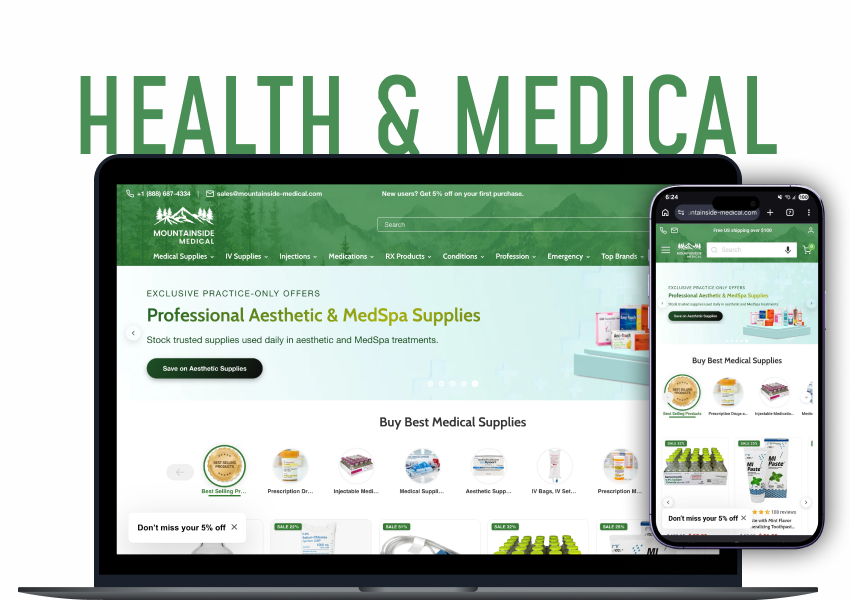
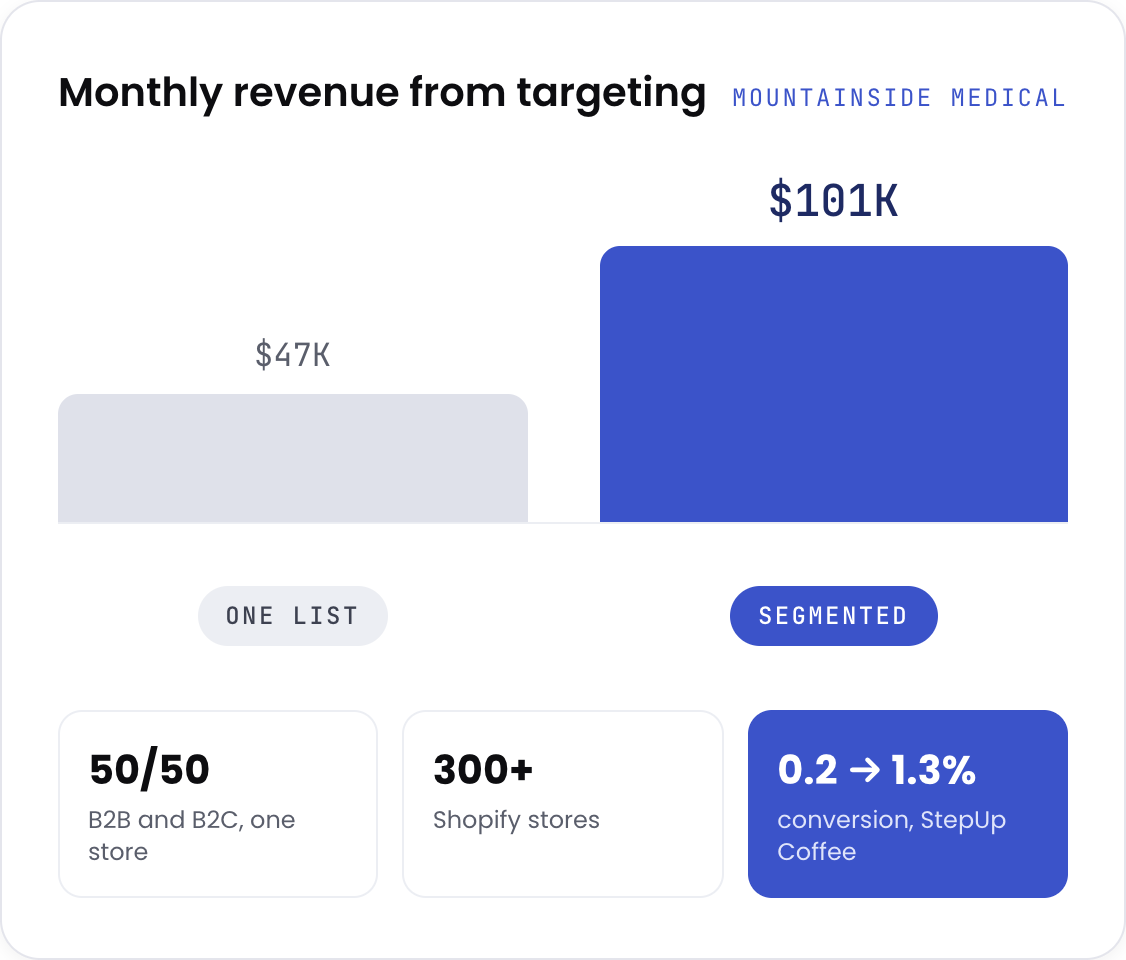
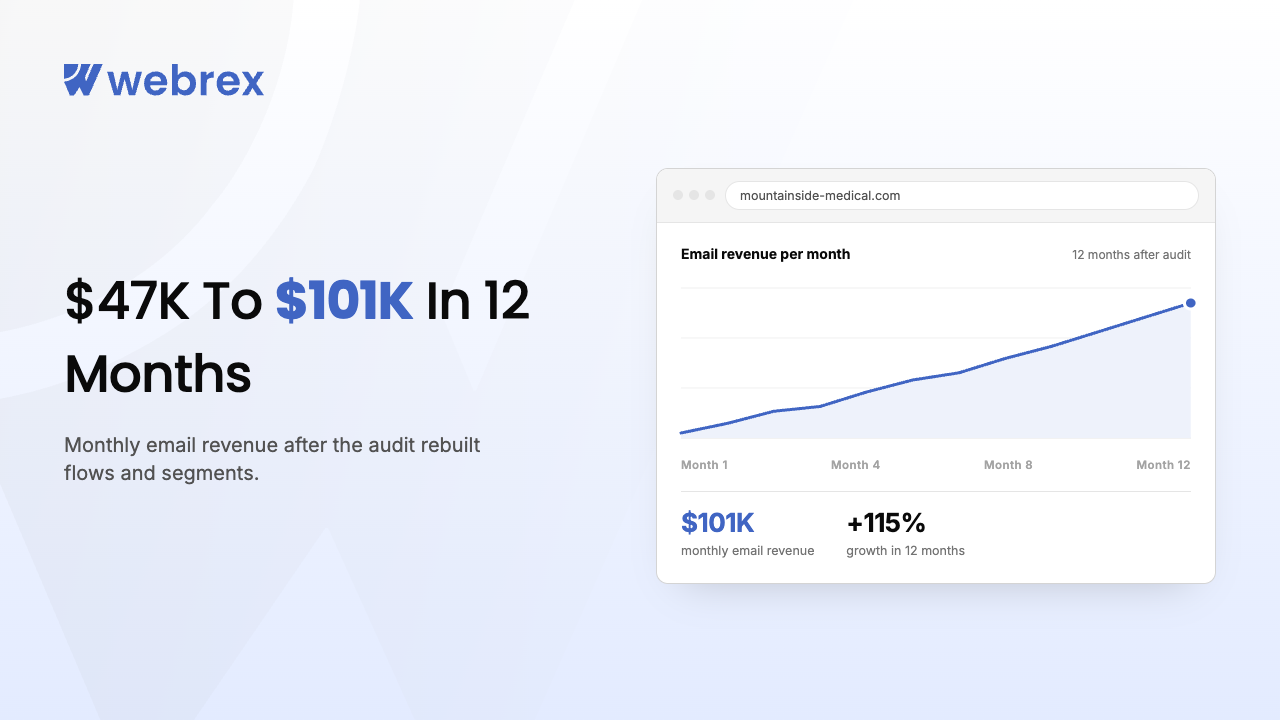
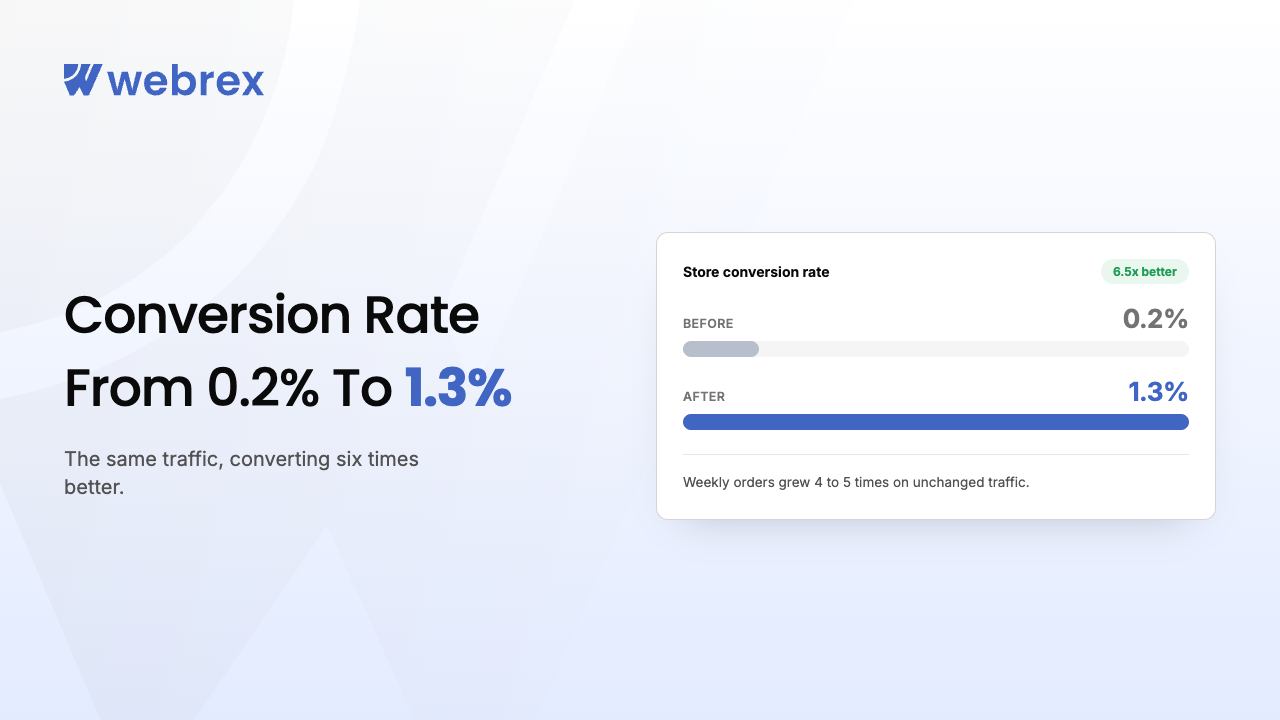
Mountainside Medical runs roughly a 50/50 split between B2B and B2C buyers. Those two groups want completely different things: one is reordering supplies on a schedule, the other is buying once for a specific need. Same store, same catalogue, two entirely different messages. Treating them as one list was leaving money on the table, and separating them properly is part of how monthly email revenue went from $47K to $101K.
Webrex runs nine apps on the Shopify App Store used by over 300,000 merchants. Two of them touch segmentation directly.
WB: Frequently Bought Together
Surfaces which products actually get bought together, which is how product-based segments get built from evidence rather than guesses.
Webrex ‑ Pricing By Country
Lets a geographic segment mean something operationally, not just as a label.
Segments get built where they can be used: Shopify customer segments for anything the store itself needs to know, and your email platform for anything that triggers a send. No separate dashboard you have to check.
View our appsFull customer segmentation analysis on your order history. Every customer scored on recency, frequency, and value. You see the shape of your customer base, usually for the first time.
The segments worth having, which are fewer than you think. Six to eight that each justify a different action. Anything you would treat identically gets merged.
Segments created in Shopify and in your email platform, wired so they update themselves as behaviour changes rather than going stale the day after we leave.
Each segment mapped to what changes for it: which emails, which ad audiences, what they see on site. A segment nobody acts on is a report, not a strategy.



If you are in the second list, say so on the call. We will tell you what we would do instead.