








Shopify Page Speed Optimization: How We Cut LCP 40% for Bullet Designs
Walkthrough of the four-phase performance build that took Bullet Designs from a 4.1s LCP to 2.4s and lifted mobile and desktop scores.
How Webrex boosted Bullet Designs' Shopify performance — improving page speed, Core Web Vitals, and SEO visibility through precision optimization.
 Sanjay Makasana
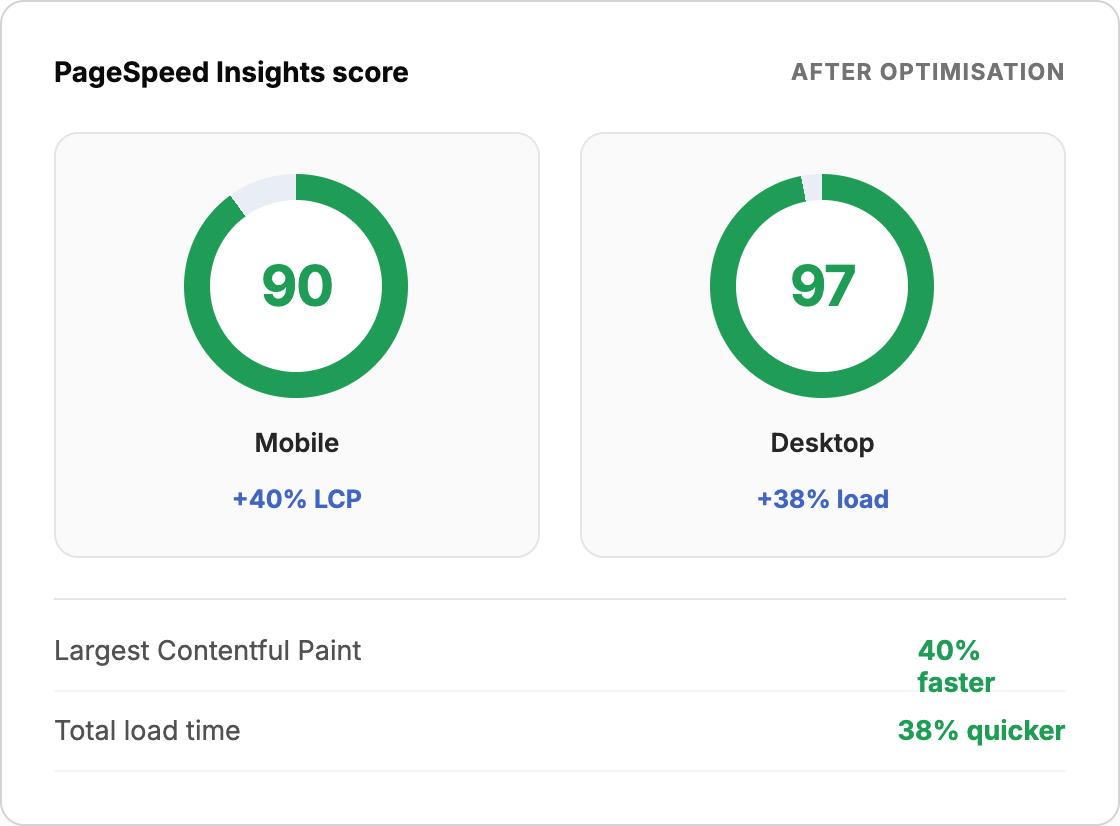
Transforming mobile performance through systematic optimization
When a leading Shopify store noticed a steady decline in mobile engagement and conversion rates, the culprit became clear — slow load times and failing Core Web Vitals scores.
The store's mobile performance hovered at just 30%, creating friction for users and impacting both SEO visibility and sales performance.
At Webrex, we took a systematic, data-driven approach to address the store's Core Web Vitals challenges — focusing on page speed optimization, Largest Contentful Paint (LCP) improvement, render-blocking removal, and JavaScript management.
Beyond numbers, this translated into smoother navigation, faster interactions, and a visible lift in conversion rate and customer engagement.
Rebuilding speed, UX, and SEO—without sacrificing design
When Bullet Designs, a leading Shopify-based lifestyle and accessories brand, noticed declining site performance and slower mobile experiences, they partnered with Webrex to rebuild speed from the ground up.
Our goal was simple: improve Core Web Vitals, enhance mobile performance, and strengthen SEO rankings — all without sacrificing the brand’s visual appeal or functionality.
Within weeks, Webrex’s tailored Core Web Vitals Optimization framework boosted the site’s performance across both mobile and desktop:
The result? A faster, more engaging, and search-friendly Shopify storefront that elevated Bullet Designs’ user experience and SEO performance.
What Moved the Needle
A concise summary of the principles that drove measurable performance and UX gains.
Speed equals trust
Faster pages improved user perception and retention.
Visual quality with technical efficiency
Optimizing images smartly preserved brand aesthetics while improving load times.
Data‑backed decisions
Real‑user monitoring tracked genuine user impact, not just lab numbers.
Simplify scripts and assets
Removing redundant code brought faster execution and smoother interactivity.
Sustained performance is cultural
Embedding performance budgets and regular audits keeps the site optimized long‑term.
Prioritizing user‑centric speed, disciplined asset strategy, and continuous measurement creates compounding gains in trust, engagement, and conversions.
Understanding the Challenge
Despite having a beautifully designed Shopify store, Bullet Designs was facing significant performance bottlenecks that affected both user engagement and organic rankings.
During our initial audit, several key issues surfaced:
-
Unoptimized images: High-resolution visuals slowed down loading times, particularly on mobile.
-
Render-blocking resources: CSS and JavaScript files delayed above-the-fold rendering.
-
Theme-level redundancy: The Shopify theme loaded unnecessary scripts and styles across all pages.
-
Third-party app overload: Marketing and analytics tools loaded synchronously, increasing blocking time.
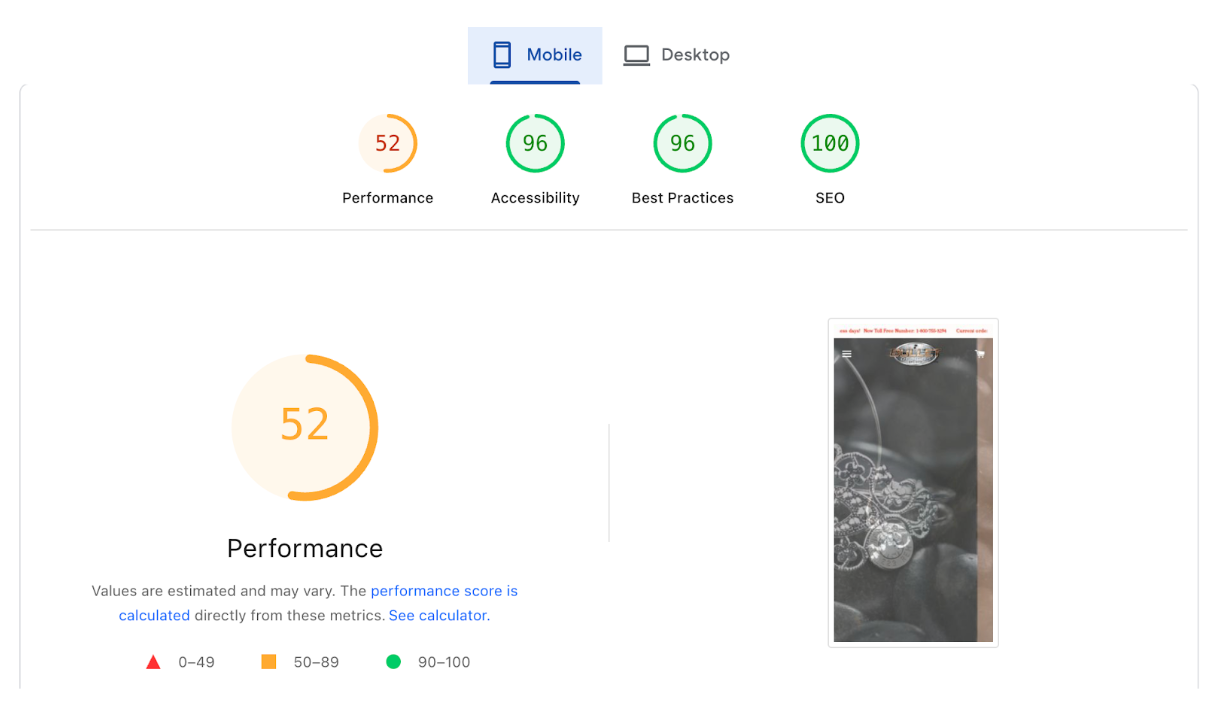
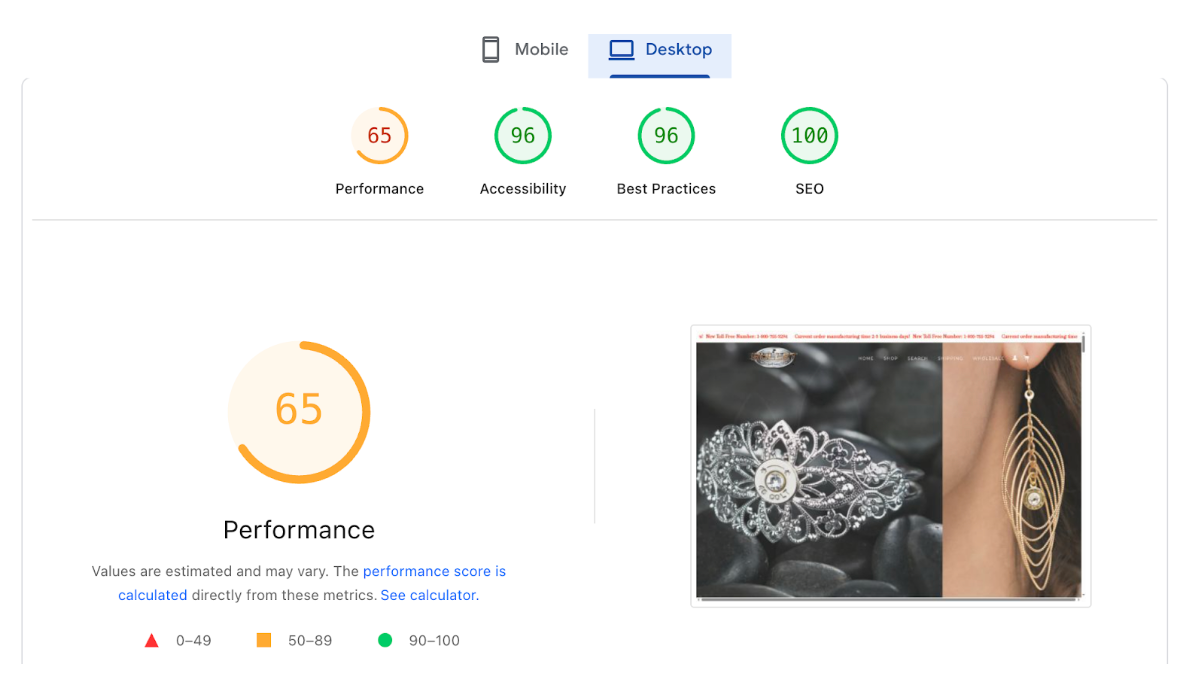
These issues directly impacted Largest Contentful Paint (LCP), Time to Interactive (TTI), and Cumulative Layout Shift (CLS) — the three critical Core Web Vitals metrics Google uses to measure page experience.
Webrex’s Optimization Approach
Performance that is both data‑driven and design‑conscious, delivered through a four‑phase Shopify Core Web Vitals framework.
Performance Audit & Strategy
- Detailed Lighthouse and PageSpeed Insights audits to identify bottlenecks.
- Collected real‑user metrics via Google Search Console Core Web Vitals.
- Prioritized a roadmap targeting highest‑impact performance areas.
Image & Media Optimization
- Resized, compressed, and reformatted assets with WebP for faster delivery.
- Implemented lazy loading for below‑the‑fold media to speed initial render.
- Preloaded hero and featured images to improve Largest Contentful Paint (LCP).
Code & Third‑Party Script Refinement
- Minified and merged HTML, CSS, and JavaScript to reduce render‑blocking.
- Inlined critical CSS for instant above‑the‑fold rendering.
- Deferred non‑critical scripts and async‑loaded third‑party tools.
- Audited and removed redundant Shopify apps slowing performance.
Testing & Continuous Monitoring
- Validated improvements using Lighthouse, PageSpeed Insights, and RUM.
- Compared before‑and‑after data to ensure sustained real‑world gains.
- Established performance budgets and CI/CD checks to prevent regressions.
How We Measured and Validated Improvements
We relied on industry‑leading tools to ensure accuracy and reliability throughout the optimization process.
Google Lighthouse
Used for lab testing and detailed diagnostics to pinpoint render‑blocking, layout shifts, and paint timings.
PageSpeed Insights
Provided mobile and desktop performance analysis to validate improvements across device categories.
Google Search Console (CWV Report)
Surfaced real‑world, field‑based Core Web Vitals to confirm that changes benefited actual users.
Real User Monitoring (RUM)
Measured true user experiences over time, ensuring sustained improvements post‑deployment.
This hybrid approach provided both technical insights and user‑centric validation — ensuring every optimization directly improved how visitors experienced Bullet Designs’ store.
Performance Results
Following the optimization project, Bullet Designs’ Shopify store achieved substantial improvements across all key metrics.
| Metric | Before | After | Improvement |
|---|---|---|---|
| Mobile Performance Score | 52 | 70 | +18 |
| Desktop Performance Score | 65 | 86 | +21 |
| LCP (Largest Contentful Paint) | 4.1s | 2.4s | 40% |
| TTI (Time to Interactive) | 6.2s | 3.8s | 38% |
| CLS (Cumulative Layout Shift) | 0.19 | 0.08 | Good |
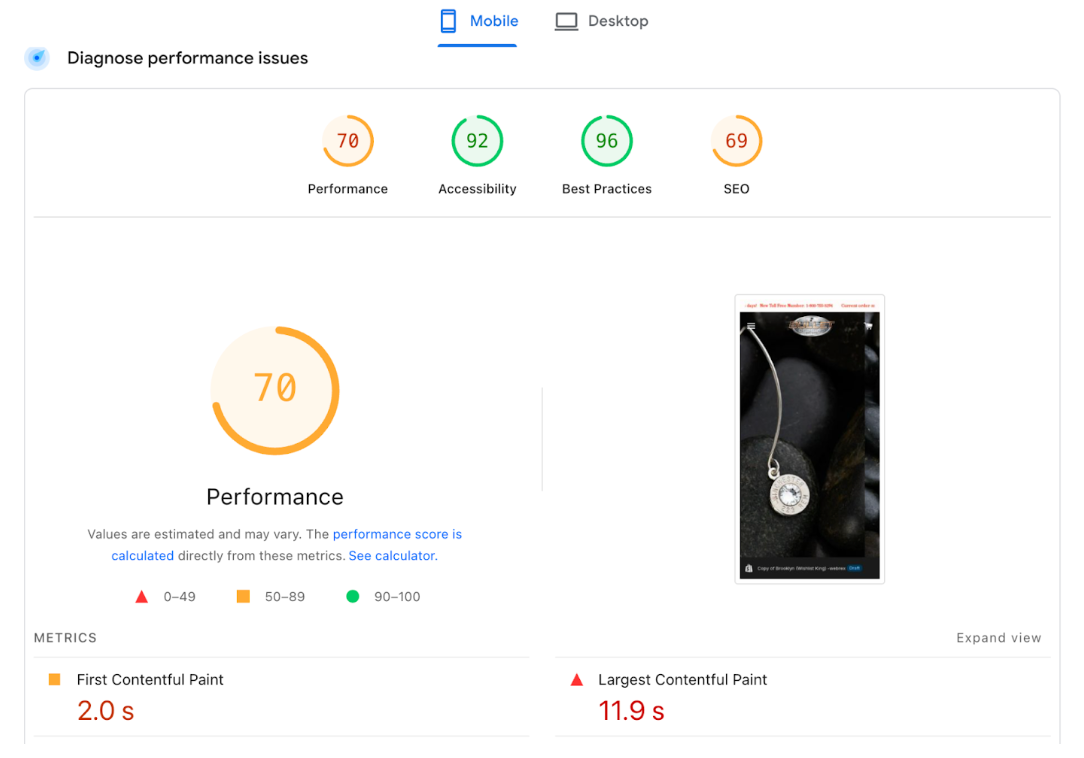
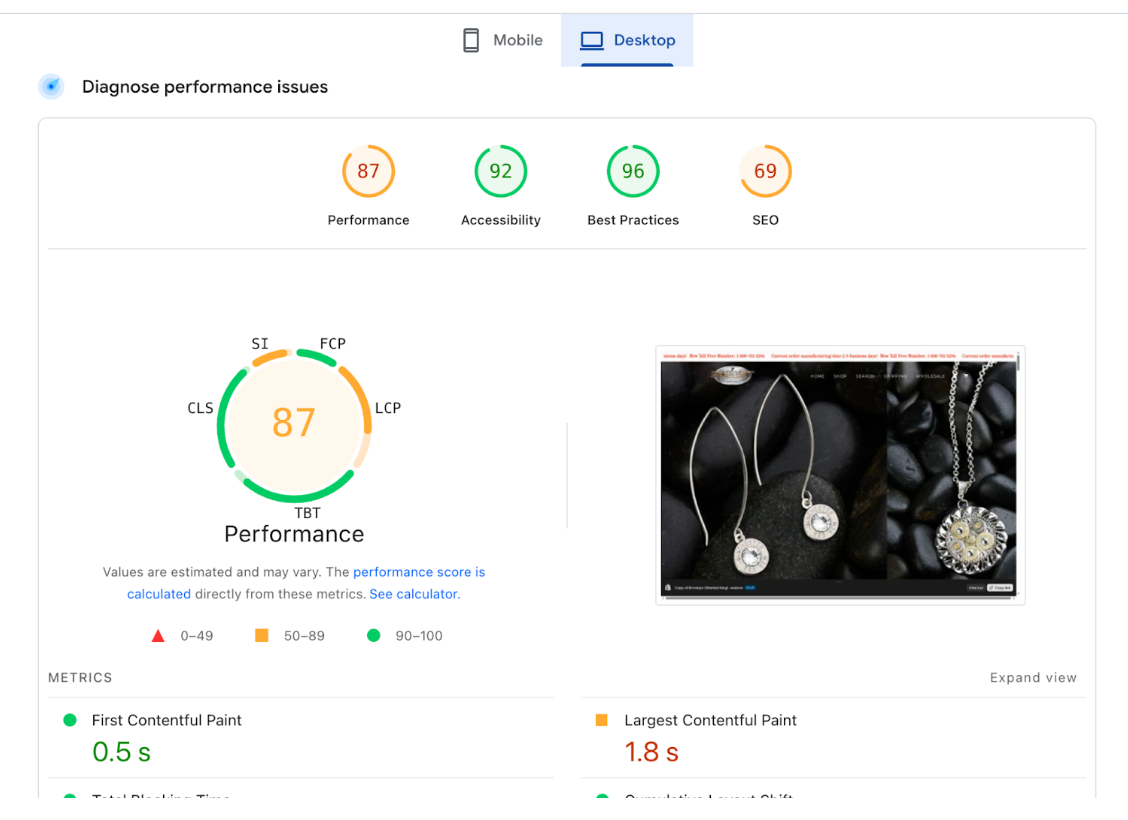
Post-optimization, the store delivers a markedly faster experience on both mobile and desktop. Image payloads were reduced, render‑blocking resources deferred, and third‑party scripts optimized—resulting in stronger Core Web Vitals and a smoother browsing experience.
SEO & Business Impact
These technical improvements translated directly into stronger SEO performance and business outcomes for Bullet Designs.
Improved Google rankings
Better Core Web Vitals and page experience signals led to stronger visibility in search.
Reduced bounce, higher engagement
Faster load times encouraged visitors to stay longer and interact more.
Growth in mobile conversions
Smoother, faster interactions on mobile improved conversion rates.
Higher product/category visibility
Improved performance helped key pages gain consistent organic growth.
Premium brand perception
A premium, seamless shopping experience elevated trust and brand perception.
By aligning performance optimization with SEO goals, Webrex helped Bullet Designs achieve measurable improvements in both user satisfaction and digital visibility.
Keeping Performance Gains Sustainable
A long-term strategy to preserve Core Web Vitals excellence and real-user experience.
Automated Lighthouse CI
Continuous checks catch regressions early across key templates and flows.
Quarterly App Audits
Review third‑party scripts to control bloat and maintain fast execution.
Real‑time RUM Dashboards
Track live performance by geography, device, and network conditions.
Developer Enablement
Ongoing sessions help in‑house teams uphold CWV and performance budgets.
These practices help Bullet Designs maintain exceptional speed, stability, and SEO advantage — ensuring every visitor experiences a fast and frictionless store.