

Imagine two coffee shops on the same street. One sits on the busy corner where everyone walks past. The other hides down a side alley with no sign out front, same beans, same prices, same friendly staff. One is packed. The other waits for customers who may never find it.
That's the difference SEO makes for your Shopify store. This guide walks you through the whole picture in plain language, no code, no acronyms, just the moves that matter and the order to do them in.
Here is the part most store owners miss: that traffic is free, and it keeps coming. A paid ad stops the second you stop paying. A page that ranks well on Google can bring in shoppers every single day for years, while you sleep, while you are on holiday, while you are busy packing orders. That is why SEO is the highest-leverage habit a Shopify owner can build.
Why Shopify SEO is different (and a little easier)
Shopify already does a lot of the heavy lifting for you. It produces clean web addresses, it is fast on mobile out of the box, it handles security, and it creates a sitemap automatically (think of a sitemap as a map you hand to Google so it can find every room in your store). A custom-built website often needs a developer just to get these basics right.
But Shopify also has a few quirks that quietly hold stores back. It can create duplicate versions of the same product page, limit how you organize certain URLs, and its default themes rarely include text that search engines can read. None of these is a dealbreaker. They are just things you need to know about, and we will cover the important ones below.
The Takeaway: You are not starting from zero. You are starting from a solid base that needs the right finishing touches.
The 5 pillars of Shopify SEO
Think of SEO as a table with five legs. If one leg is short, the table wobbles. You do not need them all perfect on day one, but you do want each one standing.
1. Keywords: speak the words your customers type
A keyword is just the phrase a shopper types into Google. "Waterproof hiking boots for women." "Gifts for new dads." "Organic dog shampoo." Your job is to figure out which phrases your customers actually use, then make sure those exact words appear on your pages.
This matters more than it sounds. Store owners love clever product names. Shoppers search for plain ones. If your page is titled "The Voyager" but everyone searches for "leather weekend bag," Google has no reason to connect the two. You can be brilliant and still invisible.
Start simple: Open Google and begin typing what you sell. Watch the suggestions that drop down. Those are real searches real people make. Scroll to the bottom of the results page and read the "People also ask" and "related searches" boxes, free, instant, and straight from the source. Build a short list of the phrases that match what you actually sell, and keep it somewhere handy.
A quick word on buyer intent. Someone searching "are leather bags durable" is reading. Someone searching "buy a leather weekend bag" is shopping. Aim most of your product and collection pages at the second kind, the ones ready to spend, and save the first kind for your blog.
2. On-page SEO: Tidy up what's already there
On-page SEO is everything you can control directly on a page. The good news is that small fixes here often produce the fastest wins, because most stores never bother.
Your page title and meta description are the headline and tagline that show up in Google's search results. Shopify lets you edit for every product, collection, and page. Write them for a human first: clear, specific, and including the keyword that page targets. "Organic Dog Shampoo for Sensitive Skin | Free Shipping" beats "Product Page" every time. If you are using Shopify's built-in Magic button to speed this up, it is worth knowing whether AI-generated content hurts your Shopify SEO before you run it across your whole catalog.
Write real product descriptions in your own words. Manufacturer copy is duplicated across hundreds of stores, and Google ignores duplicates. A few honest sentences about who the product is for and why it is good will outperform a spec sheet.
Use your headings in order, like chapters in a book. One main heading per page, then sub-headings beneath it. This helps both shoppers skim and search engines understand structure.
Finally, name and describe your images. Search engines cannot see a photo, but they can read the file name and the short text label attached to it (called alt text, which also helps shoppers using screen readers). "blue-leather-weekend-bag.jpg" tells Google something. "IMG_4471.jpg" tells it nothing.

Webrex AI SEO Optimizer
3. Technical SEO: clear the roadblocks
This is the pillar that sounds scary, but it mostly isn't. Technical SEO just means making sure Google can crawl your store, read it, and trust it. You do not need to touch code to handle the essentials.
The big one is duplicate pages. Shopify sometimes shows the same product at more than one web address, which splits your ranking power. Good SEO apps and a properly set-up theme fix this quietly in the background.
The second is making sure nothing important is accidentally hidden from Google. Every Shopify store has a settings area where pages can be blocked from search. Occasionally, a theme or app blocks the wrong thing. A free tool called Google Search Console tells you exactly what Google can and cannot see, and it is the single most useful free tool you can connect to your store. Set it up early.
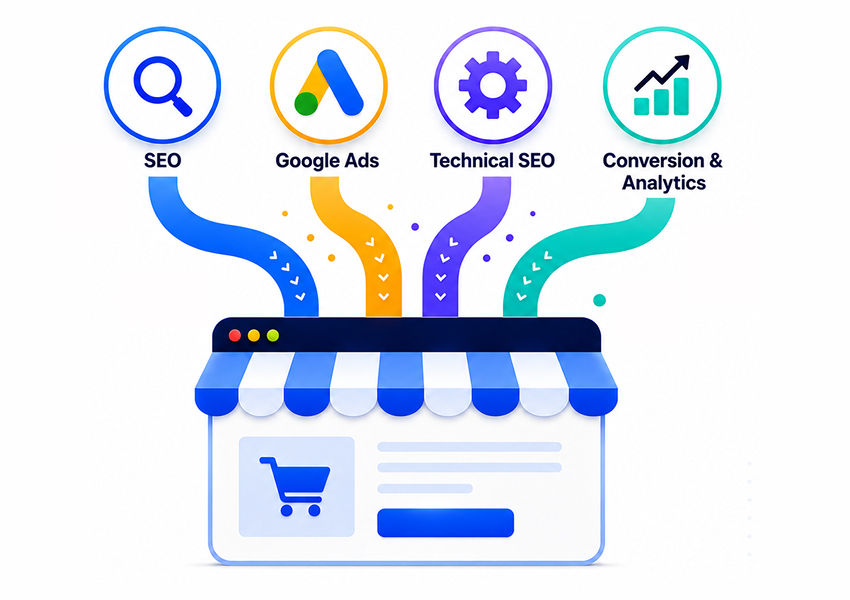
Technical SEO is where having a specialist pays off, because the fixes are invisible to shoppers but powerful for rankings. In one project, two Shopify stores added more than 73,000 organic clicks in 90 days, driven largely by technical fixes most owners never notice are missing.
Webrex SEO Audit Optimizer
4. Speed: every slow second costs you sales
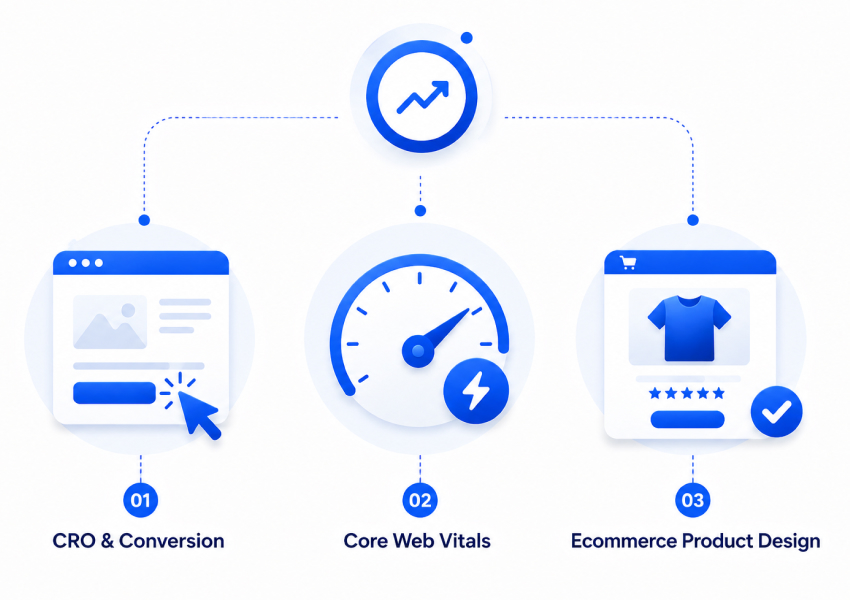
Site speed is both an SEO factor and a sales factor, which makes it one of the best things to fix. Google openly favors fast pages, and shoppers abandon slow ones. A page that takes five seconds to load loses a large chunk of visitors before they ever see your product.
The most common culprit on Shopify stores is huge image files. A photo straight from a phone or camera can be several times larger than it needs to be. Compress your images before uploading, or use an app that does it automatically, and you will often shave seconds off your load time.
The other culprit is apps. Every app you install adds a little weight. Be honest about which ones you actually use, and remove the ones you do not. A lean store is a fast store.
Webrex SEO Speed Optimizer
5. Content and links: build authority over time
The first four pillars get your store in good shape. Content and links are how you grow beyond it.
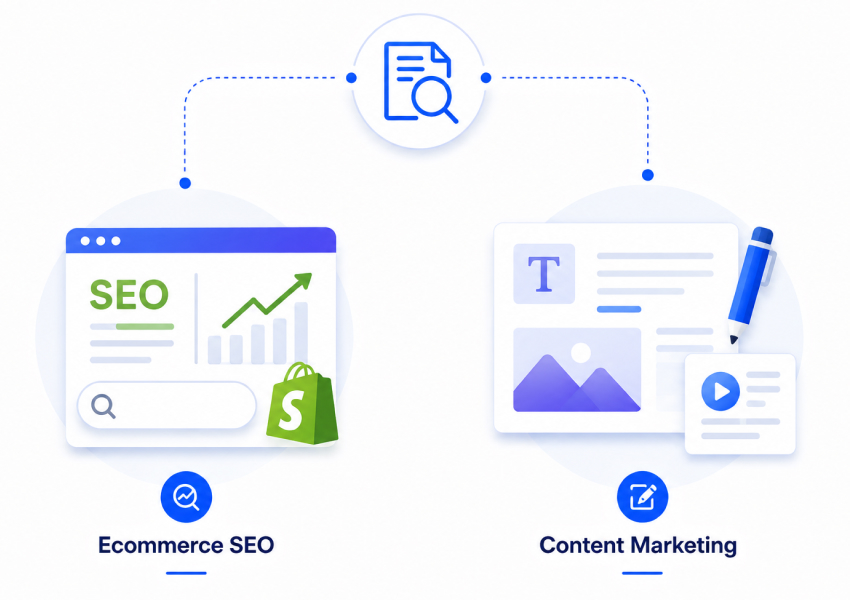
Content means a blog, buying guides, and answers to the questions your customers ask before they buy. "How to choose the right tent size." "What to look for in a baby carrier." These pages catch shoppers earlier in their journey, build trust, and give Google more reasons to send you traffic. They are also where you target those "reading" keywords from earlier.
Links mean other websites pointing to yours. Google treats each quality link as a vote of confidence. You earn them by being genuinely useful, getting featured in gift guides, partnering with complementary brands, or simply making content worth referencing. Quality beats quantity every time. A handful of links from respected sites is worth more than hundreds from junk ones.
This pillar is slow, and that is the point. It compounds. The store that quietly publishes one helpful guide a month for a year ends up miles ahead of the one that does nothing.
What this looks like when it works
It is easy to treat SEO as theory until you see the numbers move. A few real examples from stores that committed to it:
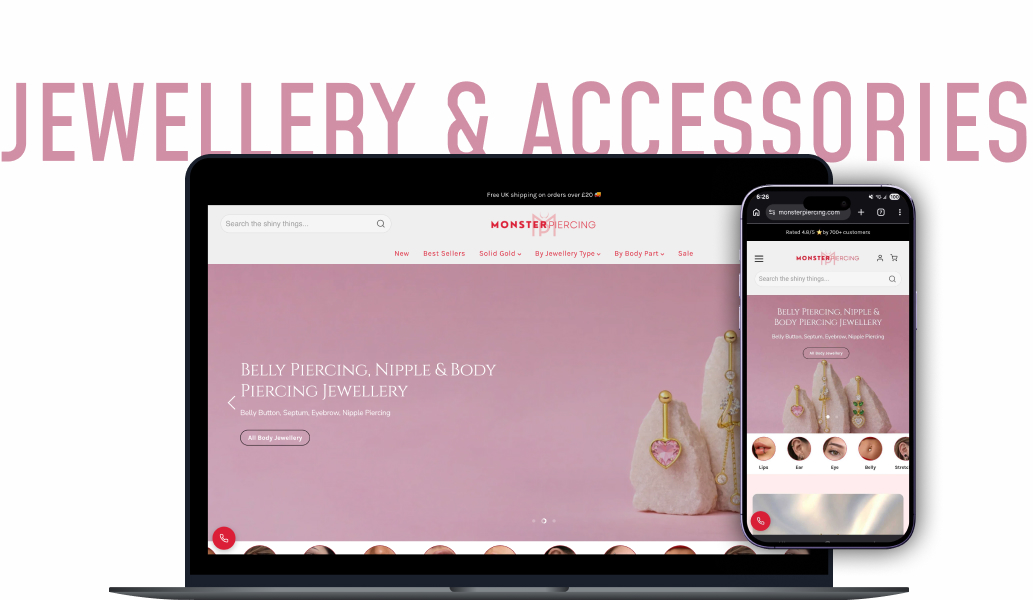
One jewelry store, Monster Piercing, was stuck at around 8,000 monthly visitors. After a focused SEO push, it climbed to 28,000 monthly visitors. Same products, far more people finding them.
A health brand, Hero Life Care, grew its organic performance by roughly 200% through a steady Shopify SEO strategy rather than any single trick.
And across the stores our team works with, the pattern holds: the businesses treating SEO as an ongoing habit average around 156% revenue growth over a year. Not because of one magic change, but because the five pillars compound on each other.
The lesson is not "you will get these exact numbers." It is that the gap between a store that ignores SEO and one that works on it consistently is enormous, and it widens every month.
Common mistakes that quietly cost you traffic
A few traps catch almost every store owner at least once.
Chasing huge, generic keywords: Trying to rank for "shoes" is a losing battle against billion-dollar brands. "Handmade leather chukka boots" is winnable, and the people searching for it are far closer to buying.
Copying manufacturer descriptions: We said it above, but it bears repeating because it is so common. Duplicate text is invisible text.
Ignoring mobile: Most of your shoppers are on their phones. If your store is awkward to use on a small screen, both they and Google notice.
Expecting overnight results: SEO is a slow cooker, not a microwave. Most changes take weeks to months to show up. The owners who win are the ones who keep going past the point where it feels pointless.
Doing it once and stopping: SEO is not a task you complete. It is a habit you keep. Search results shift, competitors move, and the store that keeps tending its pages stays ahead.
Your first 30 days: A simple starting plan
You do not need to do everything at once. Here is a sane order for your first month.
- In week one, connect Google Search Console and Google Analytics so you can actually measure what is happening. You cannot improve what you cannot see.
- In week two, build your keyword list and rewrite the page titles and meta descriptions for your most important products and collections.
- In week three, rewrite weak product descriptions in your own words and fix your image file names and labels on your best sellers.
- In week four, compress your images, review your apps, and publish one helpful blog post aimed at answering a question your customers ask.
Then repeat the useful parts each month. That is the whole secret. Consistency beats intensity.
Where to go from here
This guide is the map. The real work is in the individual stops along the way, and each pillar above can go far deeper: keyword research, technical fixes, speed optimization, and content strategy each deserve their own playbook.
If you would rather not wade through it alone, that is reasonable, too. SEO rewards consistency, and consistency is hard to maintain when you are also running a business. A free store audit will at least tell you which of the five pillars is your weakest leg, so you know where to start. Either way, the most important step is the one you take this week. Your busy corner of the internet is waiting. The shop just needs to move there.