










10 min read | Last updated: August 2026
In this guide:
- Why most stores lose money during BFCM without realising it
- The one idea that makes BFCM prep simple
- Traffic without a plan, honestly
- Discounts without destroying your margin
- The part nobody talks about: BFCM is won in your email list, not your ad account
- Your biggest fear: the site crashing or breaking when it matters most
- What actually needs to be ready before the weekend
- Common mistakes that quietly cost stores the weekend
- Your 90-day BFCM plan, week by week
- Where to go from here
BFCM 2026, in 30 seconds
- What it is: Black Friday falls on 27 November 2026 and Cyber Monday on 30 November 2026, which means your ninety-day preparation window opens at the end of August. This guide breaks that window into three thirty-day blocks: fix the foundation, build the offers, test everything.
- The catch nobody tells you: BFCM does not create problems in your store, it only exposes the ones already sitting there. When traffic jumps five to ten times, a slow product page, a typo in a discount code, or a cold email list stops being a small annoyance and starts costing real money. That is why the work happens in August, not November.
- Who this is for: Shopify store owners who want the biggest weekend of the year to run quietly in the background, instead of spending it refreshing dashboards and fixing things at two in the morning.
You know that feeling before a big family dinner. Twenty people are coming, the house is a mess, and you keep telling yourself there is still plenty of time. Then one morning, you look at the calendar, and dinner is next week. Now every small job feels huge, and you are doing them all at once with your heart racing.
That is exactly how Black Friday and Cyber Monday sneak up on most store owners. In July it feels far away. In November it feels like a fire. The difference between a store that has a calm, record-breaking weekend and a store that spends it firefighting is not luck. It is the ninety days before.
Your store is the house. BFCM is the dinner. This guide is the plan that gets everything ready while you still have time to breathe.
This guide walks you through exactly what to fix, test, and prepare in the ninety days before BFCM 2026, week by week, so the biggest sales weekend of the year runs smoothly.
Why most stores lose money during BFCM without realising it
BFCM does not usually go wrong in one big dramatic way. It goes wrong slowly, in a hundred small ways you never see.
- A checkout button loads half a second slower than it should.
- A discount code has a typo.
- The homepage banner still says "Summer Sale" on Black Friday morning.
- Your email list hasn't heard from you in three months, so half of them forget who you are. Your product pages run out of stock but keep taking orders.
None of these feel like emergencies on their own. Together, they quietly bleed away a big chunk of the weekend you spent all year waiting for.
The cruel part is that BFCM does not create these problems; it just exposes them under pressure. A store that limps along fine in a normal week can fall apart when traffic jumps five or ten times. The cracks were always there, and the traffic just found them.
This is why the 90-day countdown matters. You are not trying to build something new in November. You are finding and sealing the cracks in August, September, and October, while the store is quiet enough to fix them properly.
The one idea that makes BFCM prep simple
Here is the thing to hold on to when the to-do list gets long. Your job over these ninety days is not to add a hundred clever features. It is to make sure the path from "I landed on your store" to "I paid" has zero friction on the busiest day of the year.
Every task in this guide serves that one path. Faster pages so people do not leave. Clearer offers so people do not hesitate. Warmed-up emails so people actually come back. Enough stock so orders do not fail. That is it. When you are unsure whether a task is worth doing, ask if it removes friction from that path. If it does not, it can wait until January.
- The Takeaway: Winning BFCM is not about doing more things. It is about removing everything that slows a ready-to-buy customer down.
Traffic without a plan, honestly
Plenty of store owners spend their BFCM budget on ads and hope that more visitors will simply mean more sales. To be fair, ads work. Paid traffic during BFCM can genuinely bring you buyers you would never have reached, and if your store is already tuned, that spend pays off well.
But here is where it falls short for most stores. Sending paid traffic to a store that has not been prepared is like pouring water into a bucket with holes. You pay for every visitor, and then your slow pages, unclear offers, and clunky checkout let most of them drain away before they buy. The store that wins BFCM is not the one that spends the most on traffic; it is the one that keeps the most of the traffic it already gets. Fix the bucket first. Then fill it.
Discounts without destroying your margin
The other popular move is to slash prices hard. Fifty percent off everything, race to the bottom, hope volume makes up for it. And yes, a bold discount does grab attention, and for some products a deep cut is the right call to clear old stock.
Where this goes wrong is that a discount is the easiest thing to copy and the fastest way to train customers to only ever buy from you on sale. Everyone drops their price in November, so a discount alone does not make you stand out; it just makes you cheaper. The stores that do well pair a fair offer with things a discount cannot copy, like a genuine bundle, faster shipping, a gift over a spend threshold, or early access for loyal customers. A smart offer beats a big discount, because it protects your margin while still feeling like a deal.
The part nobody talks about: BFCM is won in your email list, not your ad account
Most BFCM guides obsess over the sale weekend itself. The truth is that a large share of your BFCM revenue is decided weeks earlier, by how warm your email and SMS list is when the offers land.
Think about it. On Black Friday, every inbox is a war zone. Twenty brands are shouting the same fifty-percent-off message on the same morning. The brands that get opened are the ones the customer already recognises and likes, because those brands stayed in touch through September and October instead of going silent and then suddenly screaming "BUY NOW."
This is the quiet advantage almost nobody prepares for. If you start sending helpful, friendly emails in the run-up, warming the list and rebuilding trust, your BFCM emails land as a welcome heads-up from a brand they like. If you stay silent until Black Friday, you land as a stranger interrupting their morning. One store we worked with did nothing but clean up and warm their list for six weeks before the sale, and their BFCM email revenue nearly doubled on the same size list. Same people. Warmer relationship.
Your biggest fear: the site crashing or breaking when it matters most
Let us name the thing that keeps you up at night. It is the fear that on Black Friday morning, at your busiest hour, the store slows to a crawl, the checkout fails, or an order goes through at the wrong price. Here is how you take that fear off the table.
- Your speed is protected by testing under load before the day: You do not wait for real traffic to find the slow pages. You check your speed now, strip out heavy apps and oversized images, and make sure the store stays fast even when many people are on it at once.
- Your offers are protected by a dry run: Every discount code, every bundle, every automatic deal gets tested with a real test order in the weeks before, so a typo or a broken rule is found in October, not by an angry customer in November.
- Your stock is protected by clear limits: You set inventory tracking so a product that sells out actually stops selling, instead of taking orders you cannot fulfil and creating a wave of refunds and complaints.
- Your checkout is protected by leaving it alone at the last minute: You make your changes early and then freeze the store in the final week, because the worst time to push an untested update is the night before your biggest day.
Fear comes from the unknown. Once each of these is tested and boring, the day stops being scary.
What actually needs to be ready before the weekend
When people say "get ready for BFCM," this is the concrete list they mean.
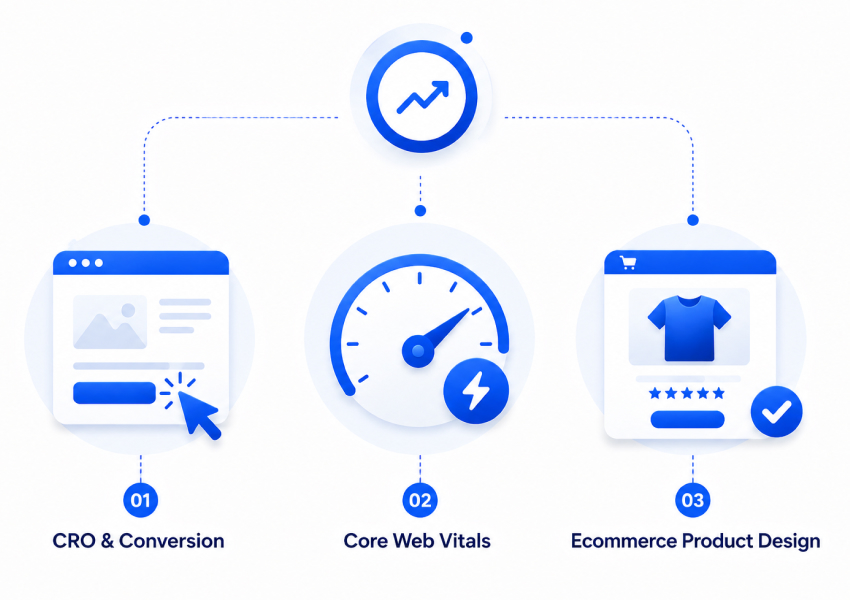
- Speed: Fast homepage, collection pages, product pages, and checkout, on mobile especially, because most of your BFCM traffic will be on phones.
- Offers: Your discounts, bundles, free-shipping thresholds, and any gift-with-purchase, all built and tested with real test orders.
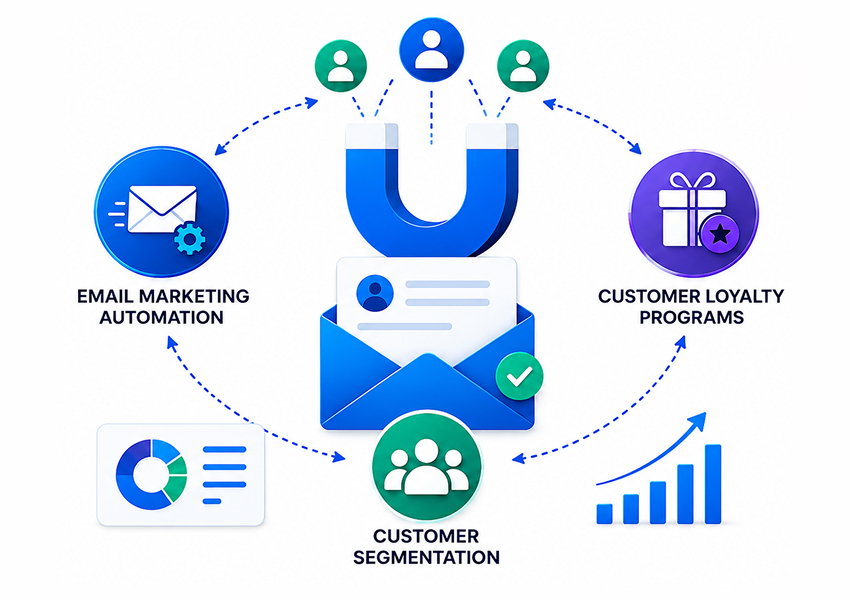
- Email and SMS: A warmed-up list, plus your planned sends: the teaser, the early-access note, the launch, the reminder, and the "last chance" on Cyber Monday.
- Automated flows: Your abandoned cart, browse abandonment, and welcome flows switched on and checked, because these quietly recover sales while you sleep.
- Landing pages: A clear BFCM or sale page that collects your deals in one place, so ads and emails have somewhere clean to send people.
- Stock and shipping: Enough inventory on your best sellers, plus clear shipping cut-off dates shown on the site so customers know what will arrive in time.
Common mistakes that quietly cost stores the weekend
- Leaving everything to the final week: This is the big one. Prep crammed into November is prep done in a panic, and panicked changes break things. Start the heavy work in August and the last week becomes calm.
- Going silent on email until Black Friday: If your list has not heard from you in months, your big offer lands cold. Stay in touch through the run-up so your sale email is welcome, not a shock.
- Discounting so hard you lose money on every order: A deal that ignores your shipping cost and fees can mean you sell more and earn less. Know your margin before you set the number.
- Making last-minute site changes with no test: A "quick tweak" to the theme or checkout the night before, with no test order, is how stores break at the worst possible moment. Freeze the store and test everything early.
Your 90-day BFCM plan, week by week
With BFCM 2026 landing on Black Friday, 27 November, and Cyber Monday, 30 November, your ninety-day countdown starts around the end of August. Here is how to spread the work so no week feels heavy.
- Days 90 to 60 (late August into September): fix the foundation. Check your store speed and cut what slows it down. Clean your email list and start sending warm, helpful emails again. Review last year's numbers to see what sold and what flopped. This is the quiet, unglamorous month that decides everything.
- Days 60 to 30 (September into October): build the offers. Decide your deals and build them. Create your BFCM landing page. Write and schedule your email and SMS sequence. Switch on and test your abandoned cart and welcome flows. Confirm your stock on best sellers with suppliers.
- Days 30 to 7 (late October into November): test everything. Place real test orders through every discount and bundle. Preview the site on mobile. Set your shipping cut-off dates. Warm up your ad account with a small early campaign so the algorithm is not learning from scratch on the big day.
- The final week: freeze and watch. Stop making changes. Do a last check of stock, codes, and emails. Then let the machine you built run, and spend the weekend responding to customers instead of fixing fires.
Where to go from here
You do not need to do all of this in one weekend, and you do not need to do it in a panic. You need the ninety days, a clear list, and the discipline to start with the quiet foundation work while the store is still calm. Do that, and BFCM 2026 becomes the weekend you look forward to instead of the one you dread.
If you want a second set of eyes on where your store stands right now, before the countdown gets loud, that is the fastest way to know exactly what to fix first.
Book your free Shopify store audit and see exactly what to fix before BFCM 2026.